
Holy Communion is not simply an act of remembrance, rather, it is a genuine encounter with the living Christ. Dr Simon Chan explains why Communion is about relationship rather than ritual, faith rather than formula, and why recovering a richer understanding of the Lord’s Table matters for the Church today.
For many Christians, Holy Communion is a familiar part of church life. But what really happens when believers come to the Lord’s Table? And how should Pentecostals understand healing, faith, and God’s grace without reducing them to formulas or techniques?
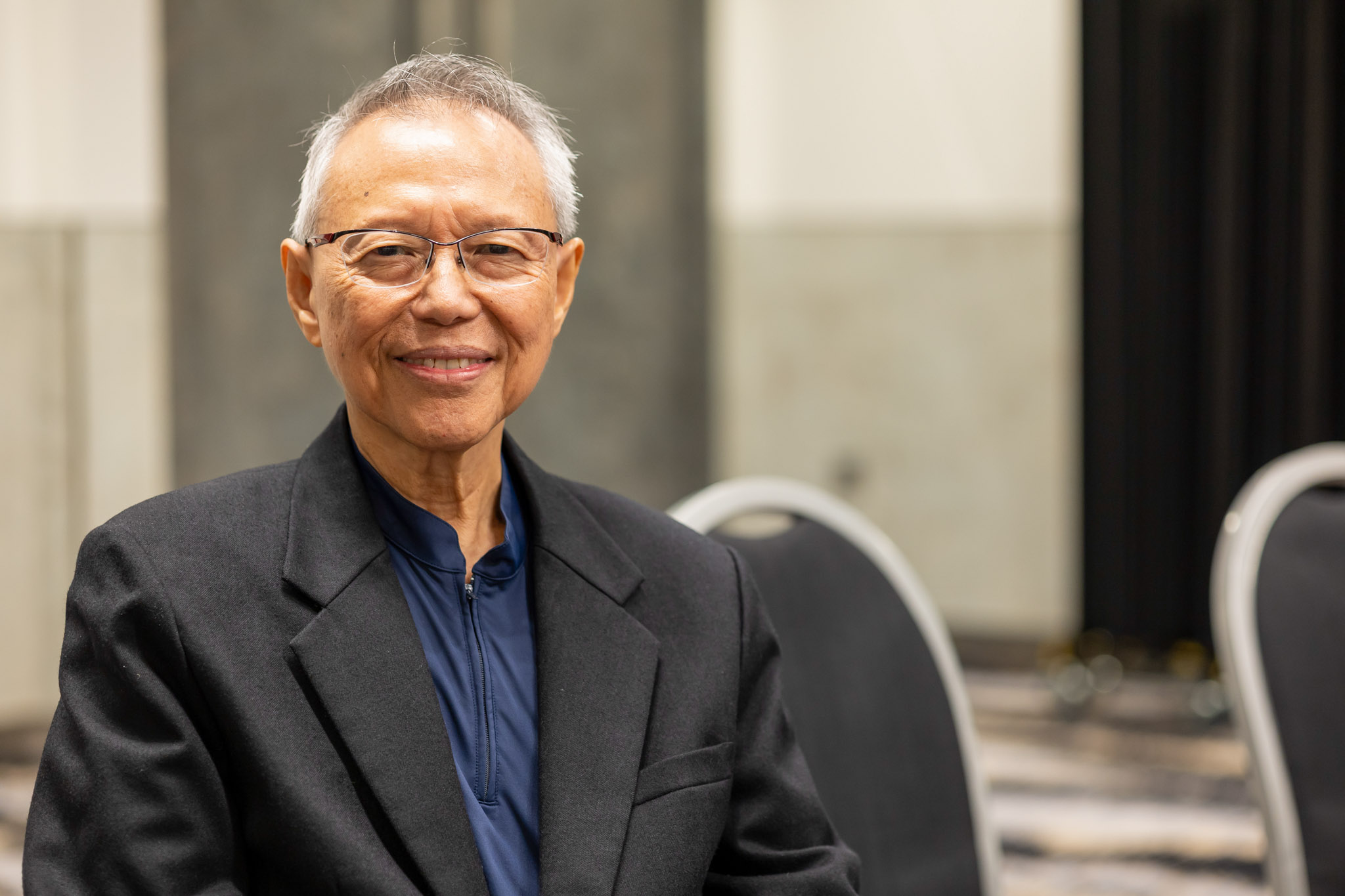
These are some of the questions explored by Dr Simon Chan, former Professor of Systematic Theology at Trinity Theological College and one of Asia’s foremost Pentecostal theologians. Dr Chan has spent decades calling the Church to recover the deep connection between the work of the Holy Spirit, spiritual formation, and historic Christian tradition.
As respondent to Dr Jonathan Black’s paper at the Asia Pentecostal Summit 2026, Dr Chan reflected on the Church’s need to recover a richer understanding of Holy Communion—one that is deeply rooted in Scripture, the wider Christian tradition, and a living relationship with Christ.
City News talks to Dr Chan about why theology matters and how Communion has become for him a treasured means of encountering the presence and grace of God.
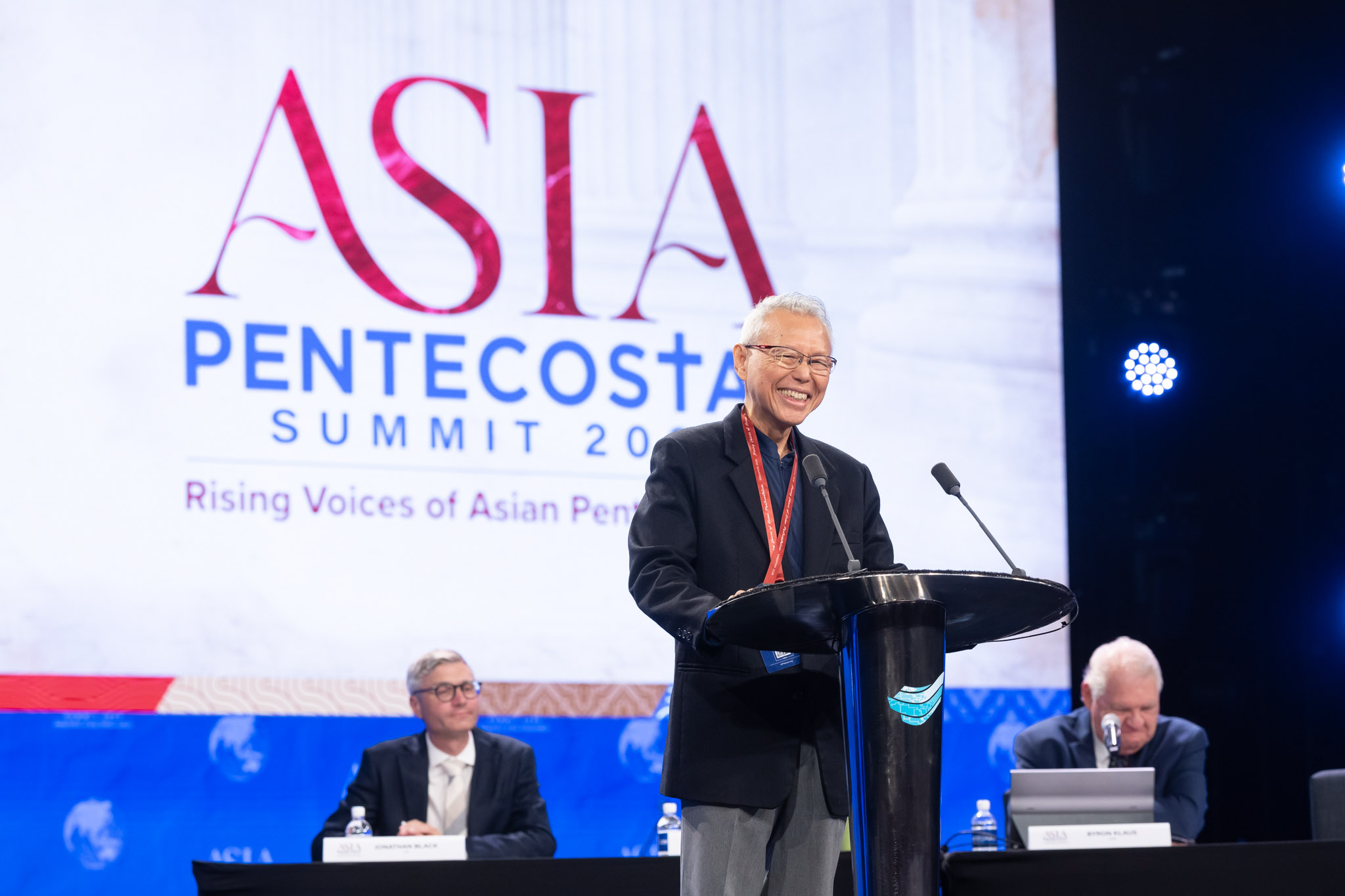
CITY NEWS: Many Christians see Holy Communion as a remembrance of Christ’s death, while others believe it is a means of receiving God’s grace and healing. What do you believe happens when we partake of the Lord’s Supper?
DR SIMON CHAN: First of all, I don’t think the idea of Communion as a memorial is wrong. We do remember Christ. But remembrance in the biblical sense is much more than simply recalling a past event. It is a deeper kind of remembering. Think about how we remember our loved ones or ancestors. At memorial services, we are not merely thinking about them intellectually; in a sense, we are engaging with their memory and honouring their lives. That gives us a glimpse of what happens in the Lord’s Supper. We certainly remember Christ, but it is far more than an act of recollection.
As Jonathan Black puts it so well, Holy Communion is a means by which we encounter Christ. Christ comes to meet us. It is a meal in which we commune not only with one another but also with Christ Himself. The very word “communion” suggests that we are entering into fellowship with the living Christ. I think that is an important dimension of the Lord’s Supper that the Church needs to recover and emphasise.
Many believers have heard testimonies of people experiencing healing through Holy Communion. How should Christians understand the relationship between Communion, faith, and healing?
I would put it this way: we believe that God’s grace is given to us in a particularly focused way through Holy Communion. Of course, God’s grace comes to us in many ways—through the preaching of the Word and through other means—but in Holy Communion we encounter Christ in a unique way. As we spiritually receive His body and blood, we are nourished by Him. This has long been the Church’s traditional understanding, especially within the sacramental traditions.
In the Eucharistic prayer of the Methodist Church, there is a beautiful phrase that says that by receiving Communion, we become one with Christ and one with one another. In other words, Communion restores and deepens relationships. It is this restoration of relationship that also brings healing.
Healing is much more than God simply correcting what is physically wrong in our bodies. It also involves the healing of our minds, emotions, and relationships. We know that many illnesses can have psychosomatic dimensions, so as our relationship with Christ and with one another is restored, we receive a more holistic kind of healing.
The connection between Holy Communion and healing is also borne out by the experience of many believers. We may not always be able to explain it theologically, because God’s work often remains mysterious. Nevertheless, it is a real and recurring testimony that God, in His own way, meets people through Communion and brings healing into their lives.
You caution against treating the Lord’s Supper as a kind of “spiritual technology”. What does that mean, and how can believers avoid turning Communion into a formula for receiving God’s blessings?
This is where understanding Holy Communion as an encounter with Christ becomes so important. After all, we call it “Communion“ because it is about communion—with Christ and with one another.
When we approach the Lord’s Supper in this way, our focus shifts away from asking, “What benefits will I receive, and how do I get them?” Instead, we begin asking, “How can I enter into a deeper relationship with Jesus?” That is a very different way of coming to the Lord’s Table.
It also frees us from what I call a “technological mindset”—the idea that if we can just find the right formula or technique, we can somehow get God to do what we want. In that mindset, we are still the ones in control. But Holy Communion is not a technique for obtaining blessings. It is an invitation to meet Christ, receive His grace, and deepen our fellowship with Him.
Sometimes Christians can become so eager for miracles that they begin relying on certain practices rather than on Christ Himself. How can we distinguish genuine faith from superstition or magical thinking?
One of the primary ways Scripture understands faith is as trust. Faith is trust, and trust can only exist within a personal relationship. We cannot really speak of trust unless we know the other person and that relationship is allowed to grow.
That is why faith can never be separated from relationship with God. By contrast, the technological approach treats faith as though it were a formula or technique for obtaining benefits from God. But that is not faith. It is simply bringing a technological mindset into our relationship with God.
The danger is that we begin to think all we need is the right knowledge, the right method, or the right technique to get the outcome we want. In the process, there is little need to cultivate trust or deepen our relationship with Christ. Ultimately, this mindset does not strengthen faith—it erodes it. Instead of drawing us into deeper communion with God, it reduces Him to someone we think we can manage or manipulate.
Theology ultimately helps us seek clarity. It enables us to understand why we practise certain things in light of Scripture and the broader teaching of the Church. That clarity helps us become more discerning in the way we live and worship.
Without a sound understanding of the truth, it is easy to adopt certain practices simply because someone says, “It works.” But when that happens, we may unknowingly embrace a different theology—what I would call a theology of pragmatism. Pragmatism says that if something produces results or makes us feel good, then it must be right. As a result, our decisions become shaped by outcomes rather than by truth.
I have seen this even among Christians. For example, some may consult a geomancer before renovating a home or planning a building project because they believe it will bring prosperity or good fortune. The question they often fail to ask is whether geomancy itself is compatible with Christian faith and belief.
I once knew a well-known Christian property developer who consulted a geomancer to determine where the main entrance of one of his flagship buildings should be. Why would a Christian do that? Because once pragmatism takes hold, the primary question becomes, “Will this work for me?” If the answer is yes, then the method is rarely questioned.
That is why theology matters. It teaches us to ask not only whether something works, but whether it is true and faithful to Christ. Otherwise, we risk allowing results—not the gospel—to shape our beliefs and practices.
You spoke earlier about how early Pentecostals had a richer understanding of the Holy Communion than we do today. What do you think the modern Pentecostal church has lost, and what can we recover from our spiritual heritage?
As I mentioned in my response paper, I can’t speak for every Pentecostal denomination, but within the Assemblies of God, the earlier ministers held a much more sacramental understanding of the Lord’s Supper. Over time, however, the influence of evangelical theology led many later Pentecostal theologians to move away from that position. I suspect something similar happened in other Pentecostal traditions as well.
The interesting thing is that this sacramental understanding was often never developed into an explicit theology. It was practised almost instinctively rather than as the result of careful theological reflection.
This brings us back to why theology is so important. When we reflect theologically on our practices, we are better able to understand why we do what we do and whether those practices are truly consistent with Scripture. If we discover that they are, theology helps to reinforce and preserve them. But if we never develop a clear theological understanding, even good and biblical practices can gradually be neglected or abandoned. In that sense, theology safeguards and strengthens the Church’s faith and practice.
You emphasised that Holy Communion is fundamentally about communion—our fellowship with Christ and with the body of Christ. Earlier, Dr Black spoke about the situation during the pandemic, when many believers were participating in online services and taking Communion alone at home. I think your response addressed that well. But what about someone who is genuinely isolated—perhaps living in a country where there is no church or Christian community? Should that person still partake of Holy Communion on their own?
First of all, I think it is very rare today for someone to be completely isolated from the Church. A more common situation is believers who are unable to attend church because of illness, age, or physical limitations.
The early Church recognised this and made provision for it. By the second century, deacons where already bringing Holy Communion to those who were housebound. In doing so, the Church extended its pastoral care to them and brought the life of the Christian community into their homes.
I believe we should do the same today. Church leaders should bring Communion to those who are unable to gather with the congregation. In some cases, this may involve celebrating Communion with them. In other cases, the church may bring the consecrated elements from a Communion service and explain, “We celebrated Communion earlier, and now we are extending that celebration to you.” In this way, they remain in fellowship with the Church even though they are unable to be physically present.
This practice also reminds us that pastoral ministry is fundamentally about person-to-person encounter and care.
So can Holy Communion be experienced entirely on one’s own? I would say no. That is really a contradiction in terms. Communion is, by its very nature, about fellowship. You cannot truly have communion by yourself.
Some popular Christian teachers have encouraged believers to receive Holy Communion frequently for healing and breakthrough. What guidance would you offer Christians in evaluating such teachings biblically while remaining open to God’s power?
The first point is that Holy Communion was never intended to be a private practice, as we have already discussed. Beyond that, the issue is not really how often we receive Communion, but why we receive it.
Some teachers encourage believers to take Communion as frequently as possible because they see it almost like medicine—that by receiving the elements repeatedly, they will experience healing or breakthrough. The problem is not the frequency itself, but the underlying motivation.
When we approach Communion primarily as a means of obtaining health or other benefits, we have misunderstood its purpose. We begin to treat the Communion elements as tools or instruments that produce certain results. As Jonathan Black pointed out, this reflects a technological mindset rather than a biblical understanding of Holy Communion.
Holy Communion is first and foremost an encounter with Christ. Healing may indeed be one of God’s gracious gifts through Communion, but it should never become the primary reason we come to the Lord’s Table. Otherwise, we risk reducing Communion to a technique instead of receiving it as an act of fellowship with the living Christ.
Let’s talk about your own personal experience. Have you ever experienced God’s presence, healing, comfort, or renewed faith while receiving communion?
Many times. One experience that stands out happened when I was invited to speak at a conference in Chicago. After leaving the airport, I discovered that my passport had been stolen. I only realised it after I had reached the place where I was staying. It was a Sunday, and I was due to return to Singapore on Tuesday, so naturally I was very concerned.
That morning, I attended an Anglican church with my host. The church celebrated Holy Communion every week, and after Communion they invited anyone with a particular need to go to the side to receive prayer. I went to the side and shared my situation with the prayer intercessor who prayed for me. I immediately contacted the Singapore embassy in Washington. Since it was the weekend, I honestly did not expect anyone to answer. But someone did. After hearing my situation, the officer immediately contacted the Immigration & Checkpoints Authority in Singapore and began making arrangements for me to obtain temporary travel documents.
Providentially, Singapore had an honorary consul in Chicago, who happened to be an American lawyer. Although it was the weekend and he was due to fly overseas the next day, the embassy managed to reach him. He personally prepared the necessary documents before leaving. On Tuesday morning, I went to collect them. The lawyer had already left for his trip, but his secretary handed me the completed documents. She remarked, “You are very fortunate that he was able to do this before he left.” From there, I went straight to the airport and was able to catch my flight home as planned. Everything happened with remarkable timing. Looking back, I could only see God’s hand at work through every step of the process.
On Monday, after I had received confirmation that my travel documents would be ready, I happened to meet the very person who had prayed for me after Communion. It was such a joy to tell her how God had answered that prayer. It became an encouragement not only to me but also to those who had ministered to me. Through that experience, I saw how Holy Communion, prayer, and the fellowship of the Church came together as God worked in a very personal way.
I have also heard similar testimonies from others. A Pentecostal friend of mine once shared how she went through a particularly difficult season while visiting Hong Kong. She needed to make some important decisions regarding medical procedures, and it was an emotionally trying time for her.
That Sunday, she attended church in Hong Kong and received Holy Communion. She told me that, in that moment, the Lord ministered to her in a very personal way. She felt deeply uplifted and experienced a renewed sense of peace and confidence. As she prayed and received Communion, she became convinced that God was guiding her in the decisions she needed to make. That assurance gave her the courage to move forward, and she did so with confidence that the Lord was leading her.
I have had many experiences like these myself. During the years I worshipped in the Anglican Church in England, receiving Holy Communion often became a deeply moving experience. It was not emotional or dramatic. Rather, as I knelt to receive Communion, I became deeply aware of God’s presence.
That is why I have come to cherish Holy Communion—not because I believe it works like magic or automatically produces certain results, but because it is a place where I encounter the living Christ. It is that sense of God’s presence that keeps drawing me back.
It is also why I have grown to appreciate the beauty of liturgical worship. Although, as a non-Catholic, I do not receive Communion in the Catholic Church, I still value attending the liturgy because its reverence and worship create a profound awareness of the holiness and presence of God. Those experiences have only deepened my appreciation of Holy Communion as a precious means of communion with Christ.
