
What does the move of the Holy Spirit looks like in Africa? In this interview, Kwabena Asamoah-Gyadu shares his take.
Dr Kwabena Asamoah-Gyadu is a Ghanaian scholar of African Pentecostalism, known for his writings related to African Pentecostal and Charismatic Christianity. He is President and Baeta-Grau Professor of Contemporary African Christianity and Pentecostalism at Trinity Theological Seminary in Legon, Ghana.
Dr Kwabena presented his paper on “In the Power of the Holy Ghost: Africa and Spirit-empowered Christianity in the Twenty-first Century”. He has also written about digital media and digital religion, which he touches on in the interview.
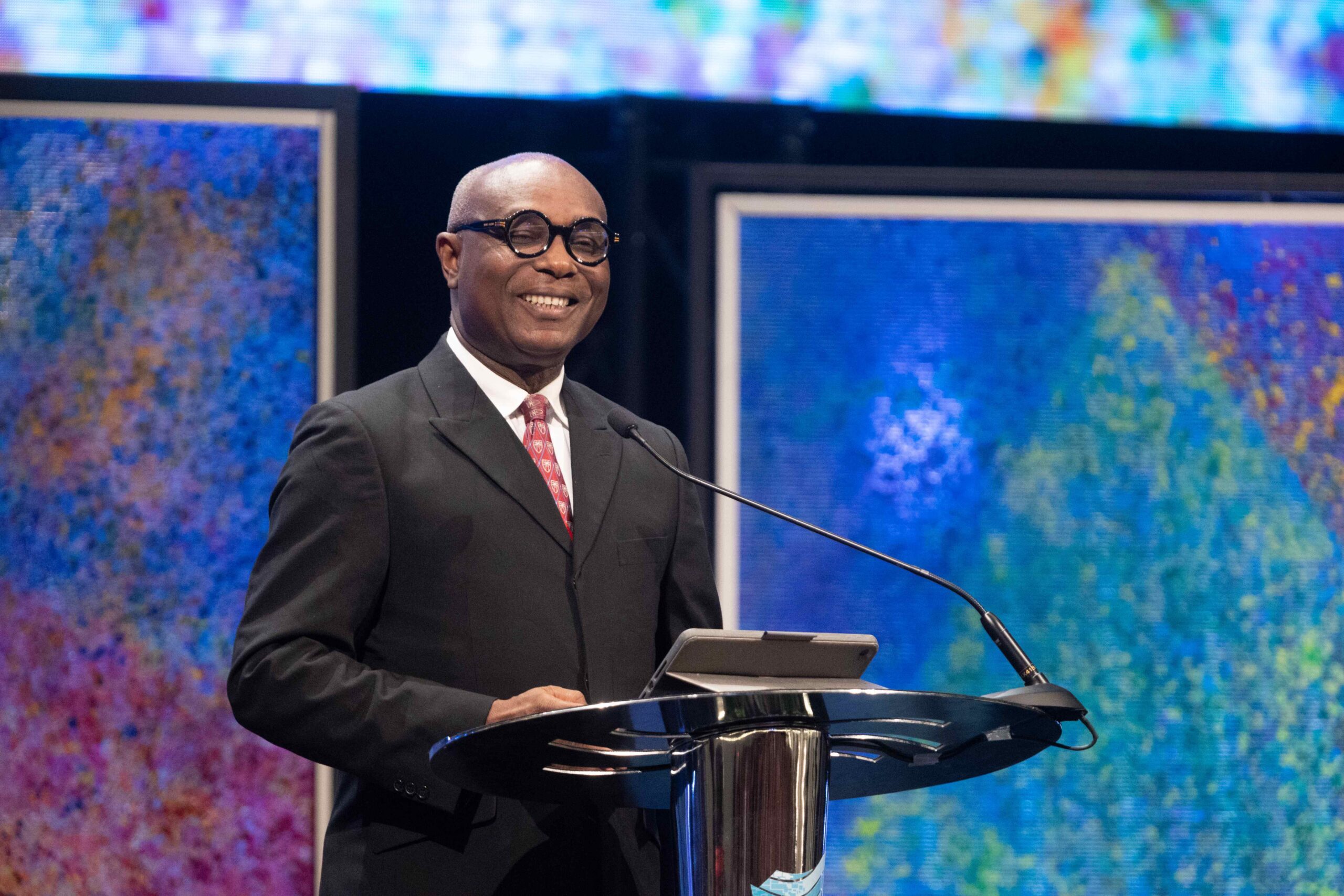
Dr. Kwabena, in your opinion, how will the Global Pentecostal Summit have an impact on the world in the next 20 to 30 years?
When you are dealing with the Holy Spirit, you can’t always predict. So we can’t even talk about 20, 30, 40 or even 50 years. You can only hope and pray that whatever travels on the wings of the Spirit will go wherever.
It is a very innovative approach to a summit that City Harvest Church has put together. In my life, I have not attended an academic conference that is located in the heart of church life. So here we have not made any dichotomy between head knowledge and heart knowledge, or head knowledge and experience.
Yesterday evening was a classic example. I thought your head pastor was giving an academic paper. In the end, one couldn’t tell whether it was an academic paper or a sermon, followed by ministry. It’s something that I would take with me to Ghana. Although I believe very much in what is happening here, in a lot of contexts, we try to create the impression that when we are doing academic presentations, we should separate it from church life. That is what people have been made to believe. But when you are doing scholarship, in a Christian context, it must be accompanied by your faith. We are first and foremost Spirit-empowered Christians, and Spirit-empowered Christians must be able to bridge the gap between academic life and scholarly life.
I think that suppression has been the bane of Christian theology. That’s the reason why a lot of Spirit-empowered people are sceptical about Christian theology because it tends to be so critical of faith, that it almost dismisses faith in God as cosmetic. To put such a conference in the context of church life—beginning with prayer, worship, praying for people, and making presentations—I think is a model that we can’t begin to imagine how far it will go, and what influence we will have on people. I have been impressed by the number of people asking questions and who have come and said, “I’m an MDiv, I’m an MA student in theology” and so on; we are great a generation of theologians who must appreciate the fact that theology has to do with faith, has to serve the interests of the church and be a blessing to people.
During the break, I was having a conversation with somebody, for example, about the kinds of systematic theology books that we have read for centuries. They are good. They tell us in a very systematic way, who God is, how He revealed Himself in Jesus Christ, how the Holy Spirit is a Person, how the church should operate, and so on. But a lot of that theology does not address the sort of things we are seeing here. You would never find any pneumatology in a systematic theology book that tells you what it means to be slain in the Spirit. Those are the kinds of things that I struggle with.
These days, I even question the whole nomenclature called systematic theology. Because if somebody’s theology is systematic, what is the other person’s theology? Chaotic? No! I think theology should be experiential and what we are doing is putting theology into practice. I hope that in the next generation, we will all see theology as something that should be experienced, not just something that should be studied for an academic degree.
I’m not saying this because we’re here. We’ve been impressed with the level of the discourse, you know, that level of discourse is very, very high. So, every now and then, when the speakers are up, I look back to see how people are listening. This systematic exposition on real issues that are normally done in the lecture rooms; that have been brought into a church. I’m going to learn a lot from him.
I’ve told Pastor Kong that if he’s open to it, I’ll bring him to Ghana, to speak to my seminary. I hope that he will be open to that. With some churches in Ghana to have him share his ministry there so that we can also be exposed a bit more to Asian Christians.
You mentioned in your paper that Africa is already experiencing revival even before Azusa Street. Could you elaborate more on that for our readers?
I always hear that Pentecostalism is 100 years old, 120 years old. So anytime somebody says that it means the history of contemporary Pentecostalism is dated from 1906. That is the American story, and we thank God for it. But the American story can never be God’s only story.
There is a book by a South African scholar, Allan Anderson. He taught Pentecostalism in the University of Birmingham for many years and is now retired. He has a book titled To The Ends Of The Earth. There he talks not just about Azusa Street, but also revivals in India that occurred at least 30 to 40 years before Azusa Street.
In my own context, in West Africa, I have mentioned some dynamic indigenous prophets who did great things as healers, as prophetic figures, and so on. Their stories are told, but they are not linked to the broader story of Christianity. They are treated as marginal. What it means is that those who were able to shout the loudest—the Americans—almost hold the story of Pentecostalism in their custody. That’s why I started my story from the day of Pentecost; that the list included people from Africa. Libya is mentioned, Egypt is mentioned, and so on. Luke is careful to say Cyrene, which is the black part of Libya.
So, Pentecost can never be an American story. We celebrate God for what He did through William J Seymour in Azusa Street. There’s no question about that. There’s no question about Azusa Street missionaries going out to preach the Word. The revival went on for a very long time. However, the history of modern Pentecostalism must not be restricted to the Azusa Street Revival. We must recognise what God did through indigenous people in South Africa, in the DR Congo, in those days in Central Africa.
There was a prophet called Simon Kimbangu and, in those days—these were the pre-independent days in Africa—when you have such a large following, you are considered a terrorist. Some of them got jailed. Simon Kimbangu was jailed by the Belgians, and he died in prison. His followers have created a shrine around his remains. The place is called Nkamba New Jerusalem, it’s a place of pilgrimage. They go there to worship and so on. I think even the very definition of Pentecostalism is a problem. That’s why I continue to say we shall watch the “-ism” in what we are doing.
In 1914, there was a prophet who became very, very popular in West Africa. His name was William Wadé Harris. Harris was arrested in Liberia and jailed. It was in prison that he had an angelic visitation. Came out, a very fiery prophet, preached the Word, and many converted to Christ. Especially in Africa and with our traditional deities, people brought their charms and amulets and burnt them. Two of the most powerful traditional priests converted and started an independent church—they were very traditional priests, one a man and the other a woman. They did ministry and all that. Unfortunately, we don’t consider those churches as Pentecostal.
You ask yourself, if you have an African movement or national movement that has the Holy Spirit as its foundation, but also has a bit of the traditional ways of doing things, what is that? The thing about the story I’m telling you is that those who converted were traditional priests. So, when you look at that church, you see elements of that. It’s almost like a syncretic organisation but their main aim, as I said, was biblical. They didn’t call themselves Pentecostal. The name that the public gave them is not a name they chose. The name that the public gave in my language is “sunsum asore”, which means church of the Spirit. Yet, we don’t call them Pentecostal.
Now, what is the vernacular word for Pentecost? We don’t have any. In the translated scriptures, Pentecost is Pentecost. But these churches in Africa call themselves churches of the Spirit. I am not convinced that they were not Pentecostal. We may have problems with some of the things they did but so do we with some of the churches that we call Pentecostal today. We can’t use their negative ways against them. As I said this morning (when he presented his paper), in human hands, anything can go wrong.
The most important thing is that we must recognise that Pentecostalism if you want to call it that way, is a global faith. And historically, we can’t let American Pentecostalism hold history in its custody. We must recognise that God did other things in other places. It may not have come to our attention, but it doesn’t mean that they don’t exist.
Let me say this, in response to the question you asked. When the Holy Spirit movement started, imagine in mainline churches, they called them charismatic. Nobody has been able to tell me the difference between Pentecostalism and charismatic. But in my country, when you come and you say, charismatic, we refer to churches like yours. It doesn’t refer to renewal groups within mainline churches; it refers to contemporary Pentecostal churches. That’s what we call charismatic.
But in the West, a Pentecostal is from the Pentecostal denomination. Charismatic is the one that comes from a mainline church, where there’s a renewal of Catholic charismatic, and so on. Who gave those names? We have allowed Western Pentecostal historiography to define Pentecostalism, which shouldn’t be the case. You know, we thank God for what He has done in the West, but the Western story is not the African story. It’s not the Asian story.
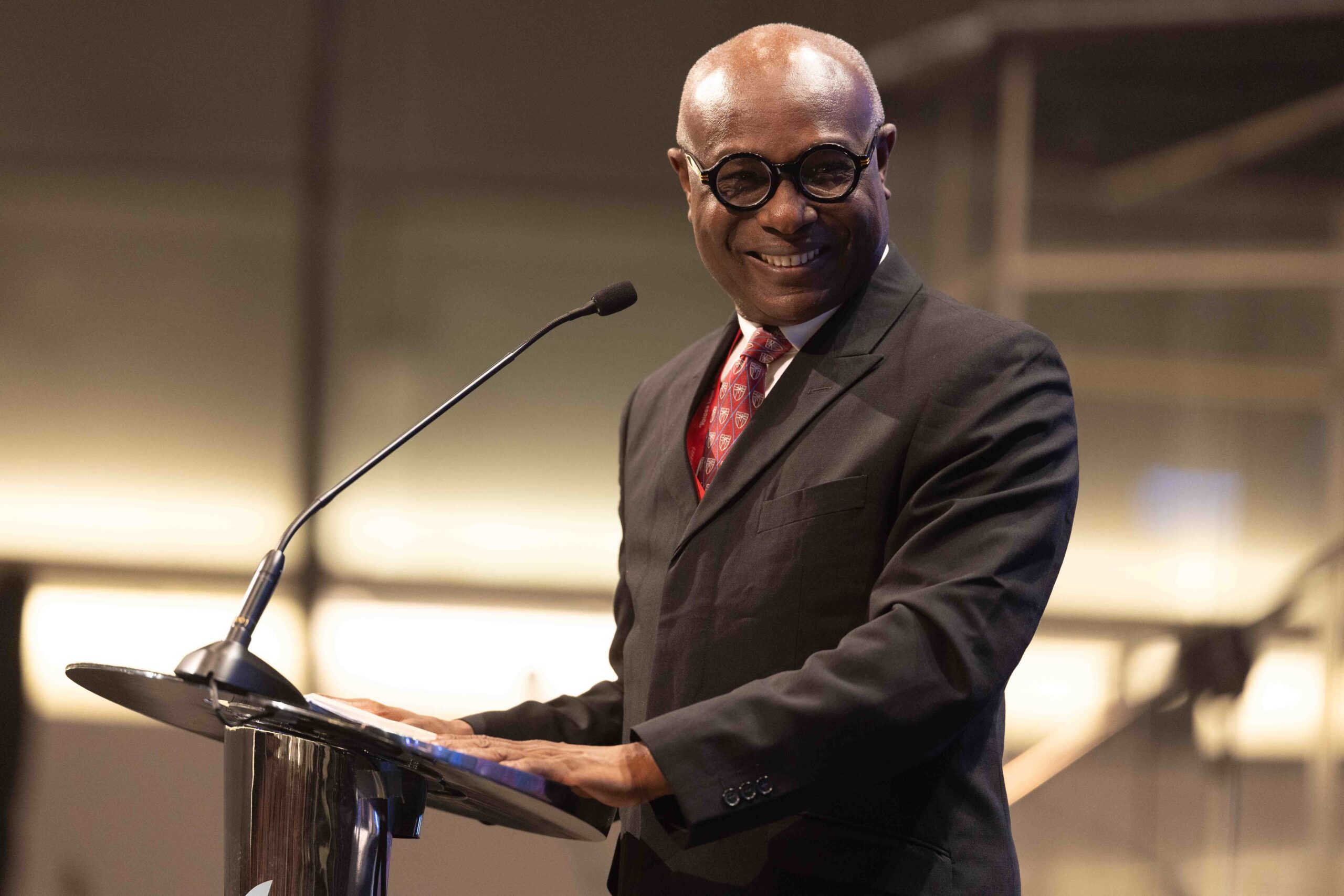
We learned that the Pentecostalism expression of faith resonates with African’s way of spirituality, which is often characterized by intense religious experiences. In your opinion, is there a risk of fanaticism in our Pentecostal practices—how can we temper that?
When the Spirit of God is in action, everything can be extreme. You can’t be an excessive Christian. When the Spirit of God takes over people, one of the first things that you see is, they are passionate. And we can’t describe passionate Christianity as fanatic Christianity.
We can talk about excesses in the way people do things, especially the negative. But sometimes, when people encounter God, they behave as if they are mentally out of control. We saw it, we see it in the prophets of the Old Testament, some people even consider them mad men and women. We see it in Paul on the road to Damascus. I saw it in my day. I have seen well-educated people who were at the height of their careers, they come to Jesus, they experience the Holy Spirit and sometimes people ask what happened. So, I’m wary of putting value judgement on people’s experiences.
Look at the way Paul preached. Look at the way he wrote. There’s no question about the fact that he was a fanatic. In any case, the first Pentecostals were described as drunk with wine. Drunken people don’t stand up straight, they misbehave. So “misbehaviour” in the Spirit cannot be described as fanatic. But I think the Bible tries to give us a certain picture—a picture of a people who were so intoxicated by the Spirit, that what they were doing didn’t make sense. I think we should be careful of allowing people to describe other people’s spirituality in negative terms.
I know a Methodist preacher who is a dear senior friend of mine. Sometimes, when he’s at the pulpit and the Spirit takes over, he loses control. Sometimes, we fear that he might fall down from the pulpit or things like that. We can’t describe that as being fanatical. We express our Christianity in different ways.
But I’ll tell you why some Christian expressions are described as fanaticism is because, in Western culture, you don’t express emotion. So, when they see non-Westerners expressing emotion, it looks odd, and they put a tag on it. But you don’t expect everybody to behave the same way you behave. I think that’s part of the problem. We are working with Western stereotypes. You don’t express emotion, you don’t dance. You don’t clap too much. You don’t jump, you don’t scream, you don’t fall down in public. When a typical Westerner who is not in a Spirit-empowered community sees these things happen, they can use the word fanatic. But we have to look from the point of view of those experiencing it. I think that’s what we have to do. Don’t look at it from your cultural point of view. Look at it from the point of view of the person who is going through the experience.
How do we balance theology and sound doctrine with all these supernatural occurrences and experiences?
The Bible, or Paul’s letters were not written to pagans. It was written to Christians. When Paul calls for orderliness in First Corinthians 14, it means people were getting out of control, so he wrote to admonish them. When Paul says, the Spirit of the prophet is subject to the prophet, because somebody was going out of control, he doesn’t dismiss prophecy. He said to keep everything in order.
That’s what I will say, in human contexts, our fallen nature can get in the way. You can be perfectly gifted as a prophet but when the Spirit of prophecy descends on you, you can decide to add a little bit of your show to it. It happens all the time, especially when everybody in the church knows that you are a prophet. And when you find that prophecy has come and it didn’t come to you, it came through the other person, you’ll be jealous. Sometimes you say “Thus says the Lord” when the Lord has not spoken.
We are all prone to making people believe that we are important. It wasn’t different in the church at Corinth. Paul, not only pointed to the gifts that people had, but he also called for orderliness, because remember that the context of the Corinthian church was a context of division. I belong to Paul, I belong to Apollos and people were using prophecy to fight. That’s why he said, if one person prophesies, especially in tongues, another person should interpret. It doesn’t mean that if God gives me a word in tongues, He cannot ask me to interpret it. God can do that! So, Paul wasn’t laying down a general rule. In the context of Corinth, because of the divisions and the infighting, he wanted to control things and preserve relationships. We can’t make that into a rule that because I have given a prophecy in tongues, and I have interpreted, it is false. It can never be because my context may not be the Corinthian context. We should be careful of making rules for people.
But I think it’s important that we know that God is a God of order. The problem is not with the gifts. The problem is with the human vessels, who are expressing their gifts. But let me say again, that the things written by Paul were written to Christians. When he says that if we cleanse ourselves from what is ignoble, we will become vessels of honour, it is because sometimes we can be gifted, but our gifts can be compromised. Anybody at all can get their footsteps wrong. It doesn’t matter how spiritual you are, there is no super-spiritual person, we are all prone to the same problems, the same temptations, the same greed, the same covetousness, the same social immorality. If you give the devil a foothold, he can take you over. Sometimes it starts very simply.
I remember going to South Korea, Dr Yonggi Cho’s prayer mountain. I went there and I found that all the counselling rooms had glass windows, so when you are there offering counselling, people can see what’s going on inside. They can’t hear you, but they can see you. That’s not meant for privacy; that’s meant for protection. Why should they do that in the church context? For accountability’s sake. Why did Paul say that if one gives a prophecy, another should interpret it? It is for accountability. So that if I have a problem with you, I don’t come and prophesy in tongues and interpret in a way that goes against you. In other words, we should be accountable for our gifts.
So, the problem is not with the experience, it’s not with the gifts. It’s the human vessels that are used to express the gifts. Remember, James and John wanted to call fire down from heaven upon some Samaritans preventing them from doing the work. Even those of us who are pastors, people say things we don’t like, we use the pulpit to fight. If you don’t stand your ground, if you don’t hold firm, you will use the pulpit to settle personal scores, especially when somebody has come to tell you something, that people are gossiping about you; you can very easily choose a text that addresses the issue. So, we are all vulnerable and we should be careful how we use the gifts we have.
So, the problem is not with gifts, the problem is the human vessels. We can always get it wrong.
How do you think African Pentecostalism will influence Christianity soon, especially with the rise of digital media?
Personally, I am very overwhelmed by the ways in which African charismatic leaders have emerged on the world scene. Never in my wildest imagination did I think this would be possible. I’m not just talking about Africa, but also Asia. And we’re growing up.
When we talk about healing ministry, it was Oral Roberts who was preaching the gospel; it was Billy Graham. Today, the biggest churches are not in America, they are in Asia, and Africa. The church in Nigeria is called Redeemed Christian Church of God, when they come together in their monthly revivals and so on, and the leader gives an altar call, you can’t walk from the back to the front—they pick them up in buses to go the front. You have 100,000, 200,000, 500,000 people parked in one location, as far as the eyes can see, led by a simple African leader.
Check out the man on the internet, Enoch Adeboye. Adeboye can preach for one hour; he will not leave the lectern. We all have the notion that a charismatic person runs from place to place but Adeboye stands in one place and yet makes an impact.
The paradigm of Pentecostal Christianity we have come to know is the American paradigm. But now with the media explosion, there are other paradigms, and these people are as strong and as powerful and influential—maybe even more than any American preacher we have come to know. If you go to the major city-states in the US, almost all the churches are African and Asian churches, and they are mega-size. Whereas Western forms of Christianity are declining, even Western forms of Pentecostal churches are losing members. It is now left for Africa and Asia to bring the church to those places.
Sometimes when I travel, some of the whites complain that they are ghettos, ethnic-based. If you see a Singapore church, it’s only for Singaporeans. The question is, are the whites willing to worship these people? I tell them that there’s something called a witness of presence. The fact that they are there is a witness to the fact that the gospel is still alive. It’s not a matter of the people being closed up, it’s just that a lot of Western Christians look on the Christianity of the south and Africa as an aberration, that it’s not the real thing. They cannot say that loudly.
Part of what made Azusa Street important is what Pastor Kong said yesterday (when he presented his paper), that at Azusa Street the colour line was washed away in the Blood—whites, blacks, Latinos, everybody was in the church. That is what made Seymour important. Today, are people willing to worship under black leadership? Probably not. There are some who do, but what I’m saying is that I think people should stop accusing these churches of creating religious ghettos because you just don’t want to worship in these churches.
Some of these churches serve a particular purpose, maybe for purposes of language. Maybe you don’t like the style, maybe you think they are too loud, maybe they shout too much. They are in cultures where everything must be sober, prim and proper. Pentecostals are not limited by time, so if you are used to going to church for 45 minutes, we are there for three hours. Some people don’t like it, but they can’t bring down their time to 45 minutes because of you. The impact is going to come from the way in which Christianity is now travelling to African hands, to other countries.
That said, there’s a Pentecostal denomination in Ghana called the Church of Pentecost. I think when you go from Canada, to the US, they are there in almost every state. The good thing about these churches is that they are not started by pastors. Ordinary African Christians find themselves in the place, come together, worship, and then later, the church in Ghana will send them a pastor.
That is why I talked about the democratizing influence of the Spirit. I think Pastor Kong talked about it yesterday too. The spirit is non-discriminatory. The pastor cannot hold the Spirit in his custody. God gifts as He wills. Anybody at all can be used by God to be a blessing to whatever community—that’s where Africa’s influence will come.
Then, we call attention to what I refer to as the interventionist nature of theology. The issue of praying for God’s intervention in situations of ill-health, breaking the power of poverty, dealing with demonic spirits, and so on. That kind of ministry almost seems lost in the Western context. But we come from a context where we still believe in demonic activity and evil spirits—sometimes it becomes an obsession. But as I said, in human hands, anything can go wrong, so the fact that somebody has gotten it wrong doesn’t mean that the whole thing is wrong. There may be excesses, as we are saying, but if Jesus explained certain situations in terms of supernatural evil, and Africans believe that this is possible. After all, there are testimonies of people who came under demonic influence, who are freed.
There’s a preacher in Ghana who has made a film from his life—he now has a church building that seats 14,000. He started as a drug addict was a womaniser, and did all kinds of things when he met God. And now he has a ministry that takes him around the world. He is one of the people who has a very credible miracle ministry. He has, I think, three children—two sons are also in ministry.
There are stories like that, real-life stories of people whom God has touched. And this gentleman has preached in many countries. In the past, you had preachers coming, from America in particular, to hold crusades in Ghana, in Africa, and so on. Now, you have Africans holding similar crusades. they attract more people to crusades than an American preacher will attract. We see that gradually we have occupied the spaces that the Americans and Europeans occupied. So that’s where the influence will come from, the dynamism of faith, and the reality of the intervention of the Spirit of God in institutions.
You also wrote, “While the tower of Babel created confusion and dispersion of nations, Pentecost announces the possibility of a new unity among people. What would this “new unity” look like in practice? How do we Pentecostals bring such unity between denominations and among nations?
Well, as I said, the Spirit of God is a spirit of inclusivity. I started as a Christian belonging to a Spirit-empowered movement and one of the things I found distressing is the pressure we put on people to speak in tongues. God doesn’t do the same thing the same way all the time, we never give people the chance. If you spoke in tongues, you belonged. If you don’t speak in tongues you don’t belong, and a lot of people felt excluded.
I think that we should broaden our understanding of what it means to be filled with the Spirit of God. If we say, speaking is a gift, then the emphasis should be on the Giver, not on the receiver. And I have no problem with encouraging people to seek the gift. But I think when we give the impression that if we don’t have it, we are less of a Christian, it creates big issues. We have seen gifted people, whether in speaking in tongues or in any area of ministry, who have serious moral pitfalls. We have also seen people who don’t have gifts as we like to understand them, whose Christian life is challenging.
So yes, we must continue to preach that we must be baptised in the Spirit, but we must also be careful not to give those who don’t have it yet, an impression that their Christianity is not complete. What happens then is that the people who don’t have it begin to live with this sense of inferiority to the point where they are always questioning whether they have genuinely believed.
Where the truth lies in the matter, I wouldn’t know. But I think we put undue pressure on people to know who they are not. A lot of people feel frustrated. I don’t know everything. But I have never been in a Pentecostal church where a hundred percent of its members have the gift of speaking in tongues. I always ask myself, those who don’t have it, are they also Pentecostal? I don’t have an answer. In other words, what percentage of a congregation must speak in tongues before the church becomes a Pentecostal church?
I tell my students, that as long as the experience of the Spirit is valued, affirmed and consciously promoted in that community, that is a Pentecostal church. Because in a non-Pentecostal church, they would never consciously promote the Holy Spirit. Whereas in a Pentecostal church, what is important is that the experience is consciously promoted as part of normal Christian expression. If it comes, we give glory to God. If it doesn’t, we don’t force people to speak in tongues or speak fake tongues. So, there’s always a thin balance there because sometimes we use our experience as a standard for everybody. Because you have it, you think that everybody should have it and the people are frustrated.
If there’s anything that is going to keep us together, it’s to recognise the common experience of the Spirit, not necessarily through Spirit baptism, but through actually embracing the presence of God in our personal lives in the context of worship, and so on. There was no doubt that when the Spirit of God is upon you, something happens. There’s no doubt about that. And I think that we should be a little more patient, and not dismissing those who don’t have it. Sometimes we even think that they are sinners, and that’s why God is not giving. I struggle with that.
