
Professor April Westbrook shares how believers can trust God through difficult seasons, build a life of prayer, cultivate Christlike relationships, and discern His calling through every stage of life.
Prof April Westbrook is Professor of Old Testament at Vanguard University in the United States, with more than 25 years of experience teaching Biblical and Old Testament Studies at undergraduate and graduate levels. An ordained minister for over 35 years, she recently spent a week teaching on “Women in Ministry” at City Harvest School of Theology, before preaching at the Young Adults Service and at the church’s weekend services on August 29 and 30.
What stood out during the interview was how warm and personable Prof April was. She readily drew from her own experiences to illustrate her answers, and each response was thoughtful and carefully considered. Her depth of knowledge in her field was evident, but just as striking was her genuine passion for the Bible and for helping others understand it more deeply. During her interview with City News, it quickly became clear that there was still so much more to glean from her, if only time had allowed.
CITY NEWS: What inspired you to choose the Old Testament as your area of academic focus?
PROF APRIL WESTBROOK: I was studying biblical studies, both Old and New Testament, formally and in my own walk with the Lord. I love them both, so it’s not that I love one more than the other. But when it came time for my doctoral studies, I had to choose which one to emphasise. I really prayed and sought the Lord about that because I was studying formally for the purpose of ministry, and I felt the Lord leading me to the Old Testament. I also had good mentors in my studies who encouraged me in that direction.
Over time, I realised there are fewer Pentecostals who study the Old Testament. Pentecostals tend to focus more on the New Testament, so there was a lot of room and opportunity to study the Old Testament from a Pentecostal perspective. As a woman entering a field where there are more men doing biblical studies formally, I think that was wise. I’m glad the Lord led me in that direction because it has opened doors and opportunities for me.
I believe the Lord calls people of all kinds—men, women, people from different cultural backgrounds, young and old—because we all bring different perspectives. That means we are going to ask different questions when we read the Bible. If we can all be doing that together, how rich could it be to have all of those perspectives?
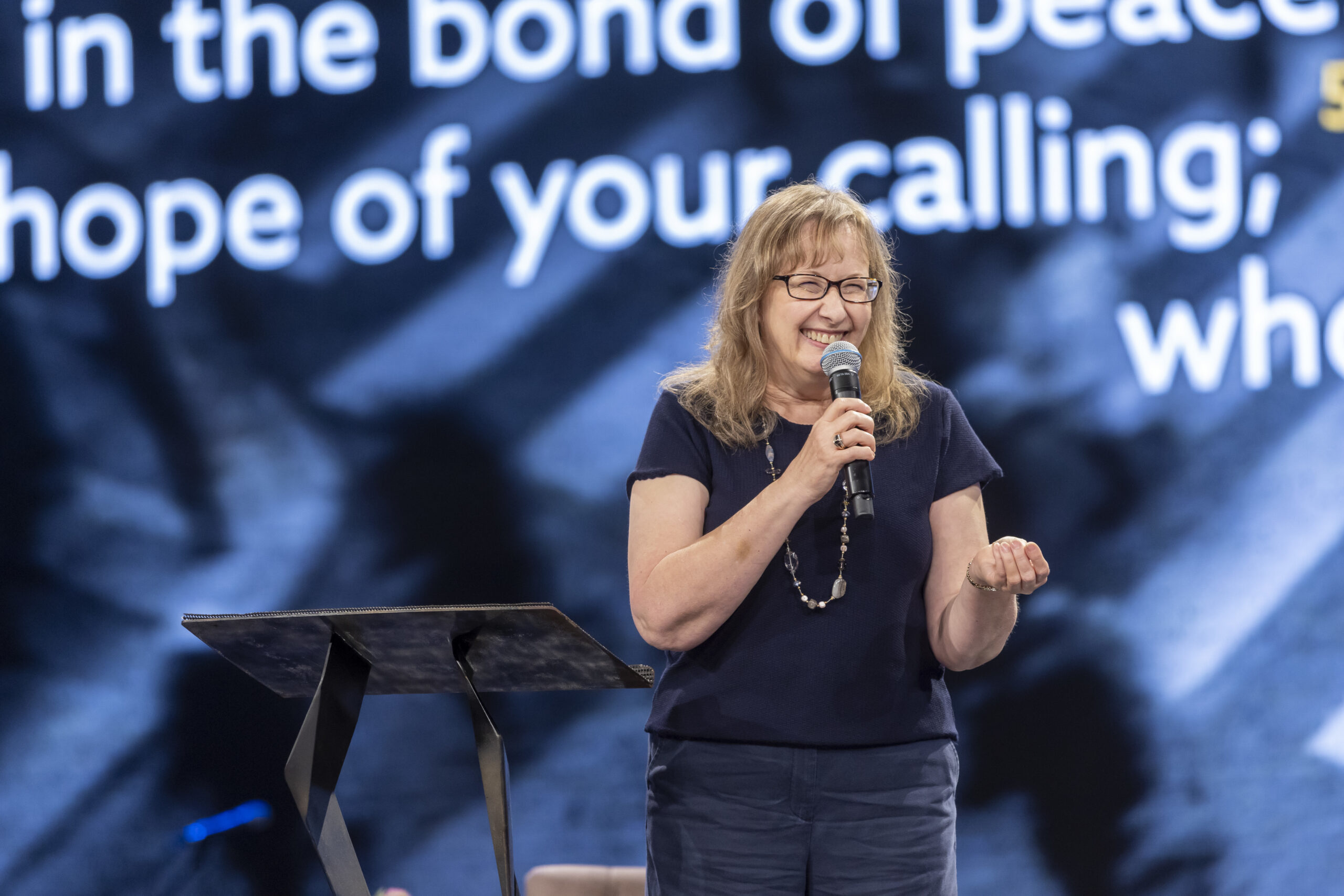
Prof April Westbrook preaching in Young Adult Service
At our Saturday service, you shared from Matthew 11:29 about Jesus inviting us to take His yoke upon us. When we are carrying heavy burdens—such as a cancer diagnosis, a failing marriage, or the loss of a job—how can we learn to trust that God is still with us and sharing that burden as we return to the realities of everyday life?
That really does get at the heart of the promise. My mind goes immediately to Psalm 23. In my studies, I came to understand that the central idea there is that the Lord is with us. The Lord never, never, never leaves us. That psalm tells us that we are going to go through dark valleys. We are going to have experiences that are challenging in this life. Knowing the Lord does not mean that will not happen, and having more faith does not mean that will not happen. In fact, going through those valleys can become an opportunity for us to learn the most about the faithfulness of the Lord, because He does not leave us. He is with us.
And what is the conclusion of the psalm? When I go through the hard things, the dark times, the losses, and the things that are fearsome in this broken world, I will not fear evil. It does not say I will not encounter evil. It says I will not fear it. And the reason is because I know the Shepherd who cares for me is with me. So no matter what I am facing, I am not facing it alone. There is great comfort in that. The Lord will either deliver us out of these things, or He will faithfully see us through them. Either way, we come out on the other side because of His faithfulness.
These seasons can also become opportunities for us to grow in our own faithfulness. Will I continue to walk with the Lord even when life is not going the way I want it to go? Have I only wanted to know the Lord for what I think I can get out of it—for my life to become better? That would be missing something.
We know the Lord because He is our hope, because He is our Shepherd, and because He wants good for us. The New Testament tells us that, ultimately, because He is with us, He is able to work all things toward good. That does not mean everything we encounter is good in itself, or that we will never face difficult things. But because we are in partnership with Him, because we are in the yoke with Him, we are together. He is with us.
It is one thing to know these truths in our heads, but another to trust them in our hearts when we are actually walking through loss, illness, or disappointment. Have there been seasons in your own life where you had to learn this personally?
It is, and I can say that from personal experience. I have lost loved ones who were very dear to me, and I have been at their deathbeds, holding their hands as they left this life. That is hard. It is painful. I have also experienced significant illness in my own life and trusted the Lord for healing. There have been times when the Lord has healed me, and there have been other times when it has simply been a walk of daily grace—leaning into Him and trusting that He will give me what I need for today, to walk through the illness or difficulty and still see His kingdom come and be part of His redemptive purpose.
From those experiences, I have learned things about who God is that I do not think I could have known any other way. There is something about the faithfulness of God in daily grace that can only really be known by walking with Him through difficult times.
I think we see something of this in Job. God never actually told Job why he went through all that suffering. But Job came through it knowing God in a way he had not known Him before. That was ultimately where he arrived. So yes, sometimes it takes the hard things for us to know God more deeply. But even in those things, He makes a hopeful outcome possible.
You’ll be speaking about egalitarian perspectives on marriage at our Sunday service. How do you understand an egalitarian marriage, and what does a truly Christlike marriage look like in practice?
I think an egalitarian marriage, first of all, is an outflow of an overall egalitarian way of life. We are not called to be egalitarian only in marriage. We are called to live that way in community and in our relationships with one another as men and women. Marriage is simply a particular expression of that.
As human beings, we were created to be mutually interdependent and to share the same human dignity. So whenever we begin saying that a certain kind of person has more authority or power over another simply because of who they are, I think we are entering questionable territory in light of who God created us to be and who He is redeeming us to become. Redemption is about restoring us to the wholeness God intended from the beginning.
So what does a healthy Christian marriage look like? It looks like a husband and wife following Jesus. How does Jesus live? How does He treat others? The same principles that govern how Christians are to treat one another also apply in marriage. We consider the other before ourselves. We love one another with the kind of love described in 1 Corinthians 13. Attraction and passion are wonderful, but Christian marriage calls us to love as Scripture defines love—with patience, kindness, goodness, and a willingness to put the other person before ourselves. And that is mutual. The husband does that toward the wife, and the wife does that toward the husband. That is where we arrive at mutual love and mutual submission.
I know some people say, “That cannot be right. Only one person can submit. If everyone is submitting, it will be chaos.” My response is: then would we also say that we cannot love one another because it would become chaotic if everyone loved one another? The two are very similar. Loving another person means putting them before yourself. Submitting to another person also means putting them before yourself.
So if this is what the Lord is calling us to in wholeness, I do not think it is going to lead to chaos. I think we feel that way because of our brokenness and fallenness, which create this urgency to have power over one another. That is why it has to be a work of the Spirit—a healing and redemptive work of the Spirit in us. As we walk in the Spirit, keep in step with the Spirit, and live in the fruit of the Spirit, the first of which is love, we begin to see different outcomes.
Galatians 5 shows us what happens when we live according to the flesh: envy, strife, jealousy, and all the kinds of things we also see in unhealthy marriages. So if we want to have a healthy marriage, we simply bring into marriage everything it means to walk in the Spirit and to follow Christ.
I also think we need to read Scripture without first bringing in assumptions such as, “Men must have power over women.” That reflects the brokenness of the world that needs redemption. Human beings trying to exercise power over one another—that is chaos.
The Lord is calling us instead toward healing and wholeness, which leads to peace. And that can only strengthen a marriage.
Marriage is also one of the places where we are most real and honest with another person. In that sense, family life can become a kind of laboratory where we learn what it means to treat others as we ourselves would want to be treated.
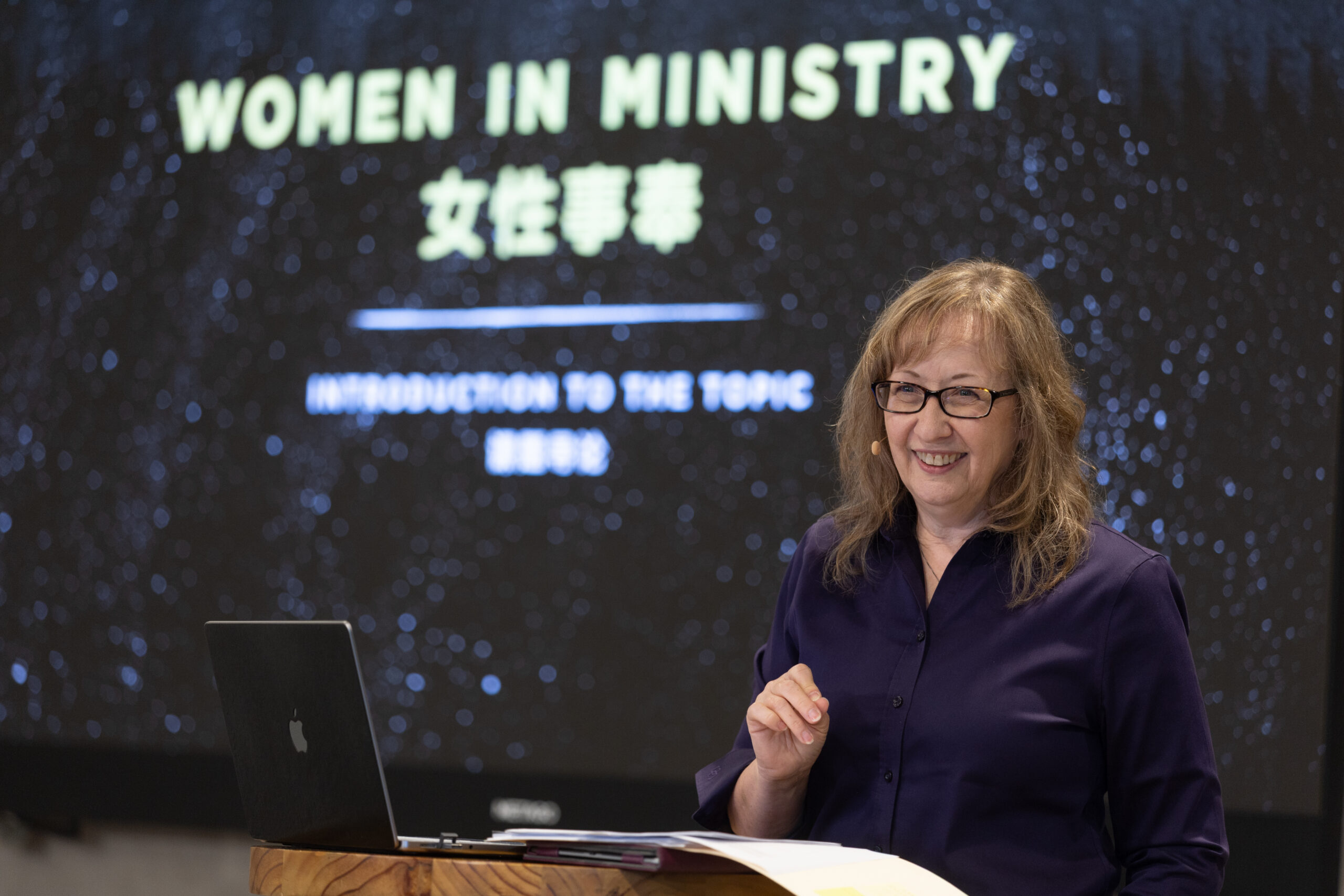
Prof April Westbrook teaching in School of Theology
Prayer and intercession are among your areas of expertise. For believers who struggle to pray consistently or deeply, how can we grow in our love for prayer?
I think there are several things we can do. First, it is about mindset. When I go to pray, I ask myself, “Do I really believe that God is listening to me right now?” A lot of times, we approach prayer in a more legalistic way. It can become, “Did I read my Bible today? Did I pray today?” We are just checking boxes. That can become a dead prayer life because there is no realness or life in it.
So I have to get my heart and mind into the right place. I remind myself, “I am about to engage in a conversation with the God who created the world, and He is listening to me. He wants to be with me. He wants to encounter me.” When I get into that mindset, it changes the way I approach prayer.
I also do not want to go into prayer only with a list of things I want God to do. I want to begin by listening. Is there something the Lord wants to speak to me? Would the Holy Spirit give me direction for how to pray today? He is Lord, not me. I may have things I think I want done, but I must first hear from the Lord and give space for that, because prayer is a real conversation.
A lot of people may feel, “I try to pray, but I don’t know what to pray for, and it feels like work.” They pray for five minutes and then look at the clock. I think we need a better sense of how desperately the world around us needs the redemption of the Lord, because that is what the Lord is about. If I want to pray according to the will of God, then praying for the redemption of the world is a good place to start, because I already know from His Word that He wants that.
So when people say, “I don’t know what to pray for,” I say, read the newspapers. Look at your neighbourhood. Look at the people living around you. Be aware of the needs around you. We are called to intercede for the world. It is not just about me and my needs. Be led by the Spirit in how you pray. Pay attention. Where is the brokenness around you? We should be praying over that, not just doing things. We should be doing and praying.
When you begin to do that and pay attention to what the Lord is doing, it brings life to your prayer because now you are really partnering with the dynamic work of the Lord in the world. And that is exciting. Suddenly, you may find yourself praying and realise an hour has gone by, because your focus is in the right place and you are trying to yield to the Spirit and stay in step with the Spirit.
The gifts of the Spirit are also designed for the prayer closet. Words of knowledge and words of wisdom can help us know how to pray. Discernment of spirits, praying in tongues, and interpretation of tongues can all be part of that. Sometimes, as we pray in tongues, the Lord gives us understanding of what we are praying. There can be a dynamic life of the gifts of the Spirit in prayer and intercession.
As Pentecostals, we should be all into that. Those gifts are not just for when we gather in corporate worship. They are for everyday life, Monday through Sunday. So be aware of what the Holy Spirit is doing. Ask, “What is He calling me to, and what is my part in this?” Prayer is always going to be a part of that.
Do you have a typical rhythm or pattern for prayer—for example, setting aside a certain amount of time each day?
For myself, I had to stop setting a fixed amount of time for prayer. Some people find that helpful, so I’m not saying a person shouldn’t do that. But I grew up in church with a good amount of legalism, and as I’ve matured in the faith, I’ve had to be intentional about counteracting a legalistic mindset. You can be doing all the right things, but they are no longer life-giving because you are doing them for the wrong reasons.
There have been seasons when I set specific times to pray in order to build the habit. Even now, I try to begin my day with prayer. When I first wake up, still in bed, I try to set my mind on the Lord: “Lord, I’m giving You this day. Let Your kingdom come today. Please guide me and direct me in how You would have me live. Help me not to miss anything You are leading me in.” But rather than asking at the end of the day, “How long did I pray today?” I try to ask, “How much of my day was I aware of the leading of the Spirit? Where were the moments when I was not praying?”
What I am trying to develop is a lifestyle of prayer. If I’m walking down the road and encounter someone who needs prayer, I want to be listening to the Spirit and responsive to His leading. Sometimes that means going over to someone, laying hands on them, and asking, “May I pray for you?” Other times, they may not even know I am praying for them. I might simply pray as I walk. I also walk through my neighbourhood praying for the people who live there, especially those who do not yet know the Lord. Those ordinary moments can become opportunities to be mindful of how the Holy Spirit may be leading us into prayer.
Even in major or minor decisions, I want my first response to be prayer. My goal is to make “pray without ceasing,” as Paul says, a lifestyle.
And inevitably, there will also be times when the Lord leads me to physically go into a prayer closet—to step away into a quiet, separate place and spend significant time interceding. When that happens, I want to go with an awareness that the Lord has called me there and with a sense of what He is asking me to pray for.
For young people who want to cultivate this kind of lifestyle of prayer, what is one practical first step they can take?
The best way to acquire wisdom is to learn the principle, begin to practise it, and then consistently evaluate how you applied it. That is the discipline part. For example, I know I should be praying and focusing on listening to the voice of the Spirit. That is the principle.
So I might pick a day—say, Tuesday—and live my normal Tuesday life, but be very intentional about applying that principle throughout the day. At the end of the day, I look back and evaluate: How did I apply this wisdom? We develop wisdom through practice and evaluation.
Most people I know—and I have had this experience myself—may forget by 10 o’clock in the morning. Sometimes I do not even remember to evaluate until Friday, and then I think, “Oh my goodness, I did not follow through for the whole day. I did not even evaluate it.” But rather than becoming discouraged, the next question is, “What did I learn from that experience?” I look back at Tuesday and ask, “What distracted me from my goal? Why did I lose sight of it by 10 o’clock? What decisions did I make that day? And what brought it back to my attention on Friday?” Probably the Holy Spirit.
By looking back and evaluating, I learn from the experience. Then I can say, “Okay, I’m going to try again.” I take what I learned from not doing as well as I wanted and apply it the next time. You just keep doing that. It is not fast. It is a lifestyle. It is a lifetime of acquiring wisdom, and I think this method can be applied to any area of wisdom.
At the Young Adults Service on Friday, you spoke about God’s calling on our lives. Some of us grew up thinking that our calling is definite and will remain the same throughout our lives. Can our calling change or take different forms as we move through different seasons of life?
Oh yes, I believe so, because our calling is ultimately up to the Lord. He may have more than one thing for us to do across our lifetime. I find that life is quite seasonal, so the important thing is to live fully in the season we are in.
I do not want to keep looking back at previous seasons, except to learn from them. Neither do I want to project too far into the future and try to live a future season now. I need to be fully engaged, fully yielded to the Spirit, and fully listening for the call of God in this season.
The Lord may call us to different things from one season to another, and I find that what He calls us to, He also equips us to do. There are some things that are simply part of who God created us to be—our personality traits, abilities, and talents. Those may remain fairly constant, though they can be developed and used in different ways.
There are also gifts and empowerments of the Spirit that may be given for a particular season. So if the Lord calls us into a certain ministry, He equips and empowers us for it. And if He calls us into something different ten years later, He will equip us for that too.
So how do we navigate this? By walking in the Spirit on a daily basis. If I am intentional about listening to the Spirit and walking with Him today, and I keep doing that every day, then I will remain in step with Him through every season of my life. I will be where I am supposed to be in 20 years without having to know right now exactly what that will look like.
It is not wrong to have goals, and hopefully those goals come from the Lord. But sometimes I find that the goals I make are simply my own. So I have to hold them with open hands because the Lord may redirect me.
We are not called to sit around and do nothing. We all have purpose, and that is part of our human dignity. We should live fully into that purpose, but we must also remember that we have a Lord. Sometimes we say “yes” to the Lord in a general sense, but then think, “My career choice is mine to make. Who I marry is mine to decide.” I think we need to listen to the Lord in those major life decisions, as well as in the smaller ones.
Seasonal shifts are often some of the most challenging moments in life. That is why we need to learn discernment and practise hearing the Lord in the smaller things, so that when the bigger decisions come, we have already learned how to recognise His leading and respond with confidence.
