
In this interview, theologian Frank D Macchia shares his thoughts on Spirit Christology and the election.
Those who have been attending City Harvest Church over the past two years would likely recognise the name Frank Macchia, even if they are not part of the scholarly world of theology. Quoted multiple times by the church’s senior pastor, Kong Hee, Prof Macchia is known as his “doctoral father” and one with a brilliant Pentecostal theological mind.
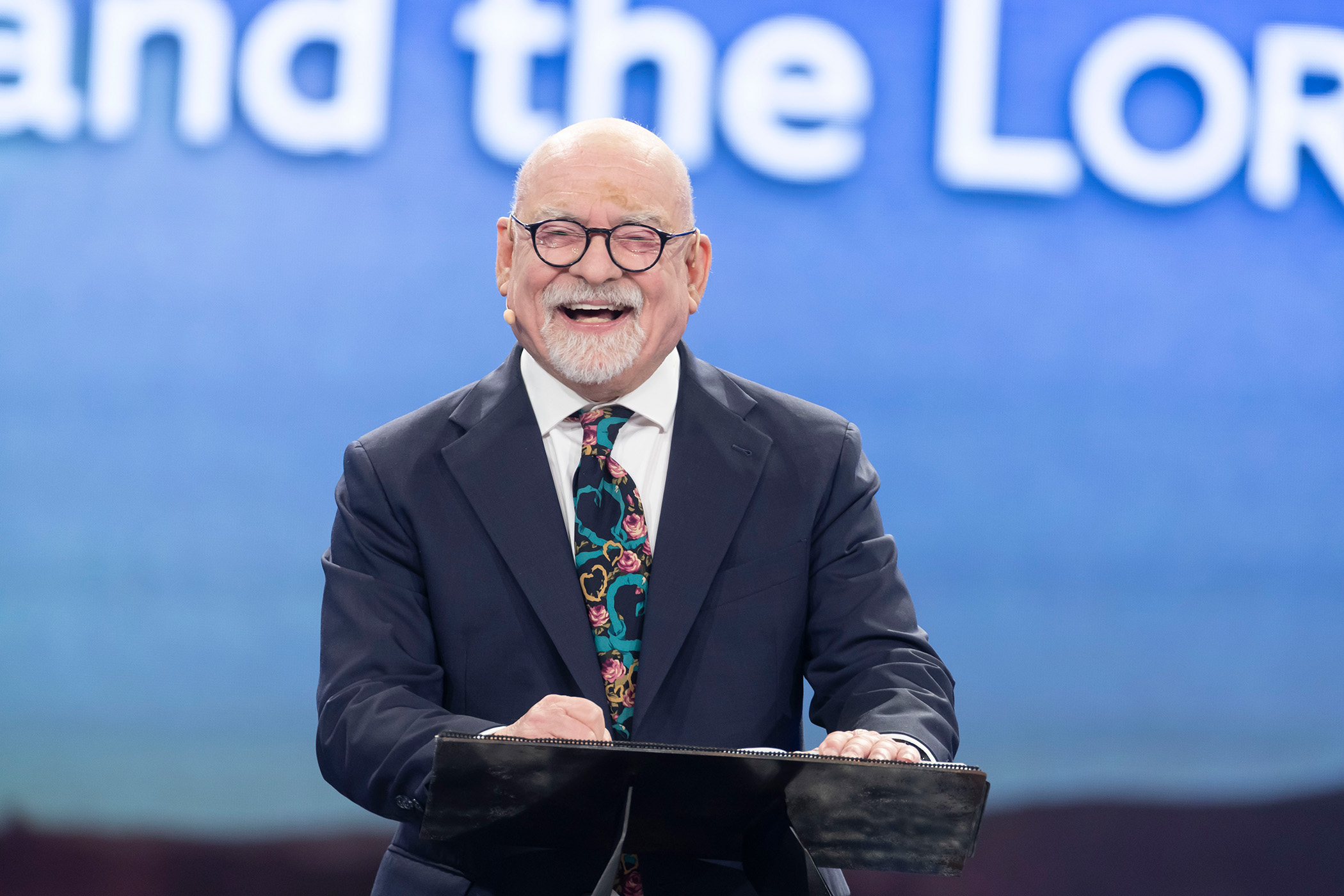 A professor of Christian Theology at Vanguard University in California, Prof Macchia was also formerly the president of the Society for Pentecostal Studies, serving for over a decade as the senior editor of its Pneuma: The Journal for the Society of Pentecostal studies. He has also authored numerous books, especially in areas of the Holy Spirit and has made great contributions to Pentecostal theology, particularly in ecumenical theology. More importantly, Prof Macchia has a heart that is well aware of God and His beautiful love. Listening to him speak about how God loves humanity makes one fall in love with God all over again.
Prof Macchia was in CHC in November to present two papers, “Appointed Messiah and Lord: Towards a Pentecostal Spirit Christology” and “Elections: A Pentecostal Reflection” at the Asian Pentecostal Summit. City News had the honour of chatting with him on his journey to writing the two papers.
CITY NEWS: In the first paper, “Appointed Messiah and Lord: Towards a Pentecostal Spirit Christology, you sought to develop an outline of Spirit Christology. For our readers who may not have attended APS, can you explain the significance of understanding Christology from this angle?
PROF FRANK MACCHIA: I think there are two ways in which I add a refreshingly new perspective–not completely new, but nevertheless, a refreshing point of emphasis.
One is that the spirit is not often brought in to understand the mission of Christ. Usually, you might get some mention of the fact that He was conceived in the Spirit in Mary’s womb and anointed by the Spirit at the Jordan, but that’s about it. However, I want to push that emphasis more strongly and make the argument that the Spirit accompanies Jesus and is active in Jesus’ self-giving throughout His life, not only at His conception in the womb or His anointing at the Jordan River. Throughout His entire life, the Spirit was leading Him, the Spirit was empowering Him. The Spirit was deepening His sense of his own Sonship. Then the Spirit leads Him to the Cross, to His self-giving, and then empowers His self-giving. And in His conquering of sin and death, the Spirit is involved in His rising from the dead and His exaltation to the throne. The spirit is active throughout.
The main reason is that He is flesh and all flesh needs the Spirit in terms of being sanctified, empowered, and glorified. No flesh can experience any of these things without the Spirit. Jesus, in taking on flesh, becomes dependent on the Spirit. So I really emphasised that in the paper.
The second thing is that His exaltation is the ultimate experience of the Spirit–that’s where he experiences the Spirit in its fullness. From that fullness, he pours forth the Spirit upon all flesh, which grants His mission its eschatological reach and significance. He becomes our Elder Brother and the head of His body, which He always wanted to be. His messianic mission doesn’t find its fulfilment until He reaches that point, until He pours forth the Spirit in order for Him to become our Lord and Elder Brother. That’s the culmination of His mission. He doesn’t want to be Son of God without us, only with us, and that’s what he becomes in pouring out the Spirit.
How were you drawn to this topic?
I wanted to write on Christology–that was my dream for many years. And so I thought, Well, how could I do this in a distinctly Pentecostal way? Well, Pentecostals are about Pentecost, right? (laughs) I started thinking about that. What if I write a Christology that culminates at Pentecost? What would that look like? And then, I did a lot of reading and thinking about it, and then it just started coming together in my mind.
Why do you think it’s important for the Asian Pentecostals?
That’s an interesting question, because on the one hand, I want to learn from Asians about why this is important to you. What value do you get from this? I want to learn about that.
Now, if you ask me, I really think that when I think of Asian contextual theology, I think of an inherently intercultural theology, intercontextual theology. Because when you’re a small country, you have to think beyond your borders, right? For example, in America, many Americans think America is the world, but Asians who come from small countries don’t think that way. They’re much more globally conscious. And so, I would expect Asian theological students to like the fact that my Christology take the multi-contextual Christ seriously. Because Christ, who pours out the Spirit, opens His life to a variety of contexts, and that makes the multi-contextual reception of Christ an important feature of the Christological Arc. It’s not lived out because we’re not cutting it off at the resurrection. Pentecost is also “the many tongues”, “the ends of the earth”, the many contexts and cultures that Christ opens His life to by pouring out the Spirit. When you include that, yeah, then that opens up that whole domain.
Your reflection on the reflections on elections is very touching. It showed a God who has never given up on mankind, and his plan was never to reject, but for mankind to return to him. Again, why was it important for you to present this at APS?
I like the way you put it, that God bears with us, does not give up on us, and continues to reach out to us. I do think that the God of election is the God of mercy, not damnation. He is the God who takes damnation upon Himself to rise up and open for us a door to glory. One thing I learned from Karl Barth (an influential Protestant theologian of the 20th century) is that the question of election is fundamentally the question about God.
Who is the God of election? Who is this God who elects and who elects Himself to take on flesh and to open His life to us in this way? Because that’s what an election is: God the Father taking His elect Son, joining his elect Son to flesh, so that all may be elect in Him.
This is what Barth taught me: the fundamental question of election is, who is this God who defines Himself in this way? Who doesn’t want to be God without us, and determines, chooses, and elects Himself to be the elect Son in flesh, who opens up His favour to us.
Barth said that John Calvin (an influential Reformation-era theologian) got it wrong by envisioning the God of election as the source of both damnation and grace. Who is this God? What does He stand for? Both damnation and grace, darkness and light? If so, then how can we trust Him? And where do we stand in this dualism of darkness and light? How do I know I’m not on the side of darkness? That is a terrifying thought. There’s no security anymore.
However, Barth said that in the New Testament, the God of election is the God of mercy and light, not damnation and darkness. A God who self-elects to take damnation on Himself in order to elect humanity into glory. If this is the God of election, everything changes. Now I have a secure hope and a secure foundation on which to stand. And so Barth said that the key question of the election is, Who is this God? When I read Barth’s Church Dogmatics, Volume 2: The Doctrine of God, Part 2, where he dealt with this issue, I thought he really nailed it. It is much more in line with the Pentecostal Christological centre and the Pentecostal missional impulse. He described the God who is self-giving, the God who elects Himself for humanity, so that we may in Him be elect. This was much more in line with the gospel as I learned it as a Pentecostal and Evangelical.
Now, I like other aspects of Calvin’s theology. I read his Institutes of the Christian Religion when I was a doctoral student, and I like a lot of what I read in it. However, on the topic of election, which he covers in his third book, I thought, “Oh no, this is bad.” (laughs)
Sadly, that’s how the world often sees God—not as a God of mercy, but a God of damnation.
There are some stunningly clear statements in Scripture, like Ezekiel 33:11, where God says, I take no pleasure in the death of the wicked. That is a very clear statement. God takes no pleasure in damnation. I take no pleasure in the death of the wicked; I will only show mercy. And if that is true–and it is true–then God cannot elect eternal damnation and still be the God of the gospel.
In your paper, you mentioned that “Israel as a nation transgressed by handing their Messiah over to the Romans to be crucified. But God always planned to use this transgression to bring salvation to the Gentiles and reveal the divine glory on the earth! In other words, God planned to use Israel’s disobedience to fulfil Israel’s mission to bring salvation to the Gentiles!” This is fascinating because we know that disobedience is always bad. How do we reconcile God using a “bad thing” to fulfil his mission? How do we then apply this in our lives right now?
Very true, and this is Paul’s stunning argument. Paul makes the argument in Romans 9 to 11 that there’s nothing humanity can do to prevent God from fulfilling His redemptive plan. The reason why we can’t stop it is that He will use even our disobedience to fulfil it (laughs). We can’t win. We can do whatever we want, but God has a plan. He will win no matter what.
The irony is that many Israelites in the ancient world felt that Israel would fulfil its calling through obedience, but Paul makes the argument that they fulfil their calling through disobedience (laughs). The reason is clear: human history in general, not just Israel, but humans in general, has a history of disobedience. “For all have sinned and fallen short of the glory of God” (Rom 3:23), all of us in our religious strivings have failed, and this is why only the Messiah can push through God’s elect plan. He alone does it. Now, of course, He brings us along, but He’s the one who fulfils it. This is the point that Paul wants to make. In the midst of Gentile failure, in the midst of Jewish failure, the Messiah fulfils the mission and opens the door for all sinners, Jew and Gentile, to benefit through repentance.
You see this when Pharaoh tried to hand Israel over to the Red Sea to be drowned, but God raised Israel from the water to declare His glory on the earth. Now, Israel tries to hand its Messiah over to the Romans to be crucified, and God raises him from Sheol to show His glory on the earth. In both cases, neither of them succeeds in aborting the divine elect plan, because the Messiah is the one who carries the weight to fulfil the mission. First God, at the Exodus, where the Son of God is only implicitly involved, and then at the Cross and resurrection, where the Son of God in the flesh is visibly involved. We see that all have sinned, all are disobeying, but God pushes through the mission, and He will show His glory on the earth through His Messiah. It is a very different take, and it’s Paul’s take. This is what gives us a secure foundation for the election.
We are all sinners. None of us deserves His grace. We have all, in some way, been enemies of the plan. Thank God we haven’t been allowed to destroy it, and thank God he is still willing to save us by grace.
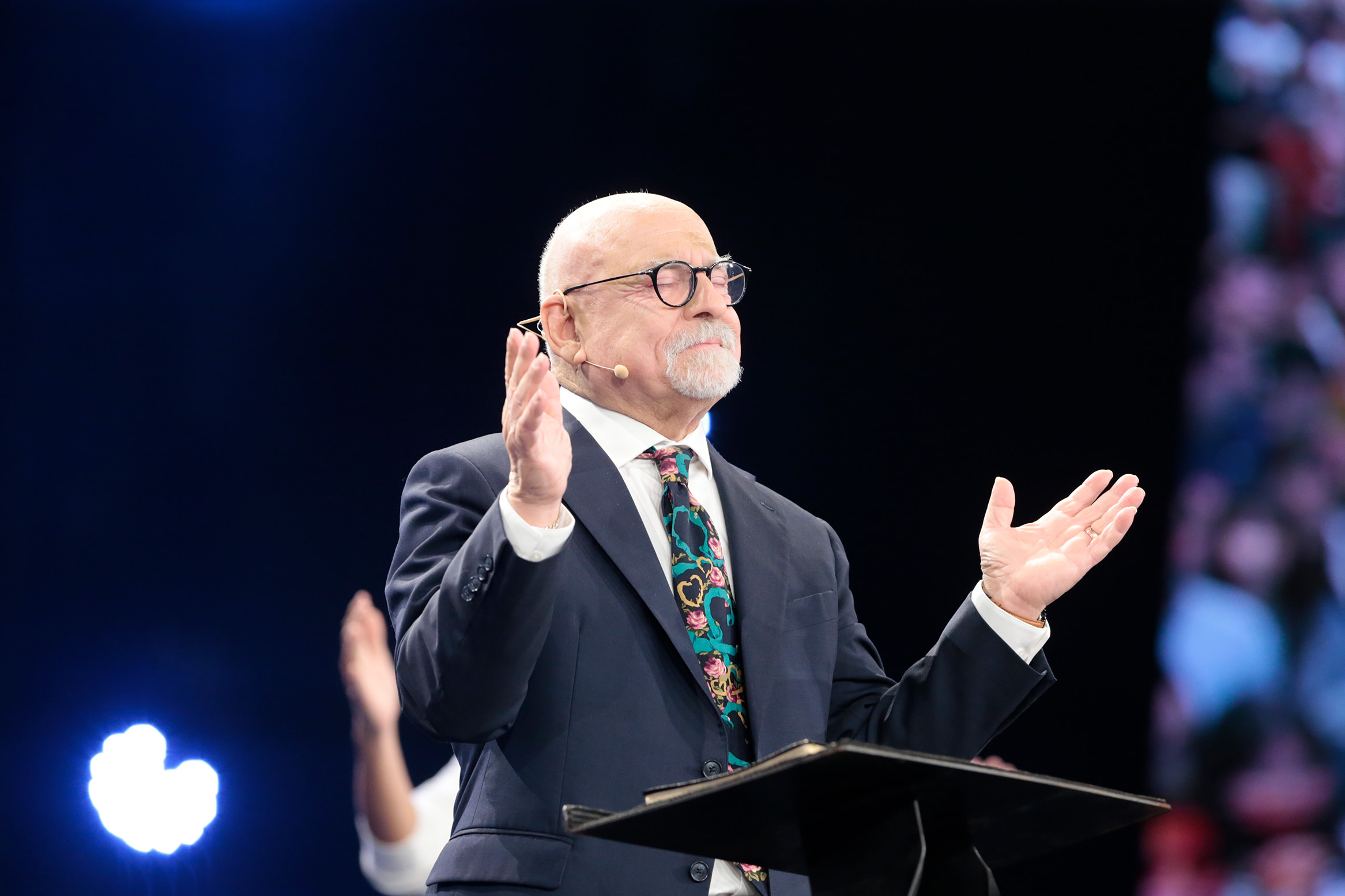 In your paper, you wrote that “our election is not based on God’s foreknowledge of our faith. It is based entirely on the grace of God.” Have you ever seen such grace at work in your life or the lives of people you know? How was it manifested?
Amen. I live from it all the time, grace upon grace. I look back over my life, and I realise that everything I am and every good thing that I’ve experienced is a gift, and I love what Dietrich Bonhoeffer said, “Even in the natural realm, I realise that I’ve received so much more than I have ever given or could give.” That’s just even in the natural realm. Once you add in the supernatural, then you just realise that I’m not worthy, and yet God is so gracious, His love so unconditional.
Is there a message you were trying to bring across to the church in these two papers you have written?
That’s an interesting question. What ties these two papers together, and what am I trying to proclaim here to the church? I think if there’s a thread that connects both papers, it’s precisely in this idea that God only wants to be God with us and not without us. In both papers, I highlighted that it was Christ who was not satisfied with just being the Christ for His own sake, but who died for us, rose again and then poured out His goodness through the Holy Spirit, to connect Himself to us, to be the Head of His body and be our Elder Brother. He doesn’t want to be the Son without His brothers and sisters. That’s the Spirit Christology–it’s always for our sake.
It’s the same for the election. God elects Himself for humanity, to open up His divine favour to us, because, again, He doesn’t want to be God without us. If there’s one theme tying both papers together, it would be that, and that is what I want to say to the church. God doesn’t need us to be God, but he doesn’t want to be God without us.
With this new understanding, how should we then live our lives?
First of all, in gratitude. Gratitude should be the first thing we think of when we get up in the morning, and the last thing we think of when we lie down at night when you realise how much God has given, the high cost He has paid to be God for us and with us all the way to the end, giving us real hope where we would otherwise have none. I think when you realise who God really is, gratitude should be a way of life. Gratitude should grace our lives and make our lives more beautiful than it is because gratitude is a beautiful thing, and those who live from it live beautiful lives.
I would say that if I could just point to one thing, a takeaway, it would be to learn to live in gratitude.
