
When you meet Drs Wonsuk and Julie Ma, you are immediately struck by the playful ease and affection between them. Dr Wonsuk exudes quiet wisdom and calm, and it’s clear how deeply he dotes on his wife—his eyes light up when she speaks. He later shares how she is someone who inspires him, and how he admires her deeply.
Together, they embody a harmony of intellect and heart.
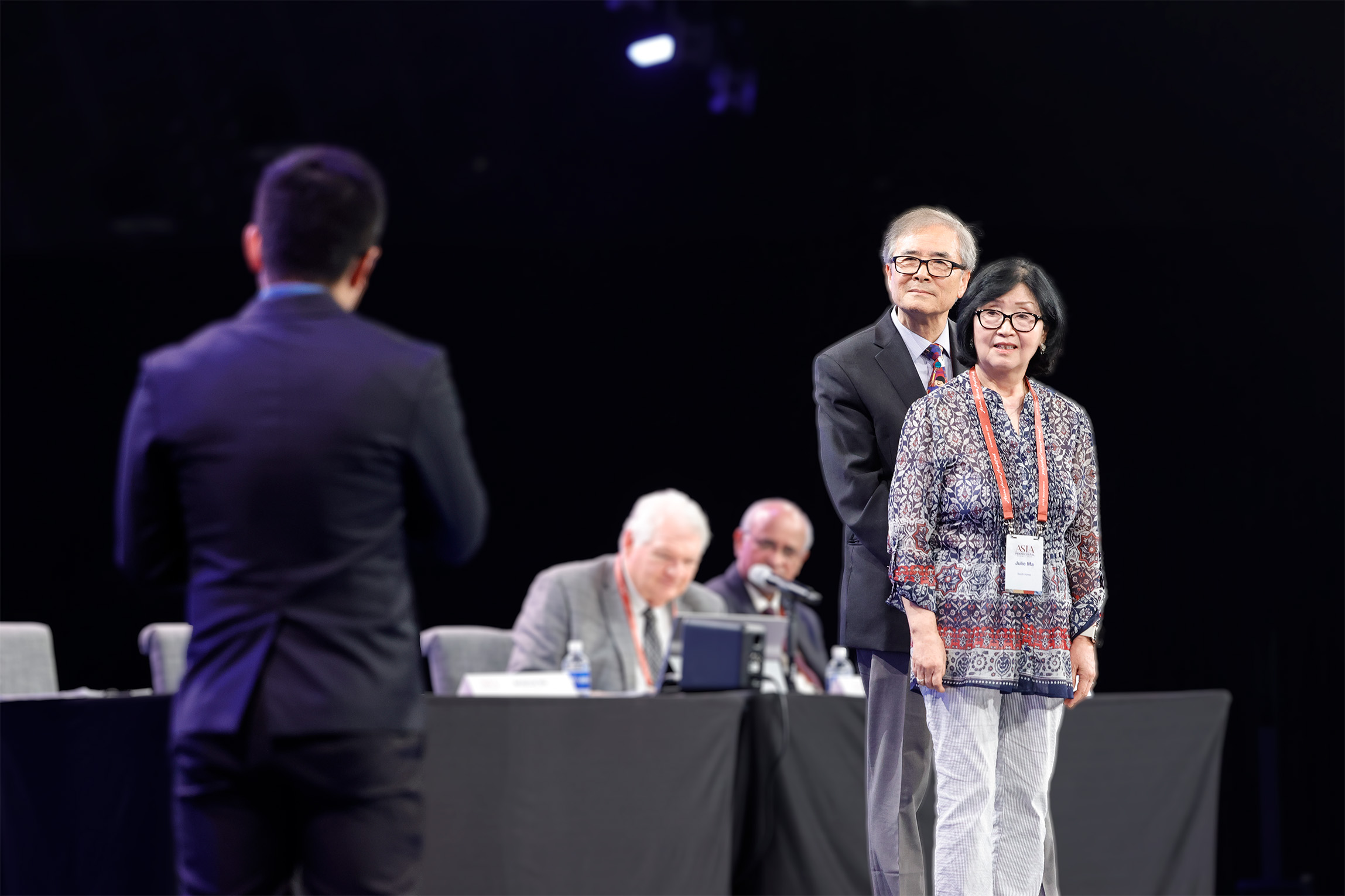 Dr Wonsuk is a distinguished scholar in global Christianity and Old Testament theology, who currently serves as professor and PhD programme director at Oral Roberts University. His work in contextual theology and Pentecostal mission has shaped theological discourse across Asia and beyond.
Dr Julie, also a professor at ORU, brings her passion for intercultural studies and missions to life through her research on Pentecostal spirituality and women in ministry. Her decades-long missionary work in the Philippines and her award-winning scholarship have made her a respected voice in global mission studies.
CITY NEWS: Your paper highlights Spirit baptism as foundational to Pentecostal identity and witness. In City Harvest Church, where the majority is baptised in the Spirit, how do we ensure that this leads to ongoing discipleship rather than a one-time event?
DR WONSUK MA: I have to begin from the Old Testament, because the Holy Spirit didn’t just appear in Acts 2. It was the Spirit of God who created us and made us special—set apart and close to God. In Orthodox theology, we call this theosis—God’s desire for us to bear His image and share His Spirit. So, the Spirit baptism we read about in Acts 2, and experience in our Christian lives today, is really the recovery of that original gift—that precious endowment from God.
We must not view Spirit baptism merely as a utilitarian “extra power” for ministry. It is much deeper than that. The Spirit renews us into the likeness of Christ, restoring the image of God that was marred by sin. Through Jesus Christ, we are brought back into relationship with the Father, so that the Spirit of Christ lives in us. He becomes our first brother, and together with Him, we are restored to call God “Abba, Father.”
When we understand this, Spirit baptism becomes a joyful walk with God—journeying with Jesus through the presence and power of the Holy Spirit. This joy of the Spirit, I believe, is what Adam and Eve once experienced as they walked with God in the cool of the day, knowing His heart and delight.
For this reason, faithful discipleship must also include a life of worship, community, and solidarity. Practices like liturgy and small groups are essential because they help us walk together and nurture this joy of the Spirit. Ultimately, this desire for communion and growth is not just ours—it is the desire of the Father, the Son, and the Holy Spirit.
DR JULIE MA: I will add that personal growth in the Lord is very important. Experiencing God’s power is not only about receiving the Spirit’s gifts, but about walking daily with the Holy Spirit and with Jesus Christ. In many ways, the Spirit strengthens and empowers us in our everyday lives—not just for ministry, but for our personal journey of faith. It is a continual process of growing, learning to trust God more deeply, and discovering that He is always at work within us. That’s what discipleship really is—a lifelong journey of trusting and growing in Him.
What does Spirit-empowered engagement look like in a multi-religious society like Singapore—where Pentecostals must both bear witness to Christ and live peacefully with neighbours of other faiths?
WM: Before we talk about what Spirit-empowered engagement looks like in practical terms, it is important to remember that the Holy Spirit—the author of life—was already present here even before missionaries arrived. The Spirit of God, as Creator, has always been at work in the world, giving life to all people. That includes those of other faiths.
We often forget that even before we said “yes” to Jesus, the Holy Spirit was already working in our hearts, convicting us, drawing us closer to God. In the same way, we must believe that the Spirit is also at work among people of other religions, encouraging, guiding and preparing them in ways we may not see.
So, when we reach out and engage with our friends of other friends—whether through friendship, generosity, compassion, or simple fellowship, we do so with deep respect, recognising that the Holy Spirit is at work in that person and that community. So, we bear witness to the gospel through our words, deeds, and lives. The messenger becomes the message.
JM: I believe in the universal work of the Holy Spirit—not only within the church or among believers, but also outside the church. That has been true in my own experience, even before I came to know Christ. It was the Holy Spirit who led me to church. No one pushed me or invited me; I simply walked into a church on my own after hearing the testimony of a woman who said she had travelled to heaven. From that experience, I truly believe that the Spirit of God is at work everywhere.
Some church members might say, “There are already so many needs within our own congregation—why focus our energy and resources on helping the poor outside the church?” How can we respond to that concern in a way that encourages compassion and helps them see that outreach can still be part of their calling in spite of challenges?
JM: How can the church really know what kind of problems each member is facing unless they share them? Members need to express their struggles—whether in marriage, with their children, or other personal issues—by approaching their church leaders or counselors and asking for prayer. They shouldn’t feel shy or hesitant to do so.
It’s very important that members take the initiative to reach out, because the church is the family of God. In a family, we share our burdens, we encourage one another, and we pray for each other. That’s how the body of Christ is meant to function—through openness, care, and mutual support.
WM: I would also add that reaching out with the good news—through compassion and love—reflects exactly what Jesus did for us and for our community. Jesus didn’t have to come, yet He left His glory and emptied Himself. Someone once described it beautifully: from that far country—Heaven—Jesus came to us.
Missions is a natural expression of the grace we have received. Because we have been touched by His love, we now share in His messianic calling: “As the Father has sent Me, I am sending you.” What we do in mission is an expression of the kingdom that already lives within us.
Of course, there will always be needs that remain unmet. Even in the early church, we read that the Greek-speaking widows complained because their needs were overlooked. But if we are already part of the Kingdom of God, then we are all called to participate in God’s mission—even in our own struggles. We don’t have to wait until we are fully whole or satisfied before reaching out. That’s exactly what Jesus would do, and that’s exactly what the kingdom is calling us to do.
We need to be sensitive to the needs of our immediate neighbors and our brothers and sisters, there is no doubt about that, but we also need to help them see the bigger kingdom picture. Even as we pray for others’ healing while still waiting for our own, we are fulfilling exactly what God calls us to do—to love, to serve, and to participate in His redemptive work together.
Many young believers in Asia are passionate but also skeptical of institutional religion. How can we remain authentic and Spirit-filled while speaking to a generation that’s shaped by digital culture, activism, and questions?
JM: Before we can offer spiritual guidance, we must first understand who young people are—their nature, their culture, and their uniqueness—so that we can truly relate to them. It’s not enough to simply teach them to say “Amen” or “Hallelujah.” They might respond outwardly, but that doesn’t mean they grasp the spiritual meaning behind those words.
We need to open ourselves to them through genuine fellowship and relationship—even in something as simple as having coffee together. That kind of connection helps them to gradually open their hearts. Only then can we begin to share more deeply about spiritual matters and the work of the Spirit.
For me, this is a process of first knowing who they are, and building relationship. Many young people keep their distance from traditional or older Christians because they see a gap—they think we are set in our ways. So we must show them that we’re not so different; that in our hearts, we are like them. Building real, authentic relationships is essential, because that’s where the Spirit begins His work.
WM: Institutionalisation is every generation’s challenge. When the church becomes too institutionalised—too routine and structured—the next generation often sees it as archive and irrelevant. So, the church must be sensitive and aware. When a church becomes overly institutionalised and loses its relevance to the new generation, new forms of church expression will emerge in response.
Keeping the church relevant to younger generation involves both internal and external aspects. Externally, it could be expressed through liturgy or worship style. Even in traditional settings, there are ways to engage the youth meaningfully. For example, in Oxford, there’s a beautiful, charismatic Anglican Church that has reimagined liturgy in a way that speaks to the younger generation. Liturgy is lived out—they allow young people to write their own prayers, which then becomes next week’s liturgy.
Churches shouldn’t get caught up in the constant chase for the newest sound or the biggest screen. Those things don’t satisfy spiritual hunger. What young people truly long for is authenticity—a faith that is real, lived, and grounded in the Spirit. That, I believe, is the real game, and what people are looking for. I’m so grateful for how this church, after 30 years, is still consciously making it relevant to the next generation.
How would you encourage or advise a couple who feels led by God to move their family overseas to serve in missions—especially in a less developed or more challenging environment?
JM: It has to begin with their relationship with God. They need to be sure that this calling is clearly from Him. If both husband and wife share the same clear calling and are determined to serve—fully aware of the challenges and still willing to go—then let them go.
Such a decision requires prayer and discernment. We shouldn’t respond too quickly, or say bluntly, “No, you should not go because you have young children.” Instead, we can advise them to think carefully by asking, “Is this truly from God or from your own desire?” They should consider practical matters too—like their children’s education, the living conditions, and other difficulties that might come with serving in a less developed environment.
They might also consider postponing—perhaps until their children are older or more independent. Ultimately, though, the decision belongs to them. Each person must hear from God and follow His leading personally.
WM: I can picture, let’s say, a family with two children still in school, who sense a strong missionary calling. In such a case, I would advise them to try going on a short-term mission trip as a family. While there, prayerfully assess the cost and practical realities, the education options, and lifestyle adjustments required. Experience together what life and ministry would be like in that environment on a long-term basis. Then, as a family, take time to reflect and discuss together: What are the things we must sacrifice? What challenges are we willing to face?
Ideally, this should be a family decision, made together in unity. Even the children should understand what is involved, because they too are part of the calling. It would be wonderful if the children could sense the Lord’s leading alongside their parents. After that, perhaps the family could set aside a period of time—say a year—to pray, prepare, and discern together whether this is indeed what God is asking them to do.
Tell us how you became a missionary to the Philippines?
WM: It was, in a way, a tricky situation—God knew I wouldn’t easily listen to Him, so He tricked me! I think that’s often how God works. When He calls us, He doesn’t always show the whole picture at once.
I first arrived in the Philippines without Julie and our son. The circumstances didn’t allow me to begin my master’s studies in theology as I had planned, but very quickly, I began to see opportunities to minister. At that time, I didn’t call myself a missionary. In fact, when someone referred to me as one, I would say, “No, no, I’m not.” Yet I found myself involved in missionary work—serving in prison ministry and running an international church.
Back then, my understanding of what it meant to be a missionary was shaped by the traditional, institutional model—quite different from what the Scriptures actually teach. So my journey into missions was gradual. I didn’t realize I had become a missionary until it happened.
When Julie joined me a couple of years later, she noticed that I was a different man. She too had to go through her own process of transformation—her own conversion into mission—until eventually, she herself became a missiologist.
If you could relive one moment from your years on the mission field, what would it be — and why does it still move you today?
WM: Once, we were walking along the Spanish Trail in the northern Philippines—a place known for the presence of guerrillas. I was walking with some local brothers, and after about seven hours, I pointed to a village in the distance and asked my friend Michael, “Is that village big?”
He replied, “Yes, that’s where our children go to school.” Then I said, almost casually, “Michael, don’t you think we need a church there?” Those words became God’s word to him. Michael began praying about it, visiting the village, and eventually, a church was planted there.
I didn’t do much—I simply said it. I didn’t even think those words were coming from the Lord, but obviously, they were. So that was a moment.
JM: There are many moments that come to mind, but one was when we made to the mountains. We usually hike for seven to ten hours as there are no roads for cars.
We were walking along a narrow trail when we saw a group of men in camouflage carrying guns. We thought they were soldiers, so we greeted them politely and walked on. But then they started following us. That’s when I began to feel uneasy—I found it strange that soldiers would be in that area. Suddenly, I realised they were NPA guerrillas—members of the New People’s Army. My heart began to tremble. I prayed silently, “Lord, please protect us.” They had guns; they could do anything to us. And we had young children who followed us from the villages, as well as mission team members. I was afraid and kept praying to God.
We stopped to rest for a moment, and the guerrillas came and sat down beside us. Then, to my surprise, Wonsuk stretched out his hand and said cheerfully, “Hi! I’m missionary Wonsuk Ma. How are you? Where do you stay?” Their eyes widened. One of them said, “Your name is Wonsuk Ma? We’ve heard of you!”
It turns out that they often went from house to house in the mountains looking for food, since they had no means to survive. Some villagers would mention our name—the Mas—and speak of our work among the villagers. Their countenance changed and they were all smiles now. They said, “We’ve heard of your good work. People say you are very kind.”
Wonsuk even asked if they wanted to take a photo with him, but they declined, not wanting to be recognised. After a while, they said goodbye and went on their way. We were left sitting there, so deeply relieved and grateful for God’s protection.
You’ve ministered together for many years. How do you keep your marriage strong and joyful while working side by side in ministry?
JM: I’m very thankful to God because He has always helped us keep our marriage strong. The longer we live together, the more I love him. He is a treasure to me.
We don’t know how many more years we’ll have together—we’re not that young anymore! Even if we live another 20 years, that’s really not very long compared to the lifetime we’ve already shared. Of course, we’ll be together again in heaven, but while we are still here on earth, I want to make the most of every moment.
So my attitude is simple: to love him more and to care for him as much as I can. That’s how I keep our marriage joyful—by cherishing the time God has given us and continuing to grow in love each day. So that has been my attitude toward my spouse.
WM: From the beginning, I’ve always felt that Julie is uniquely precious in God’s sight, (JM interjects: I feel the same!) and when God brought her into my life, I reminded myself that she is going to enrich and perfect my life, just as I hoped to do for hers.
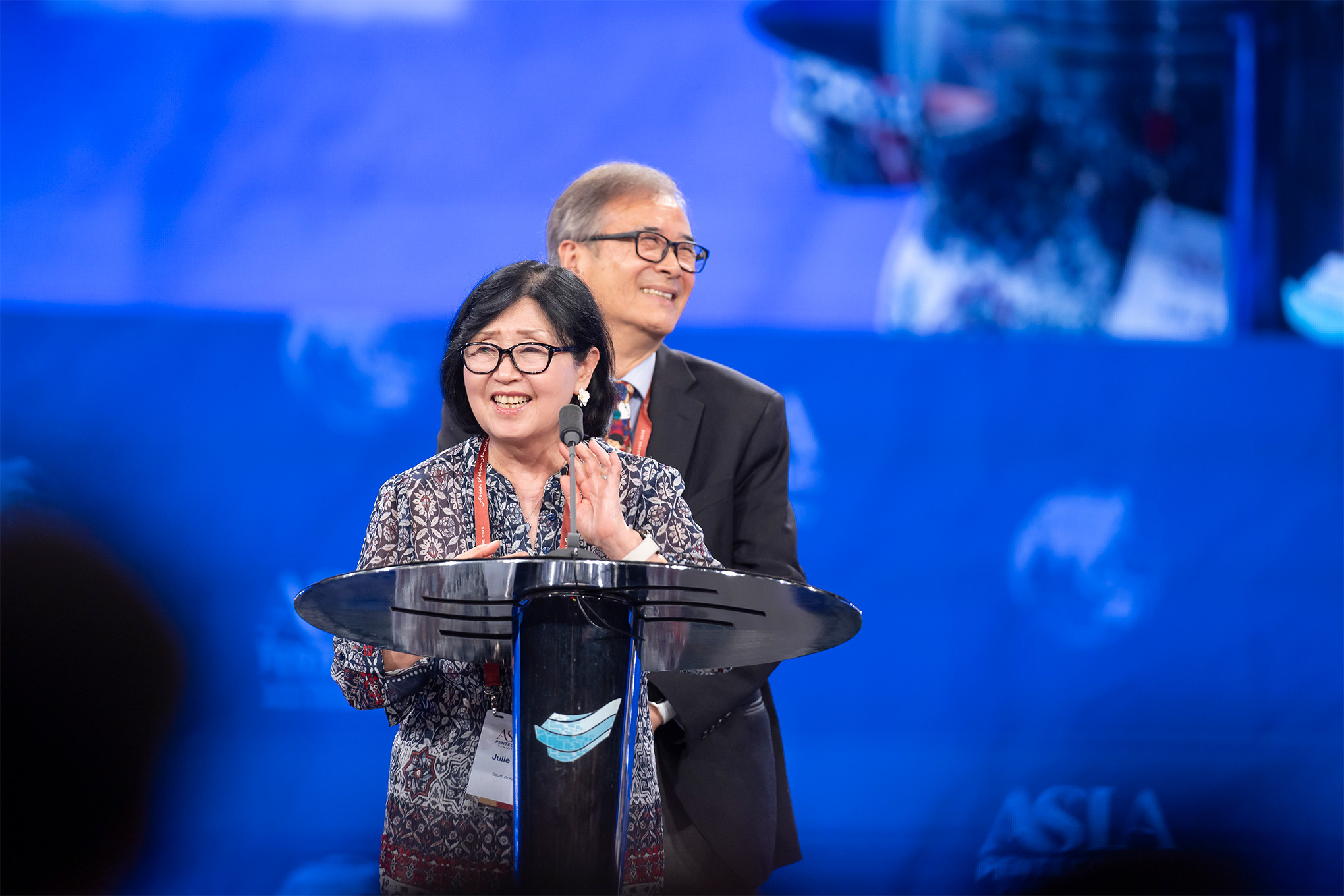 Over the years, I’ve seen how she has brought such marvellous gifts into my life. For example, she never gives up praying for something until she sees God’s answer. That persistent prayer is a certain and beautiful gift. I’ve discovered so many qualities in her that I treasure deeply—things that continually strengthen both our ministry and our marriage.
Of course, there were times when it is a challenge to work so closely—especially in being her boss. I don’t like that! I want her to be fully herself—to be Julie Ma—and for me to find my place alongside her. She has always been gracious in that balance, discerning God’s call and following it faithfully. I know that I fit into that call perfectly, and for that, we praise the Lord.
I think one thing I did right was telling her, “Julie, you have your own call. Be serious about your studies and your ministry.” I’m glad she did.
I tend to focus on the positive and interpret any challenge through the lens of gratitude. Experience also shows us that once we overcome a difficulty, God always leads us to a new level of grace.
JM: Of course, we don’t always agree on everything. But over the years, I’ve learned how to bend my will. When we have an argument, I ask myself, “What’s the benefit of arguing like this?” Then I choose to stay quiet. After some time, the tension fades, and everything becomes okay again. (WM interjects with a smile: Until I say I’m sorry.)
