
Professor Roger Heuser is Professor Emeritus in the School of Theology and Ministry at Vanguard University, where he has served since 1983. He has also served in roles such as Dean of the Graduate School, Director of the Graduate Programme in Religion, Chair of the Division of Religion, and Co-director of the Judkins Institute for Leadership Studies.
Prof Roger’s vocational background includes 12 years of pastoral ministry, complementing his academic training in theology, spirituality, and the social sciences. His interdisciplinary approach to leadership focuses on Christian spirituality and its application within churches, nonprofits, and organisational contexts.
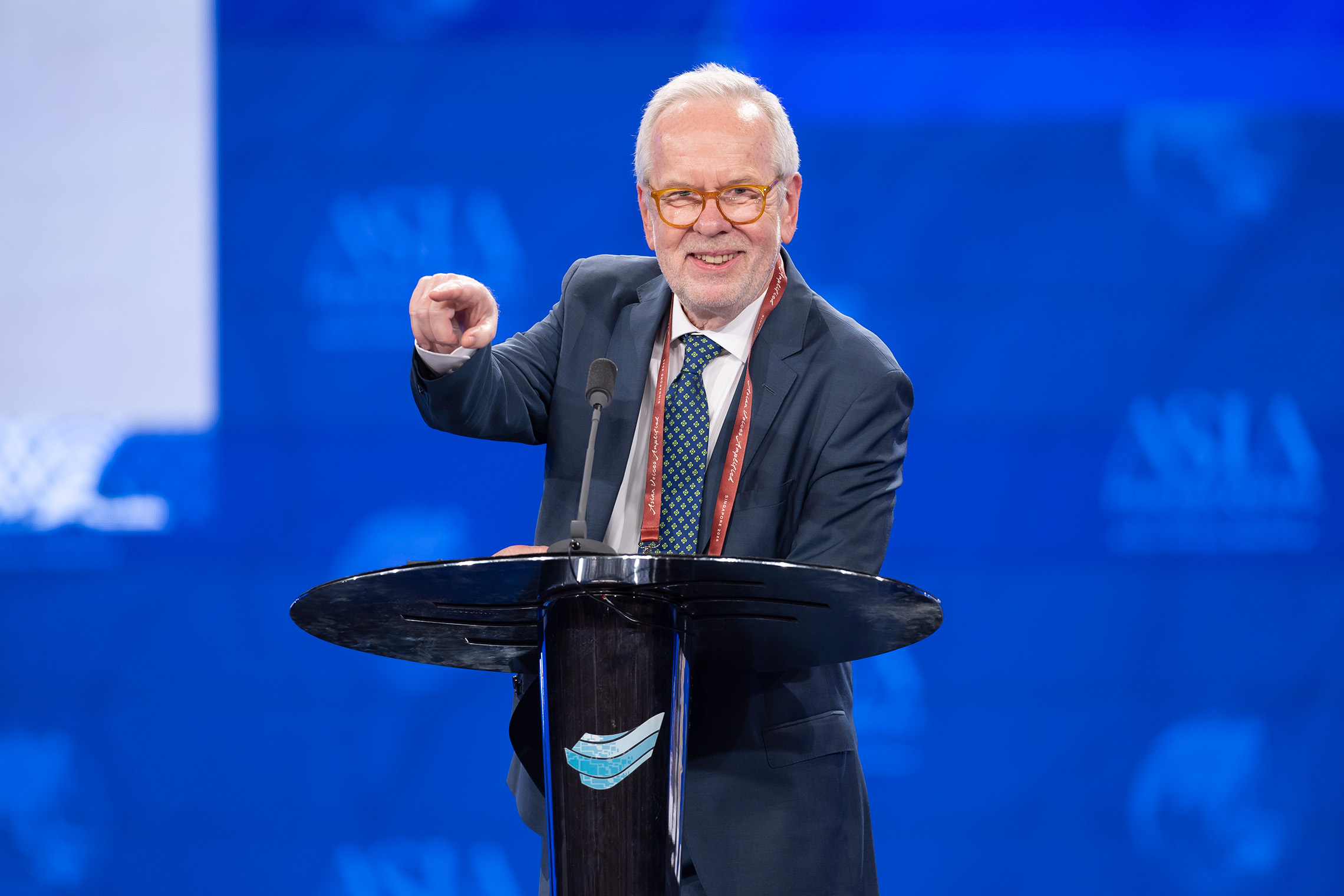
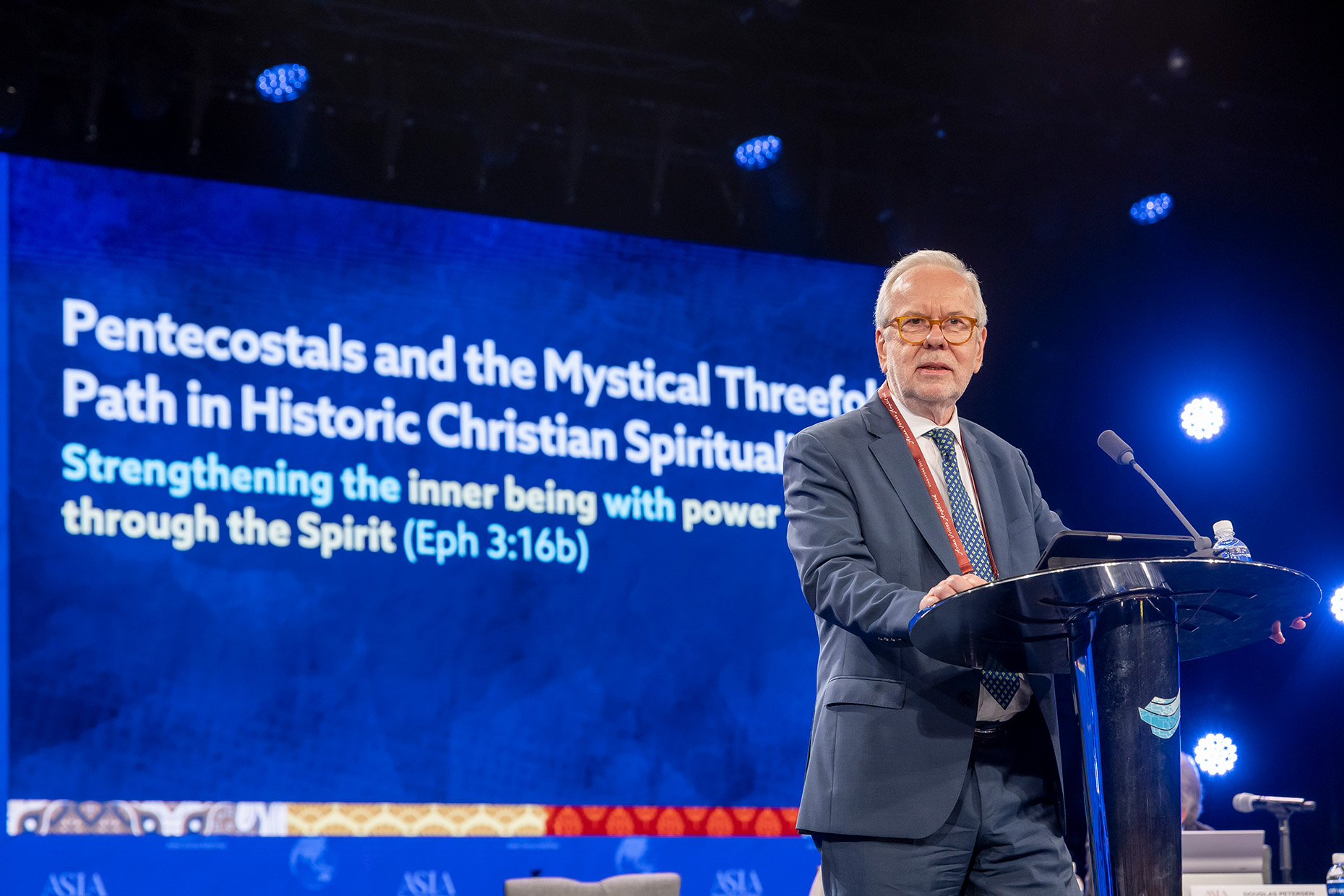
At the Asia Pentecostal Summit in October 2025, Prof Roger presented a paper on “Pentecostals and the Mystical Threefold Path in Historic Spirituality”, in which he explains how the practice of it strengthens the inner being.
City News sat down with Prof Roger to chat about how he began studying this mystical topic from the 1600s, and how deep revelation can help the body of Christ journey closer with God today.
CITY NEWS: Prof Roger, please share with us how you became interested in the study of the mystical Threefold Path: the Way of Purgation (purification), the Way of Illumination, and the Way of Union?
PROF ROGER: I grew up as a pastor’s kid in Wisconsin in a Pentecostal church. In 1952, when I was four years old, my mother read me The Pilgrim’s Progress (by John Bunyan), and my imagination was captured by all the allegoric metaphors. That was when I first made my first faith commitment, and I invited Jesus into my heart. When I was 12, I experienced Jesus baptising me in the Holy Spirit. I thought, now that I’ve got these two experiences, I’m ready to live the victorious Christian life forever!
Spirituality in the 1960s was defined primarily by good things you should do, like reading the Bible, praying, attending church, but also what you should not do — it was a long list.
I went to college at Trinity College (now Trinity International University), and took a couple years off in between. We organised a Christian jazz rock group called The Crimson Bridge, in which I played the trombone. When the band got off the road, I returned to finish college. After which, I started seminary and started working with my dad on the church staff in Northern Chicago, where I was associate pastor for eight years.
It was there that I met a person who was finishing his PhD in organisational psychology at Northwestern University, and he introduced me to the proposition that Christian spirituality is the heart of leadership, regardless of context, role or necessary skill set.
I then started a church in the Chicago area and pastored for 12 years. In 1983, Vanguard University started its Master in Arts in Leadership Studies, and that was my area, so they invited me to join the faculty 1982. And I have been there since.
The first Fall semester, I was invited to go on a retreat that was conducted by a Jesuit theologian and professor, and he introduced me to all these practices I had never heard of, like lectio divina, prayer of the imagination and other more contemplative practices. As a Pentecostal, prayer is initiating so God would respond. We would pray, “God, please heal, please do this.”
Bob Doherty (the professor) said, “What if God is in all things, and that is God initiating — with His involvement. Your response is your prayer.” I began to see that prayer is responding to God’s invitation of love. Sometimes, I don’t recognise that invitation because I’m too busy, or I just don’t see that God is inviting his love through so many different ways and means. I began to see that the spiritual life is rather mystical in some sense.
After that retreat, I started reading some of the literature in the mystics that were developed over several centuries in the Western and Eastern tradition. I landed on three mystics in Spain from the 16th century: Teresa of Avila, John of the Cross and Ignatius of Loyola.
I found that there were new ways of supplementing my Pentecostal spirituality, and I saw that this was going to really help me in my lifelong journey. During the retreat, Bob Doherty also shared his definition of spirituality: it was to integrate all of life’s experiences into a gifted relationship with the living Lord through the power of the Spirit. That was exciting for me, because I can integrate all of my experiences. But what was I experiencing?
 I was experiencing some great things — I was beginning to teach. However, seven years into teaching, I went through a marriage separation. All of a sudden, I didn’t quite know how to integrate this experience due to the sadness. I realised I needed the support of the Holy Spirit, and my friends who can help me in the disappointments.
Pentecostal spirituality is largely this spirit empowerment for witness, service and ministry. It also encompasses the spirituality of signs and wonders; faith and prayer for God’s healing and involvement of our miracle working God. So I was very intrigued when I found that some of these mystics also had pretty amazing experiences in God, including Teresa of Avila.
Teresa of Avila shared that the Greek word for soul is psyche, and it is the root word for psychology. As I read, I found that these mystic writers were mapping out the human soul within us. I realised she was knew something about my interior life as she described her interior life. She taught that your soul is like a beautiful diamond, a clear cut crystal. It’s like the interiors of a castle. This soul and castle has seven dwelling places and Jesus Christ is at the very center. Jesus wants His light to come to the outside and invite us in to that inner chamber of intimacy. She taught that prayer is a doorway into the castle and into all these rooms.
The first three rooms are primarily my spiritual walk, and we learn to pray, to read Scripture and to worship. This is the first pathway, purgation, and it is primarily transactional. I was a pastor then, but I was also a young person. My ego was saying, “Oh that worship.. that sermon.. what’s in this for me?” It was almost very transactional, even though most pastors would be very happy with people in Room Three, because they’re considered very good Christians. However, Teresa said they are still feeble.
Purgation is learning new practices as a new believer, and letting go of our attachments. When we come to faith, we want to let go of the old lifestyle and habits that were displeasing to the Lord. And so, we give things up.
But Teresa said, when you go in, there’s still more to purge — so we are moving into Room Four, where the Holy Spirit is at work in the interior subconscious. I learnt that the Holy Spirit wants to transform us entirely, including our subconscious. Transformation of the subconscious happens in Rooms Four, Five and the first part of Six. Room Seven is where the spiritual marriage happens. Understanding the Threefold Path by Teresa of Avila helped me to map out my interior life’s journey.
I concluded that, wow, I need to move into a deeper intimacy, rather than just doing things out of a transactional relationship. And so the first pathway is purgation, made up of Rooms One, Two and Three; then Rooms Four, Five and Six are under the second pathway — illumination, because the spirit is illuminating some of those darker corridors of the soul that I may have been denying or protecting. I need to expose those to God’s love. I need to yearn for intimacy with Christ, and not just depend on what I do for Christ. It is a dwelling, kind of intimate presence — sort of like the difference between Mary and Martha. This describes the soul’s journey rather than episodic encounters. Encounters are still really important, but it’s a lifelong journey. That’s the metaphor of integrating life’s successes and life’s disappointments into a gifted relationship and finding God in all things.
Your paper is on how the Mystical Theology frameworks, particularly those of Teresa of Avila and John of the Cross, can help renew and refresh the inner beings of spiritually dry churches that are being stuck in the grips of institutionalisation, what has been called “a dark night of the soul for churches”. In the spirit of love and building up the body of Christ, what do you observe are some of the signs of the Pentecostal church being in this rut?
There are different expressions of Pentecostalism. The global Pentecostal movement, like what City Harvest is part of, is a huge movement. In Elaine Heath’s words, “The North American church is going through a dark night, (which is) a purification.”
There are signs in the West that classical Pentecostalism has kind of levelled off. We have gotten into the the rituals of predictable Pentecostal worship practices, and other forms of Pentecostalism that are showing signs of institutionalisation. That was what sociologist Margaret Paloma meant when she said, “The life of the spontaneity of the Spirit is contained into kind of a ritual, where there’s not as much freedom and spontaneity.” You (CHC) have so much freedom here when you’re worshiping.
John of the Cross would say that the Holy Spirit wants to deepen our intimacy with Christ. And provocatively, paradoxically, He takes away the fulfilment we once had in the spiritual practices that were once dear to us. He used the metaphor of a baby nursing from the mother and and God takes the baby away from the breast milk in order to encourage it to walk on its own and develop its own intimacy with God, without the nourishment of the mother. Because every child can’t be with his mother forever.
This removal of fulfilment in spiritual practices leads us into the first three rooms, where we are faced with the realisation of, “I’m kind of loving God for what I can get out of God, loving God for my own sake” and God asks, “Will you love Me for My sake?”
And in response, we worship. We engage in Scripture reading with no strings attached. “I’m no going to read the Scripture just so I can get something out of it. I’m going to do this as a faithful witness.” As I engage in these disciplines of Scripture reading, prayer and all these rituals, it is formative. It takes faithfulness to serve God even though I may not feel fulfilled, but I hold on to that knowledge that it is forming me into Christ-likeness.
And that’s what these mystical writers are referring to when they say that, ‘The end game is a mystical union with Christ.’
I believe you would have embarked on the Three-fold path yourself, as your paper is on the benefits of it. In your personal journey as a Christian, how important was it to “be touched by God at a level deeper than words, imagination and feeling”? What percentage of Christians go through life without having such an experience with God?
I would say that this requires almost like an empirical study. I believe that mystical experiences has such a wide range of meaning and thus, it is often misunderstood. Some would automatically think, this is of the occult, or this is new age mysticism.
Christians need to take back and and define mysticism for ourselves, because mysticism comes from the word “mystery”. How do you explain Jesus, divinity and humanity? How do you explain works and grace. How do you explain sovereignty and free will, except to say that we serve a God that is revealed in Jesus Christ that was written about in the inspired Scriptures, giving us a witness for faith and life.
There are some moments that are just hard to explain. I was diagnosed with Stage Four lymphoma in 2011. I told my spiritual director about it and she said, “Roger, although you’ve got everyone and everything in place, you will still have to go through it. Just before I left her office, my wife, Gail said “Come and look at the sky.” And there it was: a rainbow.
I went home, and these three little neighbour girls who would often give us hugs happened to come by. They said, “Mr Heiser, do you want a regular hug or a tight hug?” And a few days later, a hawk came and sat on the fountain outside my home, and it would come for several days.
When I went for my first appointment at a large research hospital north of Los Angeles, and it was this big campus with buildings all over and we caught sight of the motto: “There is no profit in curing the body if in the process, we destroy the soul.” That spoke to me.
When I was doing biopsies, spinal taps and surgeries, my wife went out and saw several trees. And there were all these messages that families wrote down for their family members on them. She said, “Wow, look at all those messages.” The first one she looked at read, “Christ is the cure.” (EDITOR’S NOTE: Prof Roger is cancer-free today.)
To me that describes mystical experiences, because it brings up all these streams of consciousness. If you saw a rainbow, and you’re a farmer in a drought-like condition, you are going to think that rain is going to come. On the other hand, if you’re with a scientist and you see a rainbow, they may start to explain what is happening with it.
William James, a philosopher, said that mystical experiences have all of these different connections, and that’s why they were self-authenticating. You don’t need science to tell me how to interpret my experience of the rainbow. I don’t need any rationality to tell me how to interpret it.
 Karl Rahner, a theologian, said, “Why don’t we? Why don’t we find mysticism in everyday life?” So if you see a butterfly, your smile and this interview — these are gifts to me, as I see Christ in you. These are every day mystics. In fact, Rahner said that the Christianity of tomorrow will be made up of mystics, or there’ll be no Christianity at all.
There’s a mysticism that John of the Cross experienced. John was a reformer in a Carmelite order, but the traditional monks resisted his reform to go discalced (shoeless). They put him in a dark prison, only letting him out three days a week. They gave him only bread and water and whipped him. When he went back into the prison, he wrote the poem The Dark Night of the Soul. It’s based on the Song of Solomon. The imagery is beautiful, some of the finest in Spanish poetry. That is a mysticism of “Where is God in all of this?”
Spiritual writers would call this an apophatic unknowing, when we experience something that causes life to be torn apart. Where there’s an unknowing, the certitude of the past is done away with, and now we enter into an unknowing in order to get to a new knowing.
So he said, the Dark Night is actually the brightest light in that embrace of the unknowing to know that in the unknowing, there’s a knowing that’s beyond anything I’ve ever experienced before.
You realise this is what Christ experienced, you’re imitating Christ on the cross when he said, “My God. Why hast thou forsaken Me?” It didn’t mean that He was separated from God, but He experienced that. Not many people experience this. Many of us experience the first dark night of the senses, where our intellect and our emotions no longer provide the avenue that they once did, with worship and all of that. The second is a dark night of the spirit, where we surrender our mind, will and emotions to God.
But John of the Cross said, if you’re going through that, keep reading the Bible. He was still building walls, working around the convent, doing spiritual direction for medical doctors and people in the village. He was very actively involved.
It is different from depression, where people lose their will to even go out in the day. For the dark night of the soul, you’re going through this sense of dryness, but it is not to be avoided. You’re trusting that it is powerfully purposeful. It is almost like a Job experience, or when Peter denied Jesus, and had to go through a radical unknowing of the Messiah he thought he knew. He must have thought, I don’t know that this Messiah was dying. He had to give that up, because the reality was that Jesus was bleeding and carrying His own cross.
It was after the resurrection, when Jesus asks Peter if he loves him. Through Peter’s apathetic unknowing and now at breakfast, seeing Jesus post-resurrection, he got to the new knowing and now, he’ll ever question again. It’s the mystical knot that Jesus tied with Peter.
Entering the interior castle of your soul requires you to set aside time, sit and to think about it. The ego wants to stay comfortable and seek pleasure, happiness and enjoyment. This is a journey into the subconscious, and John of the Cross called it the purgation of inordinate attachments, which are idols of possibly anything — materialism, addictions or even workaholism, in which you’re rewarded.
In that particular case, why would you take time for silence and solitude when you’re rewarded for being such a strong worker bee? With busyness, people can stay on the surface of life without going deeper. But they will seek for something deeper during a midlife crisis, a breakup in the marriage, a threatening illness, or an economy crash. Only then do they decide, do I want to go deeper and really find Christ in this suffering pain? Or am I going to leave my faith and that say this is not working? I have to decide, how am I going to integrate that disappointment into my spirituality that has not gone very deep with me. And when I go to church, I will start to ask, “Where is God in all this?”
If the relationship has been transactional, you’ll hit a wall. The wall doesn’t crumble—you do. You might say “Christianity doesn’t work for me”. The wall is like the dark night of the soul. It’s another metaphor for it. The light from the interior of the castle is always trying to draw us in. Regardless of what our choices are, God will always be wanting to draw us into greater intimacy, into union with Him.
It may be that people only wake up to the realisation of their interior castle later in life. It doesn’t mean that God isn’t drawing them. For some Christians, it may take a lifetime, sometimes earlier in life, sometimes through midlife crisis, sometimes later in life. Nevertheless, it’s never too late to be drawn into that intimacy.
You quoted Teresa of Avila saying prayer is the way to enter the mansion. Does this mean that without prayer the person forfeits what Ronald Rolheiser described as “being touched by God at a level deeper than words, imagination and feeling”?
In silence of solitude retreats here, you get to come away by yourselves in silence and solitude. There will be all these voices: “I should be doing this”, “I could be doing that”. When you sit down to read your Scripture and pray, suddenly a voice pops out, “Oh, I gotta do that.”
Then you have to decide, “Am I gonna get things done first? I can do that and I’ll come back again.” Or will you choose to stay with the silence? It is a learned discipline. There are two types of people: one who begins and one who begins again. Because we’re always beginners.
If you stay with it long enough, the Holy Spirit will bring up subconscious memories, emotions, or perhaps some experiences in the past that are troubling or disruptive, and then we have to decide, “Oh, I don’t want to deal with that. I’ll get busy.” Or do we deal with them with curiosity and compassion?
It’s really a wonderful gift to be busy and use our gifts, to be fulfilled and experience human flourishing. If you enjoy your job, enter into it fully. That’s the creation story in Genesis of being fruitful and embracing our imago Dei. Hence, I have no judgment of someone who’s too busy and doesn’t want to do silence and solitude.
However, if that work has become an idol, a compulsion, and begins to move into a destructive cycle, where we suffer in our health, we would have lost our agency. Why would we kill ourselves over work? Jesus did not criticise Martha for being busy. He said, “Martha, Martha, you are anxious and distracted.” So if our work distracts us from awareness of this spirit within, then we may want to rethink our priorities.
Silence and solitude is not something we do because we have to. It’s for the sojourner who wants to go more deeply into awareness of the Holy Spirit’s work, and we can then move from self-awareness to self-understanding with the Holy Spirit’s help.
In John 14, Jesus promised the disciples, “I’m leaving you, but I’m not leaving you as orphans, because the Father will send a Comforter to abide in you.” So I wouldn’t know what the Comforter is doing in me unless I spend time with the Comforter. Just as it is written in Psalm 46:10, “Be still and know that I am God.”
There have been patterns all throughout the Bible—a passage in Lamentations 1 on Jerusalem and the temple being destroyed. The people have been exiled. And again, in 1 Kings 19, where Elijah flees after killing the prophets of Baal. And also, in the Psalms—life is good for David, there is prosperity….and then enemies come, there is disorientation. And in the ruins, we’ll wait on the Lord in silence.
All of a sudden, there’s this new light that’s coming up out of the ashes, out of the rooms, and there’s a new orientation. So you can’t get to the new orientation without going through disorientation. And you can’t get to hope without understanding what has happened in your life.
For some, there is resistance from spending time alone with Christ. Check your internal or external reality, and then grieve or lament to the Lord, confess His promises over your situation and then hope in Him. Reality, grief, hope — that’s the title of a book by Walter Brueggemann, and that is also Romans 5.
On the opposite spectrum, people can get stuck in their devotional life trying to read a lot of verses. It could be a goal, to read through the whole chapter or the whole book in a short time. No, no, stop. Read a verse or two and let it sink in, rather than leaving it up here on the surface. Let it go deep. The practice of lectio divina is actually reading the Scripture several times. And every time you read it, observe what are the images that come in the Scripture? What is the Scripture saying? What is God’s will for me in the Scripture? Let it go deep into your soul, let it sink in and let it be a phrase that you use throughout the day.
In your paper, you wrote that a hallmark of Pentecostalism is human engagement with Spirit’s empowerment, and that is its ongoing legacy. However, this kind of engagement with power can also operate in the “pride” of those in a false self. Pride and the love of approval and admiration of others can feel like “the fire of the love of God”. How does such a believer stay grounded and realise that he is going the wrong way?
I would say that that power can be intoxicating. God wants us to have agency. Part of the creative mandate is to have power and be creative. You can use your creativity to be an architect, to create. You can use your creativity in business.
But we need to use power the way God uses power: it’s a self-giving love, the Trinitarian notion of God as love, mutual affirmation and mutual edification. That is revealed in the incarnation of Jesus, who came not to be ministered to, but to minister. He took the form of a servant as written in Philippians 2:7. Jesus is the model for using power in the service of others.
God created you to be creative. So people create — they make the best bread, the best computer chip. And that can be intoxicating, which means “I can start to like power, and then I begin to use power to try to manipulate and control others to satisfy and serve my needs”. That’s when it becomes an idol.
Hence to remain grounded, the believer has to be aware that they are not serving themselves in their own needs and manipulating situations or people.
There a must be a discernment, like a temperature gauge, where you know if you cross the line, you are actually no longer free. You are bound up by this idol. John of the Cross called it an enslaved heart. So our hearts can be enslaved to inordinate attachments or addictions.
Success and money can be addictions. That’s why we need to be in community, where if we don’t see the issue ourselves, our loving friends would be able to say, “You know, I love you but what are you doing? I heard you say.. Where’s that coming from?” This is the importance of community and a communal spirituality.
All ministry that extends out must be supported by both the mystical encounter with Christ within and the communal spirituality of being in a group for support and accountability. It is a tripod of spirituality: missional service, the individual mystical encounter with Christ within, and then the communal aspect of the spirituality of being in communion with others.
The journey inward, if it’s really an encounter with Christ, will always be a journey outward into greater love of God and souls. If there’s not a greater love in service, it may not be a real encounter with Christ.
Why is the interior life important to believers and to churches? How can a believer or church begin this journey into communing with God in a deep way?
It’s important because Christ has promised that the Spirit would be an indwelling presence. Also, in John 14 and 15, Jesus said, “I am the vine, you are the branches. Apart from Me, you can do nothing.” And He wants to come to us, to make our home with the Father through the Spirit.
We are given the Spirit, through Spirit baptism, to be empowered to witness. In Luke 24:49, it is written that the believers will be “clothed with power from on high.” In Ephesians, 3:16, it says Paul prays for the Ephesian believers to be strengthened in their inner being with power through the Spirit.
The same word is used in these two verses — power to witness and power to be strengthened in your inner being. So one is used by Paul, the other one is used by Luke, and I think that’s a pretty good balance to live life on this earth.
So we are empowered to witness, empowered to serve others, empowered to extend ourselves. In Ephesians 3, Paul prays that, “He may strengthen you with power through his Spirit in your inner being” and that we may “grasp how wide and long and high and deep is the love of Christ, and to know this love that surpasses knowledge—that you may be filled to the measure of all the fullness of God.”
That’s a pretty mystical phrase, that you may be filled to the measure of all the fullness of God. If I don’t know anything about my interior life, how will I experience the wholeness of God?
