
Pentecostal theologian Dr Simon Chan reflects on the “already, but not yet” tension of the kingdom, the place of liturgy in shaping a balanced spirituality, and why serious theology must find its way into the life of the church.
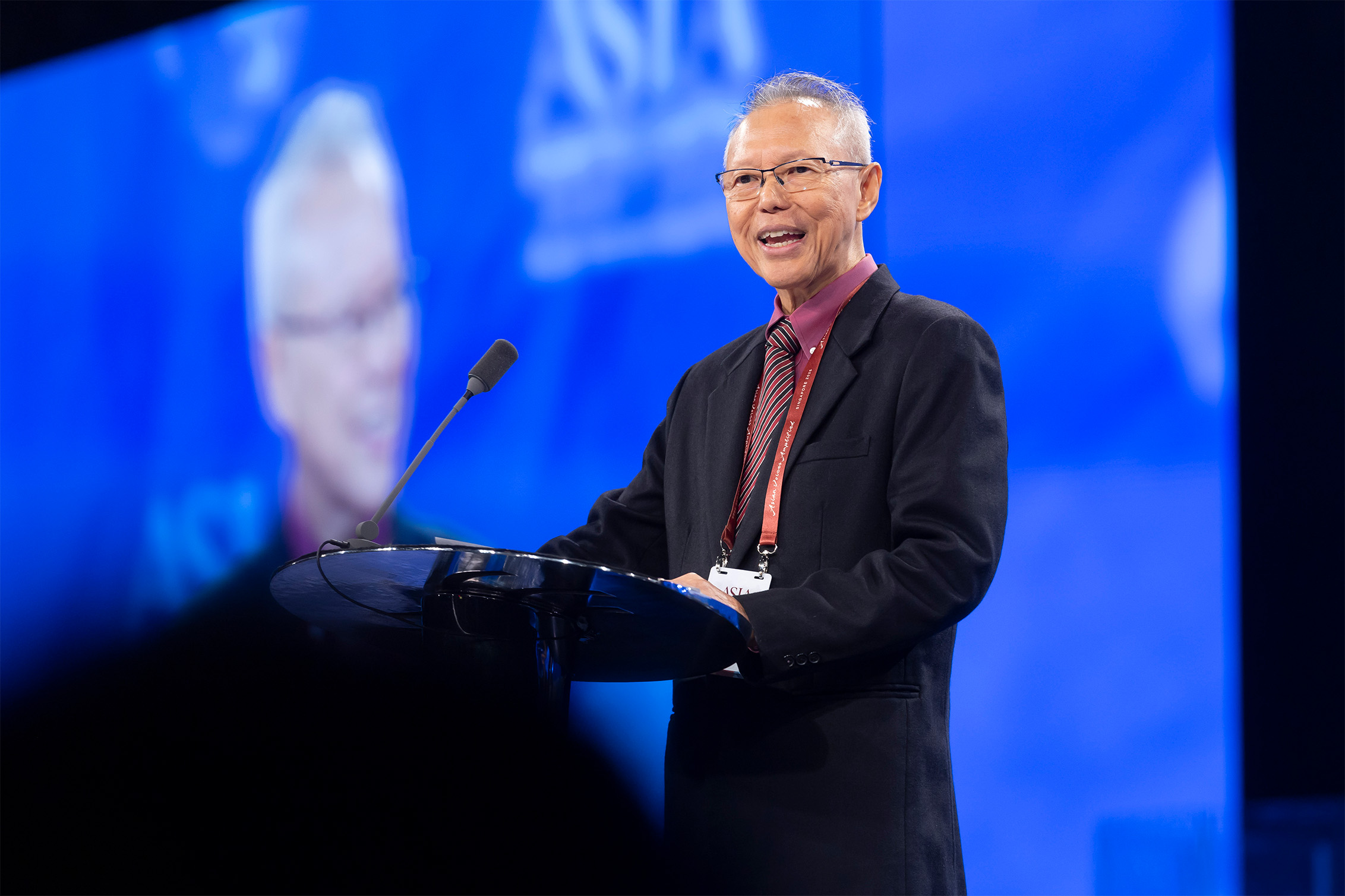
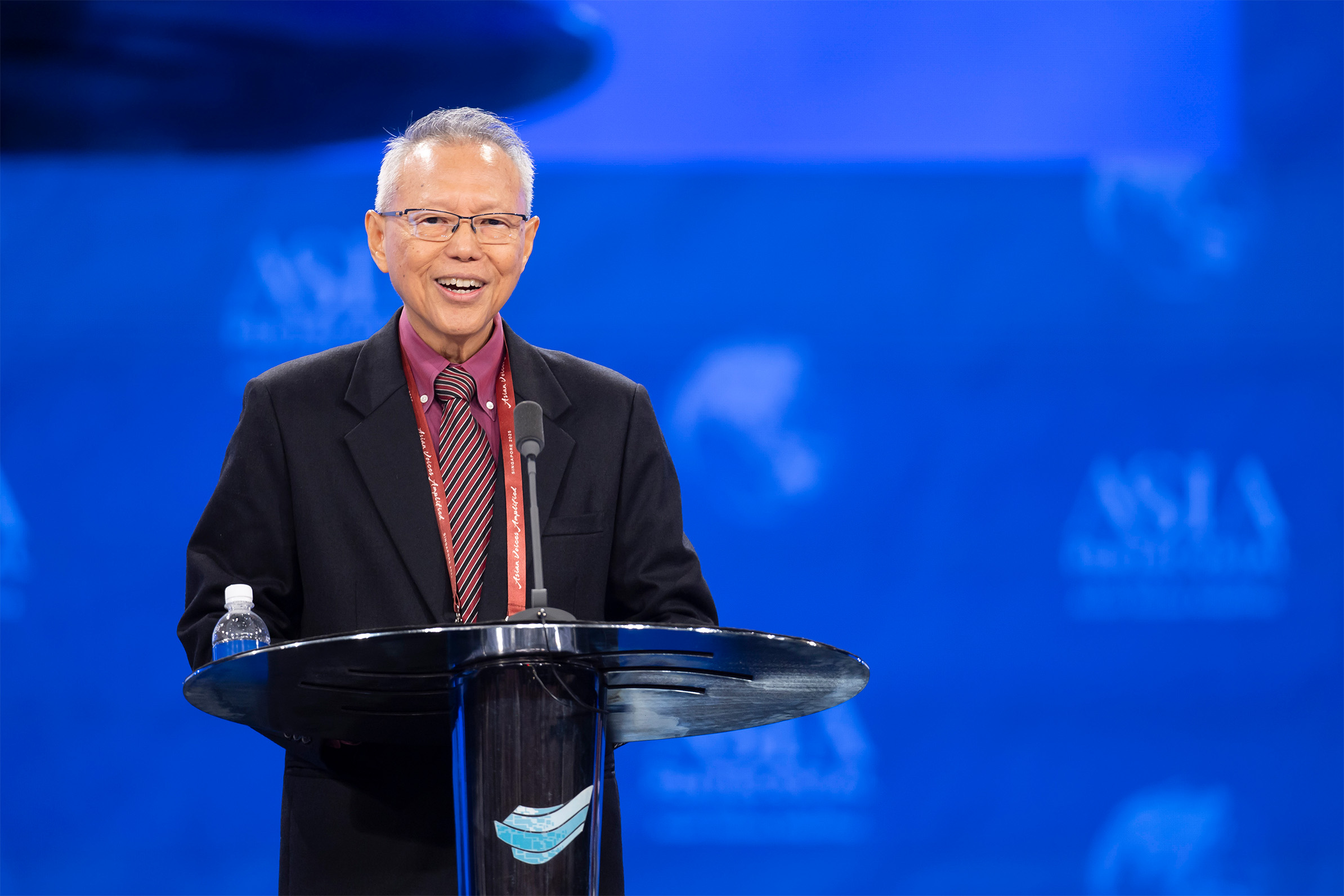
Dr Simon Chan is the former Earnest Lau professor of systematic theology at Trinity Theological College. Holding a PhD in historical theology from the University of Cambridge, an MDiv from Asian Theological Seminary and MTh from Southeast Asia Graduate School of Theology, Dr Chan has made significant contributions to the fields of liturgy, spirituality, and Pentecostal theology. He currently focuses on research and writing, exploring the intersection of these disciplines.
Besides his academic work, Dr Chan was ordained by the Assemblies of God in the early 80s and has taught in the Assemblies of God Bible college.
At the Asian Pentecostal Summit held in Nov 2025, Dr Chan presented a paper titled, “The Liturgy and the Already-Not Yet Problematic: Towards A Holistic Pentecostal Spirituality”. City News sat down with him to explore the heart behind his paper.
City News: Can you share with us how you first became interested in the study of Pentecostal theology?
Let me give you a bit of my background. I was saved in an Assemblies of God church, and grew up there. Even though I attended other churches when I was studying abroad, my basic orientation has been within the Assemblies of God. It was during my studies in various seminaries, each with different church backgrounds, that I began to think more intentionally about my own Pentecostal faith and experience. This became especially pronounced when I was in an Evangelical seminary, where I encountered the most pushback and questioning. At the time, Pentecostalism was still seen as somewhat marginal and had not yet gained the respect it has today. That was the context in which I began to think more seriously about my own faith.
 Part of it came from wanting to respond to the issues they raised, especially questions around speaking in tongues and baptism in the Spirit as a second work of grace—things Pentecostals had often taken for granted. Those questions forced me to examine my own spiritual roots, and that was how I began to look at Pentecostalism more intentionally from a theological perspective.
When I was doing my PhD studies, I was working in historical theology, and that was when I became more concerned with locating Pentecostalism historically. Interestingly, I found that many of the things Pentecostals have had to explain to others were issues that spiritual writers in the past had also wrestled with.
I began to discover a strong spiritual affinity between Pentecostal belief and practice, and the mystical tradition of the Church. Later, I wrote articles and book chapters exploring how Pentecostals actually experience many of the same realities found in the mystical tradition, even though we use different language from the mystics.
These experiences led me to dig more deeply into Pentecostal theology.
It has been said by scholars like Dr Jacob Cherian that Pentecostalism and the scholarly world were often seen as oxymorons. Was that also the perception in Singapore when you first returned from your studies in the UK?
When I returned in the 1980s, being a Pentecostal scholar was not really something people aspired to—at least not within the Assemblies of God in Singapore. My experience then was that Pentecostal scholars were often viewed with suspicion. It was almost as if, once you became a scholar, people wondered whether you had lost your Pentecostal faith. It is hard to imagine that now, because things have changed so much.
When did the shift happen and how did it happen?
In the Singapore context—I cannot speak for Pentecostal churches elsewhere—things only began to change around the 1990s. Pentecostals became more interested in scholarship, theological studies, and the pursuit of advanced degrees.
I think there were cultural factors. For one, the general level of education in Singapore had been rising steadily. More people were going to university, and within our churches, university-educated members were beginning to ask deeper questions. That, in turn, may have challenged pastors to think more seriously about how to respond and engage them at their level, instead of simply viewing their questions as a lack of faith, as had often been the case in the past.
Over time, serious theological study became more accepted within Pentecostal circles. For example, I believe the Assemblies of God in the USA began graduate-level seminary training in the 1970s. But at the time, they did not call the school a theological seminary, because the word “seminary” was often associated with mainline denominational training.
So it was not called a theological seminary; it was simply known as the Assemblies of God Graduate School. If I am not mistaken, the name was changed to Assemblies of God Theological Seminary only in the early 2000s, by which time the term “seminary” had become more acceptable.
In fact, many early Pentecostal preachers used to say, “If you go to theological seminary, you will end up in a theological cemetery.” There were all kinds of negative perceptions about seminary and theological education in those days.
Your paper deals with the “already but not yet” tension of the Kingdom. For many Christians, especially those shaped by either an over-realised or under-realised eschatology, it may be difficult to see the imbalance in their own spirituality. How did you first become aware of this issue, and what drew you to explore it more deeply?
This began for me way back in the 1970s, when I encountered a group known as the Shepherding Movement. The basic idea was that every believer had to submit to a person appointed as their spiritual leader—their “shepherd”—and defer to that person in all major decisions. That struck me as deeply intrusive. I knew of people who were told whom to marry simply because their shepherd had said, “This is God’s will for you.”
When I began to probe deeper, I discovered that this was not a new problem. It was connected to an older movement in early Pentecostal history known as the Latter Rain movement, which emerged in the 1940s. Some of its teachings later influenced those who advocated shepherding in the 1970s.
As I studied the history of the Latter Rain movement, I found that many—if not all—of the classical Pentecostal denominations, including the Assemblies of God and the Church of God, had condemned it as heretical. What is remarkable is that in more recent times, particularly in the 1990s, similar teachings resurfaced through the New Apostolic Reformation.
The common theme I noticed was a “Kingdom now” theology—the idea that everything God has promised can be fully realised in the here and now. That is what I would describe as an over-realised eschatology. This forms the background of my concern. When I looked back at earlier Pentecostal history, however, I found the opposite problem: an under-realised eschatology. I did not mention this in my paper, but another important point is that early Pentecostals were generally wary of strong leadership control. They emphasised the freedom of the Spirit and the idea that individuals should be led directly by the Spirit.
In that sense, the Latter Rain movement may be seen as a reaction to this earlier, more chaotic phase of Pentecostalism—moving from a movement with little organisation or institutional structure to one that became highly structured and authoritarian. So even in the early phase of Pentecostal history, we see a pendulum swing from under-realised to over-realised eschatology.
That same pattern repeated itself in the 1960s, with a renewed emphasis on the freedom of the Spirit, followed by the Shepherding Movement as a reaction to it. As I looked at the broader history of Pentecostalism, I began to feel that there must be a way to hold these two together. It cannot simply be either-or, even though much of Pentecostal history has tended to swing between the two.
What drew me more deeply into this idea was a remark by John Stott, the well-known evangelical Anglican pastor and theologian. In one of our devotions, he said that if Christians could properly address the tension between the “already” and the “not yet,” we would be able to resolve many of the problems in the Church.
That statement stayed with me and led me to probe the issue further. Over time, it was my immersion in the liturgy that helped me appreciate how liturgy brings these two realities together. As we move through the liturgy Sunday after Sunday, we become conscious both of what God has already accomplished and what God has yet to fulfil in the future.
To see that pattern happening repeatedly in history is interesting. Where do you think we stand right now?
I think the concept of the “already and not yet” is widely recognised as an important part of New Testament teaching—there is no question about that. The difficulty lies in the application: how do we actually hold these two realities in proper balance?
In more recent Pentecostal history, the tendency has been to move towards an over-realised eschatology. In some circles, there is the impression that if you have enough faith, you should simply declare that God will do the work—and you should not even say, “Thy will be done.” To say “Thy will be done” is sometimes seen as a lack of faith.
I think that is where we are today in certain parts of the Pentecostal world. In Pentecostal scholarship, this imbalance is being addressed, but I do not think it has fully seeped into the life of the church yet. That is why I believe the practice of liturgy is so important. It is through the actual practice of liturgical worship that these two truths can be brought together. If the “already and not yet” is only taught by theologians, it remains a doctrine. It may not truly get into our lives. But through the practice of liturgy, the church learns to hold together what God has already accomplished and what He has yet to fulfil.
What would that look like in a church service?
I think that if people practise the liturgy faithfully, as I describe it in my paper, it creates a balance. For example, when we pray for healing, an under-realised eschatology might say, “There is nothing we can do about it; Jesus will take care of it,” and simply surrender the outcome to God. Many non-Pentecostals tend to take that position.
On the other hand, Pentecostals can be tempted to think that if God does not heal, it must be because something is wrong with the person—that he or she does not have enough faith. But for someone who is already sick and suffering, that only compounds their feelings of guilt. I have seen that happen in many lives, and it is terrible.
I believe we should pray for people. At the same time, we must also help them realise that the Lord can give them the strength, grace, and means to walk through their situation. We simply do not know God’s specific will for every person. So we pray for healing, and if the Lord desires to heal that person, He will heal. But we also pray for God’s presence to become real to that person, so that he or she may know how to handle and live through the situation. Whatever the outcome, it is ultimately God’s prerogative, not ours.
That is why journeying with people is so important, whether they are facing physical illness or other kinds of difficulties. We often think of healing only in terms of physical healing, but what about emotional healing? Some people may assume that it is never God’s will for someone to be depressed, and that if a person is depressed, something must be wrong with them. That simply extends the same mistaken idea from physical illness to emotional suffering.
The truth is, I know good Christians who have struggled with clinical depression all their lives. That does not mean they have no faith. In fact, some of them may have more faith than we do.
A good friend of mine struggled with clinical depression all his life and had to remain on medication. Why God did not heal him, I do not know. He could not function without medication, and yet I saw how God used him in so many situations—sometimes far more powerfully than someone who was physically and emotionally healthy.
One evening, he came to me in tears and said he could not understand why he had to struggle with depression all his life, and yet somehow, he had been able to help others come out of depression. That was truly a mystery, and the struggle was very painful for him. Despite his depression, his presence was a blessing to us whenever we gathered in fellowship. His prayers moved us. We could sense that he was in touch with God in a way that many of us were not. He was such a blessing to others, and yet he could not manage without medication.
To me, that is an example of the “already and not yet.” God was clearly present and at work in his life, but the fullness of healing had not yet come. I have also seen many people whose lives were deeply affected by an over-realised eschatology because they carried false expectations. They expected to be healed because someone had prophesied over them that they would be healed, yet their health continued to deteriorate. That is why I believe we must address this issue with great pastoral sensitivity. We need faith to pray for healing, but we also need humility to recognise that the outcome belongs to God.
Finally, why do you think a conference like the Asia Pentecostal Summit is important for churches in Asia?
First of all, the fact that this conference is being hosted and promoted by a church is a very good sign. Many academic conferences tend to be organised by academic societies or universities. But I think it is important to bring serious theology into the life of the church, because it helps people see how good theology can shape their church life, ministry, and daily practice. That is what theology ought to do. It should come from within the church, impact the church, and not remain merely an academic exercise. To have this conference in a church context is an important step forward for Pentecostal scholarship. It means that scholarship is beginning to seep into the life and consciousness of ordinary church members.
 Bringing scholars from different parts of the world together is also, in a way, quite unprecedented. I hope it will create greater awareness among Pentecostal churches—and even non-Pentecostal churches—of the importance of doing theology within the context of the church.
I also think this conference can help bring the church to greater maturity as it wrestles with various challenges. Stronger theology helps the church think critically about societal trends and not be swept along unquestioningly by society’s values.
In the Singapore context, we are influenced by popular culture from the West. Christians are not exempt from this; we are also shaped by popular culture. Sometimes, things that happen in the West are uncritically assimilated into the church. Good theology helps us become more discerning.
