
Dr Wolfgang Vondey is a professor of Christian theology and Pentecostal studies at the University of Birmingham, where he also directs the Centre for Pentecostal and Charismatic Studies. Dr Wolfgang’s research focuses on systematic and constructive theological themes, with a particular emphasis on pneumatology, ecclesiology, and ecumenical studies.
Dr Wolfgang founded and directed Regent University’s Center for Renewal Studies. He has published numerous influential works, including Pentecostal Theology: Living the Full Gospel (2017), The Routledge Handbook of Pentecostal Theology (2020), and The Scandal of Pentecost: A Theology of the Public Church (2024). He serves on the editorial board of the Journal of Pentecostal and Charismatic Christianity and is the co-editor of the book series Systematic Pentecostal and Charismatic Theology.
At the Europe-Asia Pentecostal Summit 2025, he presented the paper titled “The Church as the Scandal of Salvation: Pentecost and the Continuity of the Gospel of Jesus Christ”.
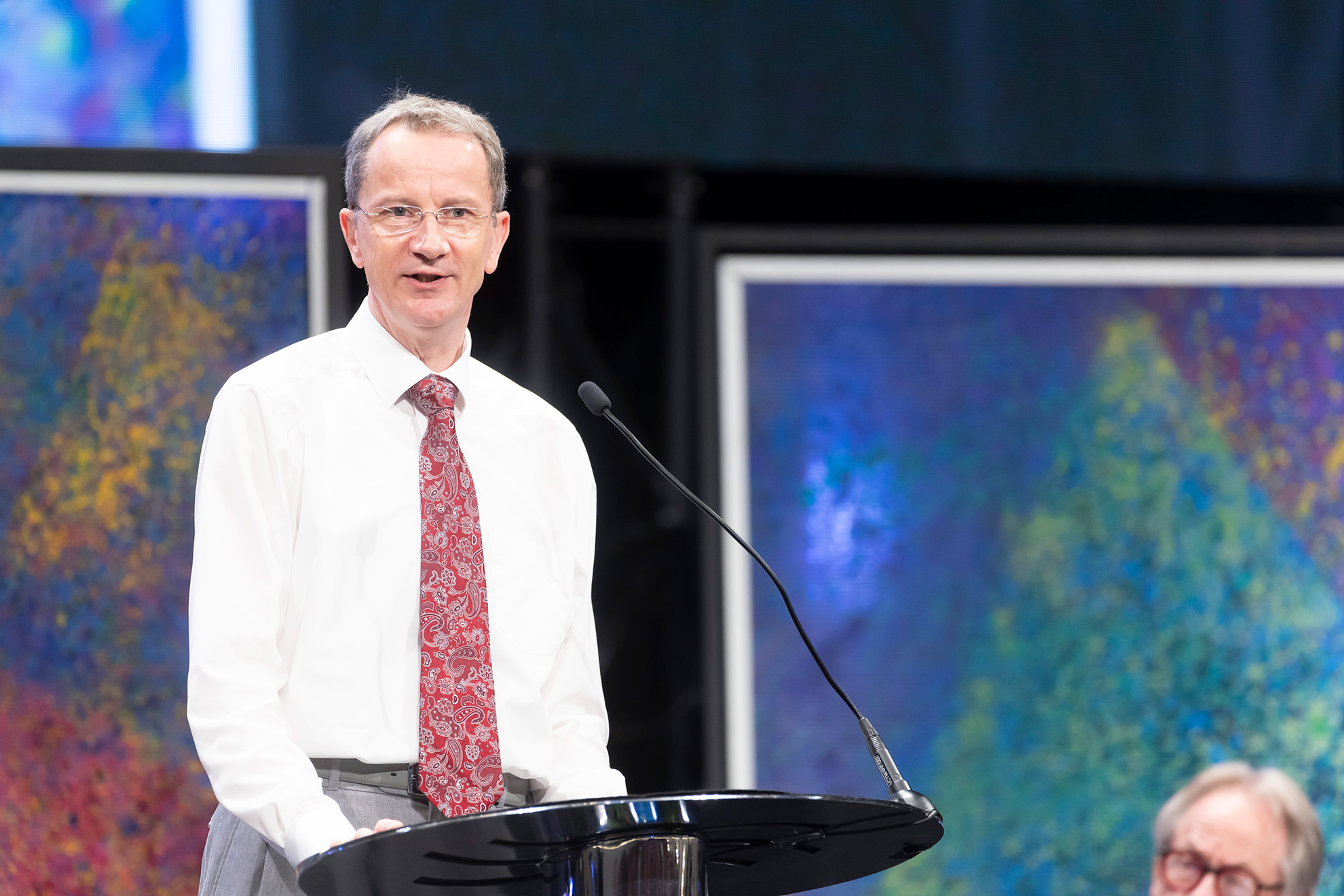 CITY NEWS: Prof Wolfgang, tell us how your journey into Pentecostal theology began.
PROF WOLFGANG VONDEY: The story is really personal. I met God in Japan, in a context where God spoke to me audibly. And God chose to speak to me in English—while I was in Japan. Not in German, not in Japanese, but in another language. At that time, my English was not very good. In fact, my English teachers would write under my exams, “You will never learn English.”
So when God spoke, He said very few words, and I did not understand all of them. I had to look them up. I went back home, took out a dictionary, and looked up the words. But those words did not really exist in German. We have similar terms, but they mean something quite different.
So imagine this: you do not know God, and then God speaks to you—but you do not fully understand what He is saying. You cannot make this up. After that, I had to go around asking questions. I knew it was God, but I did not know what had happened. I went to different churches and spoke to many Christians, but they struggled to explain it to me. Then I spoke to Pentecostals, and they had no problem telling me, “God is alive. God wants to speak to you. He has a calling for you.”
And I thought, “Okay, if Pentecostals can explain to me what happened, maybe they can explain more.”
So I left Japan, went to a Pentecostal school, studied with Pentecostals, and began to understand and learn more about the world. That is how I came into Pentecostal theology. And I thought, “Well, this is the path I will pursue.”
So, at that point, you were not yet a Christian, but you heard God speak to you. Tell us more about that.
I studied Japanese and Japanese Studies in Germany. After I graduated, I went to Japan and worked for the Japanese government in Okinawa. That was what I was doing at the time.
I think coming to faith was a whole process. There is another story behind that.
I lived on a small island, and I did go to a small church there, but it was not a Pentecostal church. There was no Pentecostal church where I lived. But that was okay. It became an important time of being trained, taught, and receiving from God.
It was a transitional period for me.
You mentioned that being an academic is not the primary way you would describe yourself. Was there a season when you had to discern between pastoral ministry and the academic route?
No, it is not the primary way I would describe myself. But I spent a lot of time discerning and praying about what I was supposed to be. At one point, I thought I was obviously supposed to be a pastor—that God had called me to be a pastor. But then I learned that there was another option: the academy was also an option.
So I asked God every day, “Do You want me to be a pastor? Do You want me to be a professor? Do You want me to study, or do You want me to be in ministry in the church?” After much discernment, I chose the academic route. But it takes time to discern that.
I think part of it came from a conversation I had with someone. At one point, this person said to me, “You know, Pentecostals hide behind the easy tasks. They are experiential. They are afraid of the difficult things. They do not want to do theology. They do not want to do systematic theology.”
I left that conversation and said to myself, “I’ll show you. I’ll go there.” So I went into systematic theology. That became my area, partly in response to that challenge, but also because I felt that this was what Pentecostals needed. There was a real need for Pentecostals to engage theology, especially systematic theology.
Your EAPS 2025 paper was strikingly titled “The Church as the Scandal of Salvation: Pentecost and the Continuity of the Gospel of Jesus Christ.” What led you to explore this topic?
When we think about scandal, it is very easy to say, “I do not want to be associated with that.” But I thought, wait a minute—Pentecostals themselves have a history that shows how scandalous they were. They were called “Holy Rollers” and “jumpers.” They fell under the power of the Spirit, what some called being “slain in the Spirit.” They were persecuted. Their houses were burnt down. All of that was scandalous. So why should I be afraid of scandal?
Then I looked at Pentecostal wisdom by going back to Pentecost itself. When you read the story of Pentecost (Acts 2) it is also scandalous. They were accused of being drunk. They were babbling and speaking in strange languages. I thought, well, there is another scandal.
So I began to ask: Is this so unusual? Is the scandal of the Church something that suddenly appeared, or is there a deeper continuity?
When I looked further, I found that Jesus Himself was quite scandalous. So theologically, I began connecting these things and asking whether there is a continuity between the scandal of the Church and the scandal that characterises Jesus.
What I learned is that, in many ways, the Church has become disconnected from that scandal. For me, it was important to contribute to this conversation by asking how connected we really are to Jesus. It becomes a way of evaluating our own connectedness to Him.
For CHC, the word “scandal” carries weight because of what the church has gone through. Understandably, there is a desire to be careful, accountable, and never be in the news again for the wrong reasons. But your paper speaks of scandal in a different sense—the scandal of Jesus, Pentecost and the Church’s witness. How do we balance wisdom and accountability with the courage to be seen as scandalous for the right reasons?
Yes, there is a negative kind of scandal. That is one side of scandal that I did not include in the paper. This is not about the kind of tabloid journalism you see in supermarket headlines. That is not what I mean.
Much of the Christian life is not scandalous in that sense. It needs a firm foundation—one that is not shaken by things we obviously should not be involved in. There has to be a foundation.
At the same time, the Christian life is always pressing forward. That is important because we are called by Christ to press into the world and bear witness. Whether we go to speak, preach, or teach about Christ, whether we go to heal, serve in soup kitchens, or minister to people in need, we are entering territories beyond the safe ground of the church. And when you enter that other territory, you are bound to encounter offence. You do not have to call it a scandal, but “scandal” is simply the New Testament way of showing that the Church and its behaviour are not what people expect.
What is expected? People do not naturally want to go to soup kitchens. They do not naturally go to the poor. In a typical Western city, when you see homeless people on the street—people who may have slept outside, who may smell, who may not have access to toilets—you notice all these things. What do people often do? They cross to the other side. But imagine not doing that. Imagine staying where you are and encountering these people. That is a scandal—not a negative scandal, but a gospel scandal.
It may be the same with ministry to the elderly. It is not expected that you would go into the homes of lonely elderly people. But when the Church says, “We are going to do exactly that”, it is like Jesus associating with sinners and tax collectors, even inviting Himself into their homes. You enter places where it becomes scandalous that the Church is found there. It is not a negative scandal. Rather, it shows the importance of pressing into territory that has been claimed by evil, darkness, sin, sickness, loneliness, and everything that needs to be redeemed.
So for me, scandal is that threshold—the threshold to redemption. That, I think, is what Jesus shows us.
You spoke about the risk of domesticating the Spirit—where the Church becomes too cautious, too comfortable, or too afraid to move beyond familiar boundaries into the world. But in a highly regulated society like Singapore, churches also have to consider legal and regulatory requirements. How can the church avoid domesticating the Spirit, while still acting wisely and responsibly within the confines of the law?
Paul is asked a very similar question in the New Testament, and he engages these issues quite often. There is one particular passage (1 Corinthians 8) where he thinks about whether Christians can eat meat offered to idols.
His response is, in effect, “Meat is meat.” As far as the meat itself is concerned, you can eat anything. There is no idol. There is no other God. So in that sense, it is irrelevant. However, if what you do causes your brother to stumble—if it becomes scandalous to them, if it leads them astray—then do not do it.
So the principle here is, surprisingly, not first related to those outside the Church, but to those inside. Yet it is also applicable to those outside. If a non-Christian witnesses certain behaviour from the Church, and that behaviour keeps them from entering the church or becoming part of the community, then it hinders the witness of the gospel. The same principle applies: we should not do it.
So it is a matter of discerning whether our behaviour as a church keeps people from Christ, or keeps them from the intent of the gospel.
It is far less a concern of whether I might go to prison because a law was not obeyed. The disciples themselves could have gone to prison because they were accused of eating when they should not eat, or working on the Sabbath when they should not work. In that sense, they were accused of breaking the law. But those actions did not keep outsiders or insiders from following Jesus.
So discernment is necessary. And I think it is always important to emphasise that discernment has to happen in community. There is no such thing as exclusively internal, individual discernment. I need to discern, but I also need to go out and have others discern with me. Then the witness of several people can help.
So if you are wondering, “Can we do something that seems scandalous?”—if the community discerns together that this is for Christ, and that it does not hinder others from coming to Him, then it may be a risk worth taking. That is how I would probably interpret it.
As you reflect on this conference, what has stood out most to you—personally, theologically and in your scholarship?
I think what is really significant here is the crossing over of what we might call “publics.” There is the church, there is the academy, and then there is the secular realm, if you will. These are three dominant publics, and it is often very difficult for the academic world to engage the other publics. Sometimes the environment simply does not allow for it.
One thing that has been very good in this environment is that these different publics are being engaged together. We have people from the church, people from the academy, and perhaps people who are less situated in either of those worlds. And here, worship is being mixed with intellectual conversation. Prayer is being mixed with presentations. All of these things are very difficult to accomplish in other contexts.
So this is a unique, somewhat surreal environment. But it is also a test case to see how this can work. To me, it has been very successful. I think there will be people who may find this difficult because they prefer to keep these publics separate. Some may feel uncomfortable being involved in worship in an academic environment. Others may love to worship God, but find the academic side very challenging. And that is okay. But this is a threshold, and I think it is a very important one. I would like to see more of this elsewhere, as a model that shows it is possible.
Having listened to the different papers presented at EAPS, was there a theme or concern that kept surfacing for you? And why do you think that matters for the Church in Asia today?
I think one of the issues I found present was a desire for what I hesitate to call “truthful living”—a form of living that we should desire. Whether we are talking about leadership, ministry, the persecuted church, demonology, or any other area, there is a desire among Pentecostals to understand: How can I discern these things truthfully? What have others said about this? What can I learn?
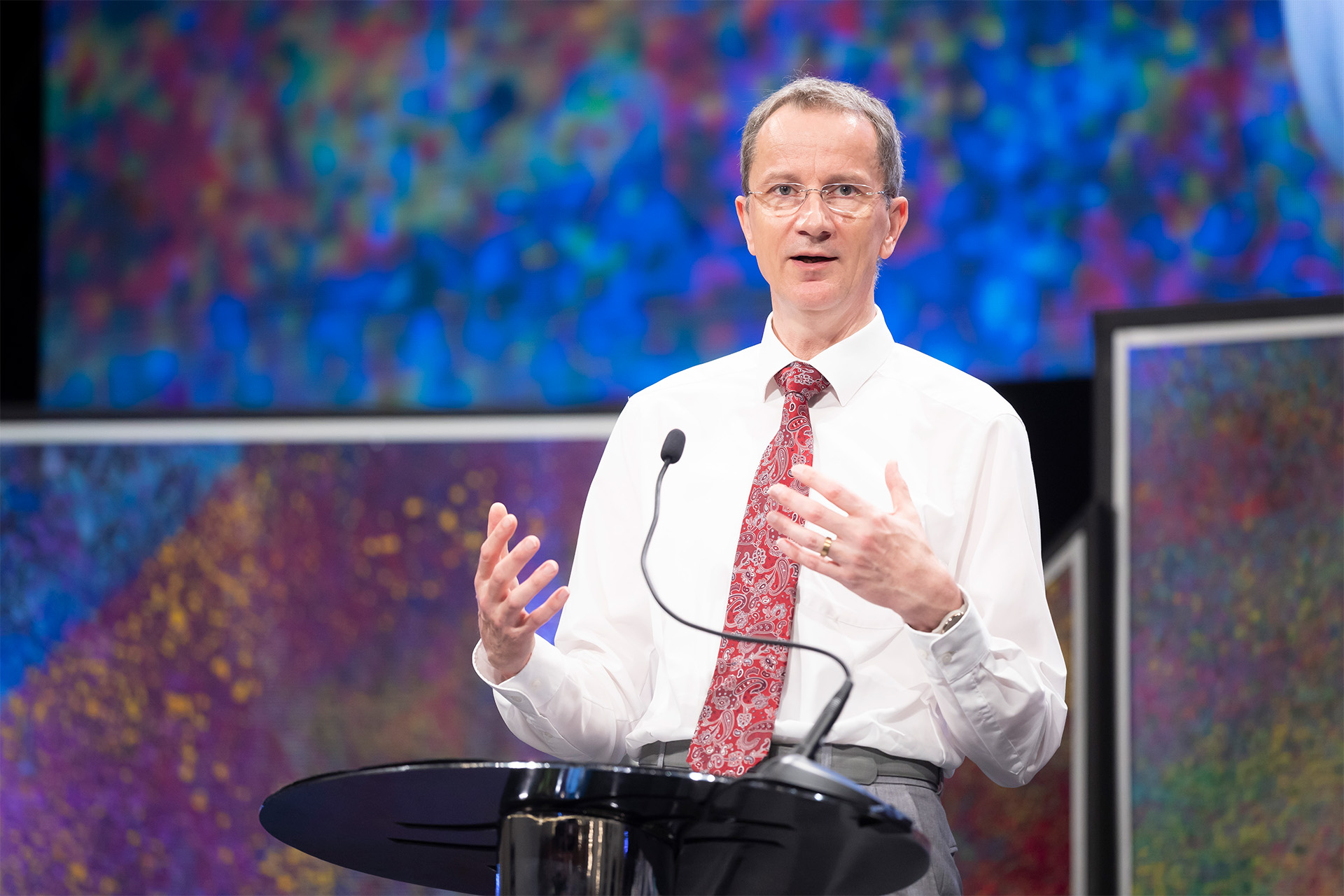 But there is also another question: Do we, as Pentecostals, understand these realities differently from others because we have access to God in ways that perhaps other communities have not fully explored or experienced? So there is a sense of curiosity, but also a desire to contribute to the dialogue for the purpose of building up the Pentecostal Church, the Pentecostal world, or a Pentecostal way of living in Christ—however one might phrase it. I think that is something we all share. That is also why we are scholars. We believe the mind can lead us to ideas, models, principles, and vocabularies that help us. And then we share those things with others.
That is one area I have seen here, and it helps me. I can listen to someone speak on an area I may not have thought much about before, but I become interested because they are helping me understand certain principles. They are helping me understand what truthful living might look like in that particular area.
So perhaps it is more of a general sense than a single underlying theme. You could say it is about Christlike living—we are all interested in how we become more like Christ. You could say it is pneumatological—we are all interested in the work of the Spirit. These are all aspects of it.
In that sense, we are very similar, because we are all Pentecostal.
Based on the conversations over the past three days, what practical lessons do you think the Church in Asia can learn from the experience of European churches? And conversely, what might European churches glean from the experience of the Church in Asia?
I think there are a lot of stereotypes because we do not really know one another. Europeans often do not know Asia well. They may have a sense of what Asia is like, but for them, “Asia is Asia” although that is not actually the case. When I was first asked to connect my paper to Asia, I said, “Well, I do not know Asia. I know Japan, and I know some other Asian countries, but I do not know all of Asia.”
For example, if you are in Birmingham and someone says, “That is an Asian district,” they may be referring to an Indian or Pakistani community. But in another place, it may be Koreatown or Chinatown. So Asia is not simply Asia.
The same is true for Europe. There is no single “Europe.” There may be a desire to have a European community, but within that community are many different countries and cultures. So it is important to say that there is not simply “the Church in Europe.” There is the Church in England—and even within England, there are many different churches with different experiences. These experiences may be quite different from churches in Switzerland, Germany, or Italy. So it is important to learn where the contexts differ. Perhaps churches in Singapore may learn more from churches in England, or perhaps less from England and more from churches in France. We need that kind of dialogue.
When Japan opened up to the West during the Meiji period, they sent people to the West to learn. One important figure was Fukuzawa Yukichi. They wanted to know, “What is the West actually like? Who are these people?” So they went to Germany, England, France, and other places. But in the end, Japan adopted specific elements from specific countries. They were not simply “European concepts” or “Western concepts,” though we often call them that. They were specific concepts from specific contexts.
I think that is important for us to learn from one another. There may be things that help in the German church, the American church, the English church, or the French church—not just generic concepts from “Europe” or “the West.” But this also shows me that if someone like Fukuzawa Yukichi had not gone, he would not have known. He would not have learned. He would not have observed.
So actually going to Asia—wherever in Asia—or actually going to Europe—wherever in Europe—helps us understand. It helps us overcome stereotypes. You may think all British people are stiff, but they are not. You may think all Germans are rude and straightforward, but they are not. So visiting, travelling, going to churches there, and seeing the reality on the ground—that is the starting point. Everything else comes from conversation and friendship.
