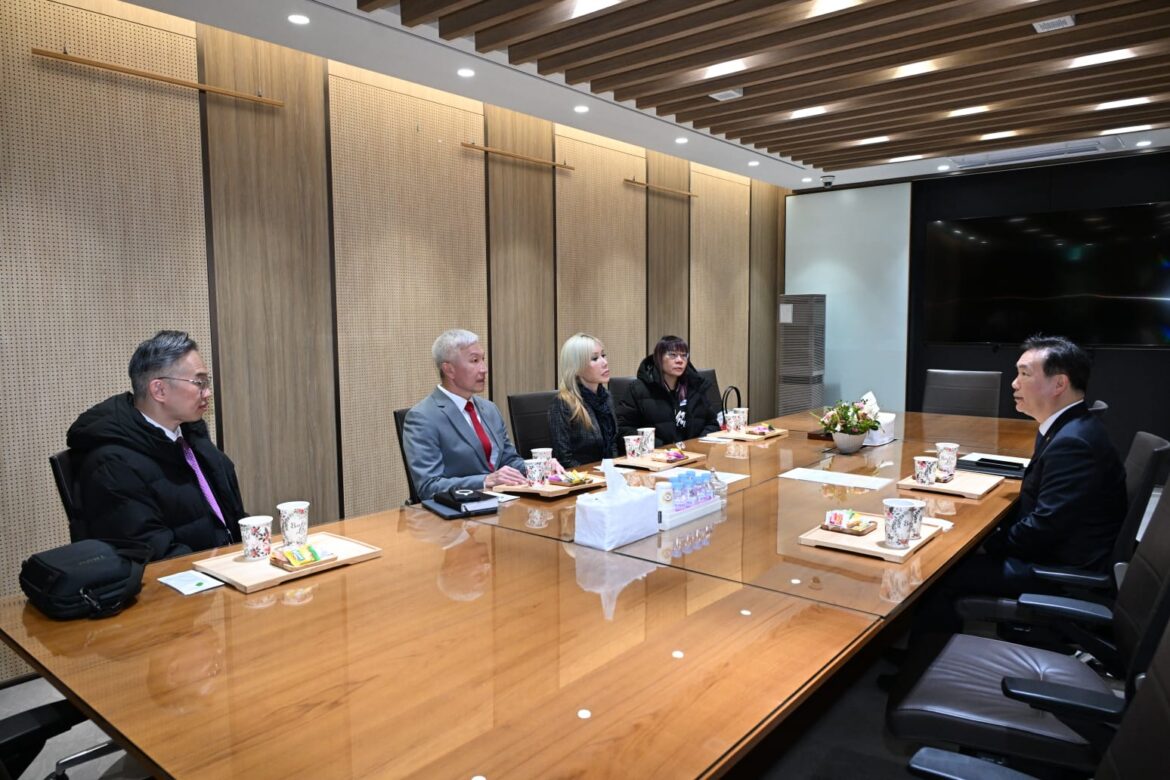
While in Korea earlier this month, Pastor Kong Hee was recently interviewed by Church Growth Magazine by Rev Dr Youngseok Kim. City News reproduces the interview here with permission.
Rev Dr Youngseok Kim: Pastor, please briefly introduce yourself. Could you also share about your personal encounter with Jesus and what led you to become a pastor?
Rev Dr Kong Hee: I am Kong Hee, senior pastor of City Harvest Church Singapore. By nature, I am an introvert. When I am alone, I enjoy reading, praying, walking, and simply being alone with God. I also deeply value quality time with my wife Sun, my son Dayan, and my close friends—sharing meals, praying together, and serving Jesus side by side.
I accepted the Lord Jesus Christ when I was 11 years old. Not long after, I encountered the Holy Spirit in a powerful way during a service led by Dr David du Plessis, widely known as “Mr Pentecost.”
In 1982, Dr Yonggi Cho came to Singapore for an evangelistic crusade at the National Stadium. I was still a high school student then, but I witnessed many dramatic and indisputable healing miracles that week. As an altar worker, I was assigned to look after a man who had come to the stadium paralyzed from the waist down. As Dr Cho prayed in the name of Jesus, the man stood up, walked up the stadium steps to the podium to testify of his healing. From that moment on, I fell in love with Dr Cho’s ministry and began to dream of serving Jesus as a preacher someday.
Fast forward to 1989. I was preparing to serve as a full-time missionary in the Philippines, but the Lord spoke clearly to my heart to remain in Singapore and plant a new church. Together with Sun and a group of 20 young people, I founded City Harvest Church on May 7, 1989. By the grace of God, our congregation has grown to 24,543. Together with our 268 branch and affiliate churches, our total membership is now over 80,000. To God be the glory!
What are the core ministries that City Harvest Church focuses on most?
City Harvest Church has many ministries but the five core ones are the following:
First, worship and the Word. We are committed to building a Christ-centered, Spirit-filled church where people encounter God through passionate worship and faithful biblical teaching. Pentecostal theology is central to us because it affirms the ongoing work of the Holy Spirit in the life of the church today—bringing loving transformation and missional empowerment. Our School of Theology is one of the largest in Asia, having graduated 9,432 students to date. Our goal is to raise up 1,000 Pentecostal scholars over the next decade to articulate Pentecostal theology with depth, faithfulness to Scripture, and relevance for the Asian church.
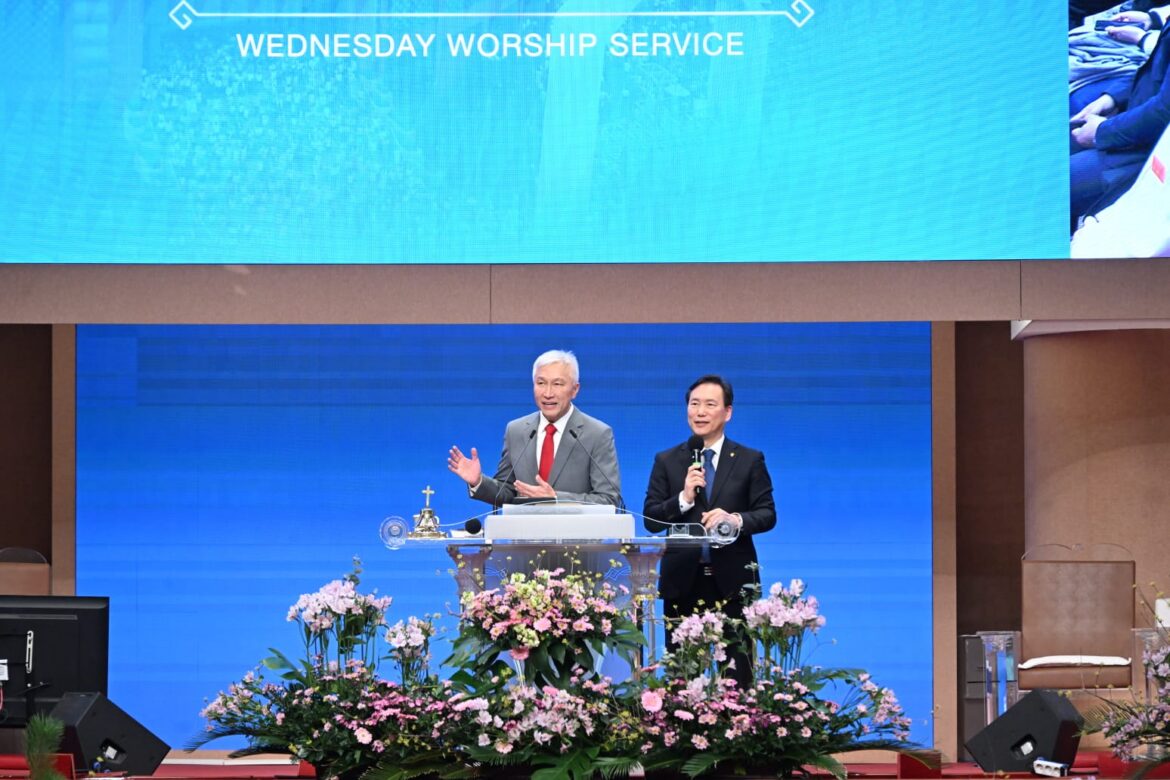
Second, prayer. Dr Cho and Dr Younghoon Lee have consistently taught that prayer is the key to revival. At CHC, prayer is foundational to everything we do. Through corporate prayer, fasting, and personal devotion, we seek God’s presence, guidance, and power, recognizing that all fruitfulness in ministry flows from our dependence on Him. We regularly observe seasons of early-morning and late-night prayer, during which thousands gather to seek the Lord together. Each January, many of our members make the annual pilgrimage to Yoido Full Gospel Church to participate in the “Twelve Baskets” prayer weeks. As a Pentecostal church, we pray boldly—including praying in tongues corporately and simultaneously—while also valuing moments of solitude and stillness before God. Many of our members also participate in silent retreats, intentionally setting aside time for quiet reflection and deep communion with Him.
Third, discipleship and leadership development. We invest deeply in nurturing believers to grow in spiritual maturity and to be equipped for ministry and leadership. This is done through home cell groups, where intentional mentoring and structured training take place. Our cell group ministry is the backbone of our church. It is the primary environment for pastoral care, discipleship, accountability, and the raising of new leaders. Our internal records indicate that the median range for cell group size is 20 to 30 people. Members meet weekly or bi-monthly to worship, pray, study the Bible, and enjoy fellowship. Beyond these meetings, cell groups remain active throughout the week—caring for one another’s practical needs and sharing the love of Jesus with families and friends.
Fourth, missions and church planting. From our inception, we have carried a strong missionary calling. Through our branch and affiliate churches, we work to advance the gospel across Asia. Our guiding conviction is that the whole church must take the whole gospel to the whole world. A core focus of our missions is reaching unreached people groups (UPGs). This is important because UPGs are communities that have little or no access to the gospel—often without a local church, Scripture in their native language, or any sustained Christian witness. One recent report states that 75.1 percent of all UPGs or 5,354 groups are in Asia, many remain beyond the reach of traditional evangelism. It is our desire that every people group should have a living witness of Christ—through a local church, indigenous leaders, and the Bible in forms they can understand.
Fifth, community outreach and social impact. We believe the gospel must be both proclaimed and demonstrated. Through our humanitarian and community initiatives, we seek to serve the poor and needy, care for the sick and disabled, support the elderly, reach youth at risk, and uplift the marginalized. Through our “Church Without Walls” initiatives and City Harvest Community Services Association, we assist more than 10,000 individuals and families annually. Our guiding ethos remains simple and practical: to find a need and meet it, to find a hurt and heal it. We believe people don’t care how much we know until they know how much we care. Therefore, beyond providing financial assistance, we intentionally build meaningful relationships to demonstrate the love of God and invite them into genuine Christian friendship.
How does City Harvest Church understand the core of the Holy Spirit movement?
We sense that the Holy Spirit is drawing the global church back to a life-transforming encounter with Himself, in a way that is centered on Christ, anchored in the Scripture, and outward-looking in love and mission.
First, at this moment in history, the Holy Spirit is not primarily emphasising novelty, spectacle, or spiritual elitism. Rather, the Spirit is re-forming the church from the inside out—calling believers to a deeper participation in the life of the Triune God.
Second, across cultures and traditions, we see a hunger for authentic experiences of God. The Holy Spirit is restoring prayer, worship, and attentiveness to God’s presence—not as emotionalism, but as transforming communion. This movement is less about outward manifestations and more about inward renewal that leads to changed lives. The Spirit’s work today is not only to empower but also to conform believers to Christ. This global Holy Spirit movement is marked by (a) a return to holiness of heart and life, (b) the formation of humility, obedience, and love, and (c) a recognition that fruit must accompany power. The Spirit is producing mature disciples, not spiritual consumers.
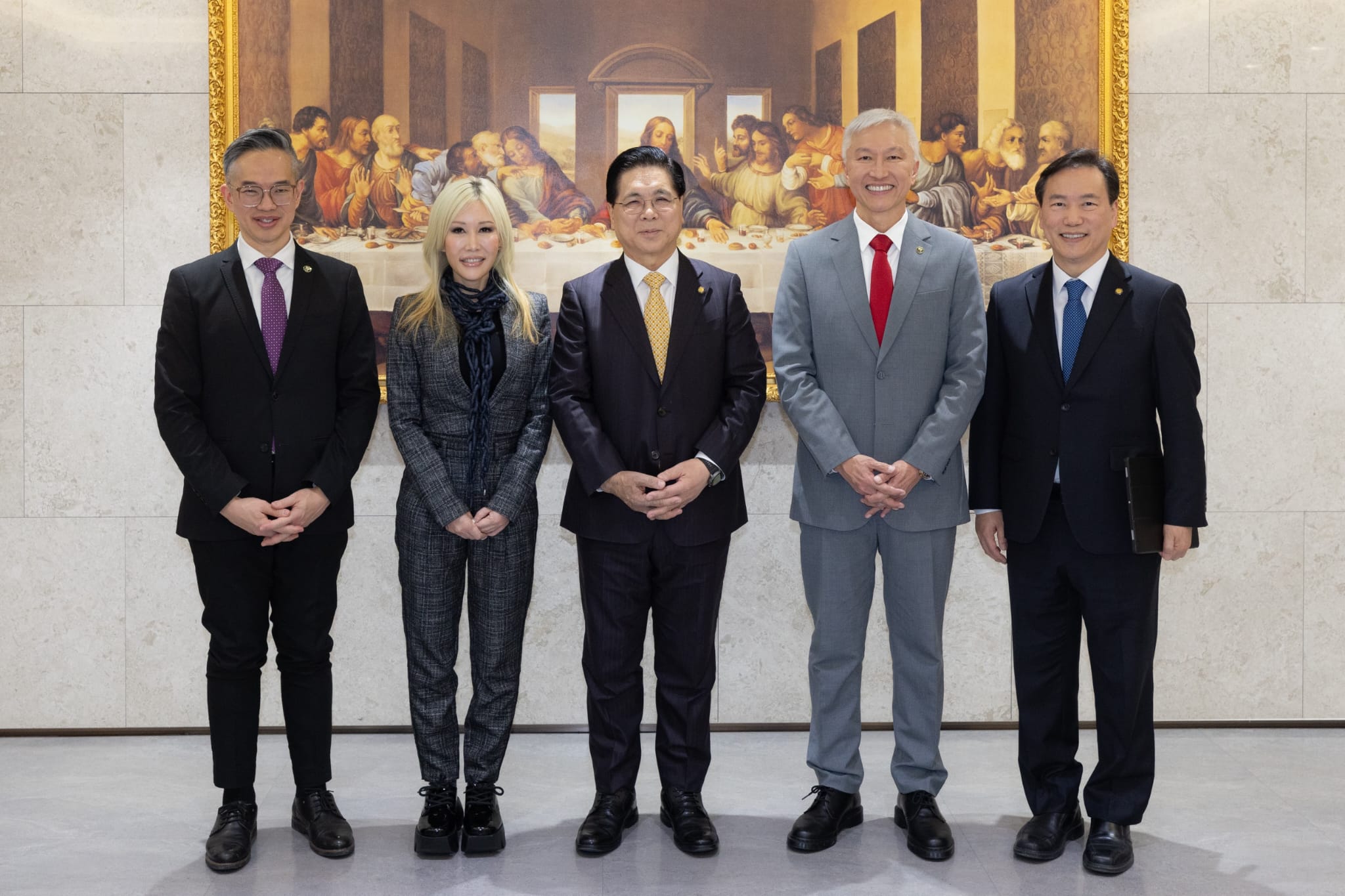
Third, the Holy Spirit is re-emphasising that empowerment is always given for the sake of others. It is missional rather than self-centered, compassionate rather than combative, and it is expressed through witness and serving the poor, the broken, and the unreached—embodying the love of God in the world.
Fourth, what is happening today is not confined to one denomination or geography. The Holy Spirit is working across traditions, generations, and cultures, reminding the church that the Spirit belongs to the whole body of Christ. There must be a greater humility and openness to learn from others, a shared longing for renewal rather than competition, and a unity rooted in Christ, not uniformity of expression.
Ultimately, I believe the Spirit is drawing the church back to the love of God. On the Day of Pentecost, the Holy Spirit poured divine love into human hearts (Rom 5:5), healed wounded communities, and sent the church into the world as a sign of God’s self-giving love (Acts 2). Any movement that claims to be of the Spirit but does not produce deeper love for God and neighbor has missed the Spirit’s central purpose.
How should discipleship and the work of the Holy Spirit be connected?
Discipleship and the work of the Holy Spirit are inseparable. Christian discipleship is not merely the transfer of knowledge or moral instruction, but a Spirit-led process of transformation into the likeness of Christ (2 Cor 3:18).
The Holy Spirit initiates discipleship by drawing people to faith in Christ, and then continues His work by forming character, cultivating holiness, and empowering obedience. Through the Spirit, believers are taught, corrected, and guided into truth, as Scripture becomes living and active in their lives. At the same time, the Holy Spirit empowers disciples for missions and service (Acts 1:8). As seen throughout the New Testament, especially in Luke–Acts, the Spirit equips believers with spiritual gifts so that discipleship results not only in inward growth but also in outward witness.
In this way, discipleship is both formational and missional—shaped by the Spirit’s sanctifying work and directed by the Spirit’s empowering presence. A church that is truly discipling people is one that is intentionally forming believers who live by the Spirit, walk in love, and participate in God’s redemptive mission.
What is the key to maintaining spiritual depth while pursuing church growth?
Pursuing church growth is part of the missional calling of the Christian life, but it is only the tip of the iceberg. Like any iceberg, what lies beneath the surface is far greater and more powerful than what we readily see. Everything we do for the Lord—including evangelism, ministry, and church growth—must be founded on and deepened by a growing knowledge of God through His Word and an ever-deepening union with Him through loving communion.
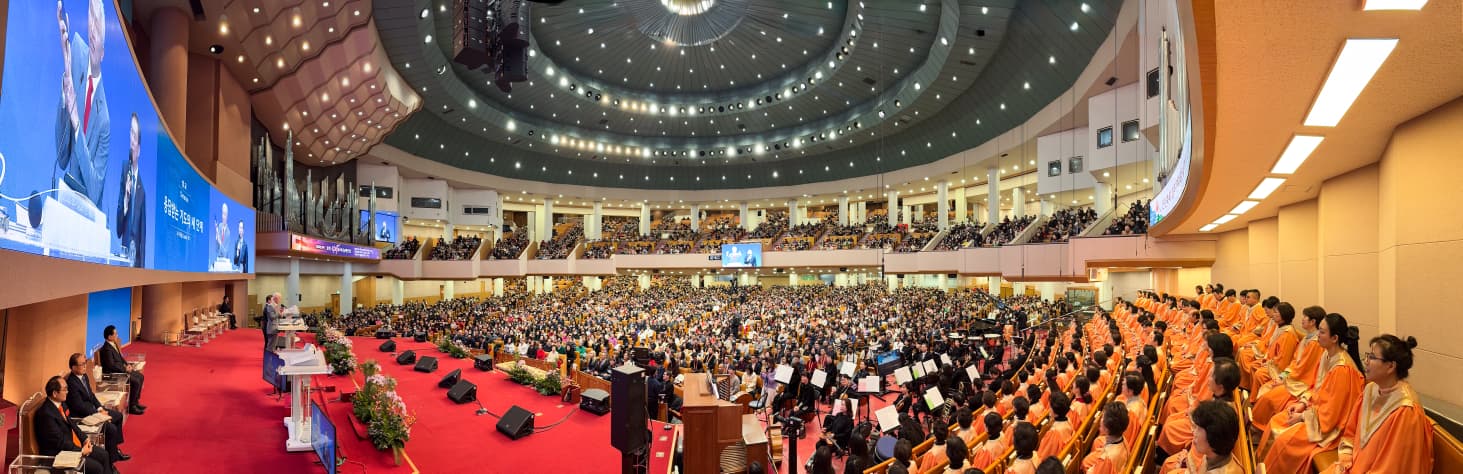
The true measure of our communion with God is seen in our inner transformation into Christlikeness. Are we increasingly bearing the fruit of the Spirit—the character profile of Jesus Himself? Is love, joy, peace, patience, kindness, goodness, faithfulness, gentleness, and self-control becoming more evident in our lives? Are we living with a steady overflow of love, forgiveness, and mercy toward others? Sadly, busyness is the greatest enemy of spirituality. When we live ultra-busy lives—even for good purposes like ministry, evangelism, and church growth—we often become too exhausted, physically and mentally, to nurture a deep and loving communion with God.
This is why prayer is so essential. Prayer is the most direct way we engage God and enter into loving communion with Him. Yet prayer itself must deepen. We must move from petition (asking), to devotion (seeking), and then into union (knocking). We must learn to relate to God not only for what He can give us—materially or missionally—but for who He is: a God who is love (1 John 4:8) and who desires a real relationship with us. As we learn to receive and enjoy His love, that divine love naturally overflows back to God and to others. Missions and ministry then become an expression of love, not a heavy burden. This is where we begin to experience what Jesus describes in Matthew 11:28–30—His easy yoke and His light burden.
For many years, our leaders and members worked so hard that burnout set in, and marriages and family life suffered. At CHC, we are now learning to practice what some call “slow-down Christianity.” We are learning to do less, so that God can do more—living out the principle that He must increase, and we must decrease (John 3:30). The results have been remarkable. We are seeing even greater church growth, not through pressure or striving, but as the Holy Spirit overflows the love of God through us. Our congregation is also experiencing greater joy—in their relationships, in their service, and in their home life—because love has become both the focus and the launching pad for everything we do.
What do you see as the most significant shift in missions today? And how can we effectively lead younger generations into missions?
I am speaking here from my perspective as the senior pastor of CHC. Over the years, our church’s missions focus has intentionally shifted from a primary emphasis on cities to a stronger commitment to unreached people groups (UPGs). While urban ministry remains important, many major cities today are already saturated with churches. Urban missions are often more attractive because they are relatively more comfortable, less risky, and logistically easier than reaching communities beyond the cities. Cities are also where the more educated and sophisticated populations live, and where much of a nation’s wealth and influence are concentrated. However, urban missions can unintentionally breed competition and rivalry among churches, as ministries overlap, resources are duplicated, and churches end up reaching people who already have access to the gospel—sometimes even drawing believers away from one another rather than extending the kingdom to those who have never heard.
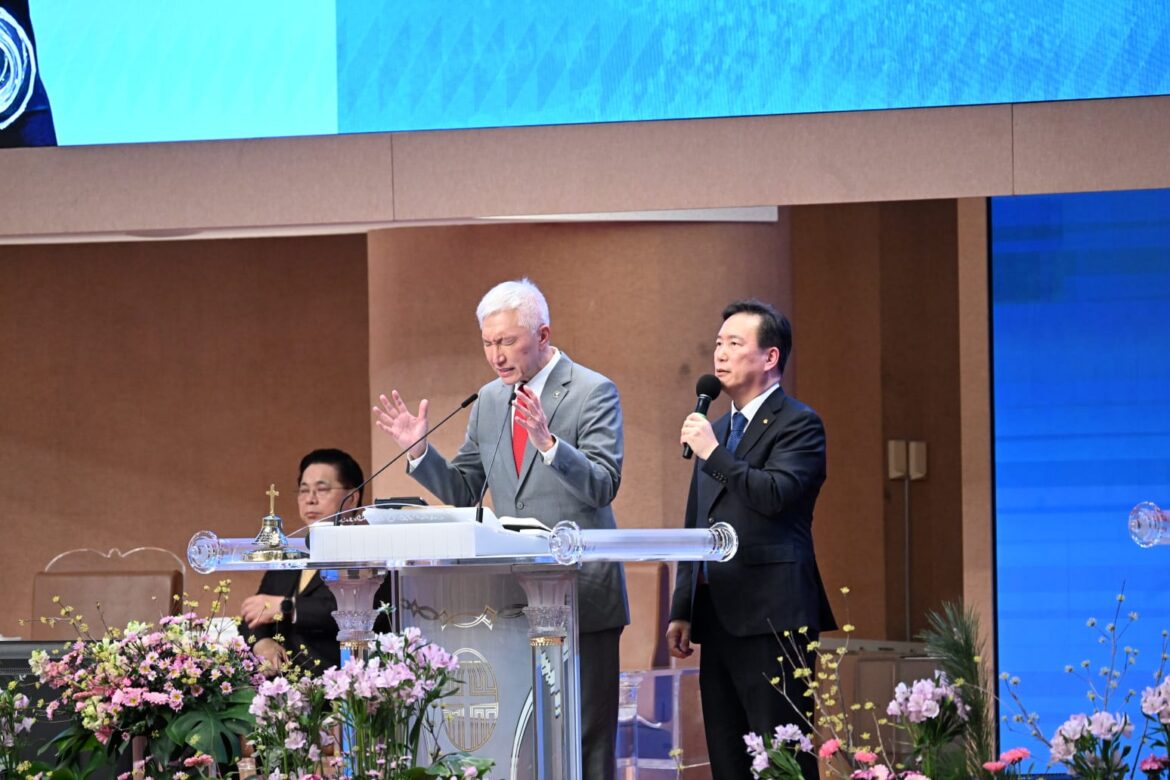
A number of missions studies have pointed out that nearly 94 percent of global missions funding is directed toward major cities and already-reached areas, while only a small fraction reaches UPGs who have little or no access to the gospel. Today, there are 7,130 UPGs worldwide, many of whom have no indigenous church, no Bible in their native language, and no sustained Christian witness in their communities. This reality compelled me to redirect our overseas missions strategy toward intentional UPG outreach. Over the past four years, we have purposefully organized mission trips to these unreached communities, many of which are located in the most challenging and remote regions of Asia.
Some time ago, I personally led a team to a village located more than 2,000 metres up a mountain in central Philippines. The people there had never met a foreigner. They had never heard the good news of Jesus Christ, and there was no church in their region. We shared the gospel, a group of villagers believed, and a small church was planted. Today, that work has grown into a congregation of more than 1,000 members, and we are now constructing a second church building as well as setting up a school to serve the community.
Missions among the genuinely unreached are deeply rewarding and faith-building. Our members have seen their passion for missions rekindled. More people are signing up for these trips, and many have testified that their own spiritual lives were profoundly renewed through participation. Rather than “mission tourism”—where missions are combined with shopping, dining, and sightseeing—UPG missions are truly the adventure of a lifetime: travelling to the remotest areas, serving the poorest of the poor, and witnessing the gospel take root where it has never been before.
In 2025 alone, CHC sent out 268 mission teams, averaging almost one team every one and a half days. These teams preached the gospel, prayed for the sick, cast out demons, planted churches, and served vulnerable communities. The praise reports and the genuine excitement of those who went have become the strongest testimony to the rest of our congregation.
This raises an important question: How do we effectively lead the younger generations into missions? My conviction is simple—use the pulpit on purpose. I must explain to the next generation why missions matter, not merely what to do. Yet beyond instruction, leadership is always by example. Discipleship is more caught than taught. Each year, I personally go—crossing crocodile-infested rivers, trekking through jungles, climbing mountains, and sailing across seas to reach the UPGs. When our members see the photos, videos, and testimonies of salvations, healings, miracles, and church planting, something stirs in their hearts. They want to be part of what God is doing. As a result, many youth cell groups have organized their own mission trips to these regions. Like the disciples in Luke 10:17, they return with joy, saying, “Lord, even the demons submit to us in Your name!” Their excitement, faith, and renewed sense of purpose have become a powerful catalyst for missional awareness among the next generation.
What are the key messages you especially emphasise in your sermons, and what is your sermon preparation process? Also, how do you find and select illustrations for your sermons?
In my preaching, I consistently emphasise a Christ-centered, Spirit-empowered, and love-shaped Christian life. At the heart of my sermons are a few core convictions:
First, faith in God. I have learned from Dr Cho to preach a gospel carrying a positive message of hope and vision. God is a good God. I place strong emphasis on His character: His love, holiness, faithfulness, power, and mercy. Before asking people what to do for God, I want them to know who God is and to trust in Him fully.
Second, union with Christ and life in the Spirit. I emphasise that Christianity is not merely moral improvement or religious duty, but a living relationship with God through Christ, made real and powerful by the Holy Spirit. The life of the Spirit is sharing in Jesus’s own life of love, drawing believers into communion with God, and then sending them out in mission.
Third, transformation of character, not just activity. The Holy Spirit empowers believers not only for service, but also for inner transformation into Christlikeness. I stress the importance of the fruit of the Spirit—love, joy, peace, patience, kindness, goodness, faithfulness, gentleness, and self-control—as evidence of genuine spiritual maturity. Power must always be accompanied by character.
Fourth, missional living shaped by love. I consistently teach that the Christian life is outward-looking. The gospel compels us toward evangelism, missions, compassion for the poor, and service to society. Yet God is love (1 John 4:8), and it is receiving this divine love that the Christian life becomes satisfying and fulfilling. Our mission must never be driven by guilt or pressure, but by love overflowing from our relationship with God.
Finally, practical obedience and hope. While it is vital that my sermons are theologically grounded, I seek to make them deeply practical. I want people to leave knowing how to trust God, obey Him, and live faithfully in their everyday lives—with hope, resilience, and joy.
My sermon preparation process? I usually begin with prayer and Scripture, not with a pre-selected topic or illustration. I spend time listening, reading, and meditating on the biblical text, asking, “What is God desiring to speak to my congregation?” At times, this process also includes a strong sense of what the Spirit is impressing on the church, which then leads me to search the Scriptures more deeply to discern and confirm that burden. From there, I work through three movements:
- Exegesis – understanding the biblical text in its context. I study the passage carefully, often consulting commentaries and theological resources, to ensure the message is faithful to Scripture.
- Theological reflection – discerning the Spirit’s emphasis. I ask how this text speaks to the life of the church today—spiritually, pastorally, and missionally. I am particularly attentive to how the Holy Spirit is forming Christlike character in the members.
- Pastoral application – connecting truth to lived experience. I then shape the message so that it speaks clearly to the realities my congregation faces—faith, suffering, relationships, work, family, and mission.
How do I find and select illustrations? I choose illustrations very intentionally. For me, illustrations are bridges that help people understand and remember truth. I draw illustrations from Scripture itself, my own life experiences, church life and missions, contemporary events and real-life stories, and—when appropriate—history or literature. The illustrations must serve the message and not overshadow it. They must be truthful and pastorally responsible. Most of all, they must help people encounter God, not merely be entertained. I avoid illustrations that are sensational, manipulative, or distracting. The goal is always clarity, conviction, and transformation.
Lastly, please share your vision for the future of City Harvest Church and any message you would like to convey to pastors in the Korean Church.
My vision for City Harvest Church is not merely numerical growth, but spiritual depth—a church that grows deeper and truer to the heart of God. Since God is love, our primary calling is to grow ever deeper in our love for Him and to be formed by the Holy Spirit into people who reflect His love in our lives, relationships, and mission. In the years ahead, I see CHC becoming a church that is deeply rooted in loving communion with God, formed in Christlikeness by the Holy Spirit, boldly missional—especially toward the unreached—and healthy in leadership, families, and community life.
We want to be a church where spiritual depth sustains spiritual fruitfulness—where prayer, worship, and Scripture shape everything we do, and where missions flow naturally from intimacy with God rather than pressure or performance.
Practically, this means we must continue to invest in the spiritual formation of our leaders and members, prioritise missions to UPGs rather than only accessible cities, expand compassionate service to the poor and marginalised, and raise the next generation to be Spirit-filled, emotionally healthy disciples. Our desire is to be a church that loves God wholeheartedly, loves people fervently, and serves the world lovingly—a Spirit-filled, Spirit-led community that reflects the love of Christ in both word and deed.
My message to pastors of the Korean Church? I want to begin by expressing my deepest respect and gratitude to the Korean Church. The global body of Christ owes so much to Korea’s legacy of prayer, sacrifice, and missionary obedience. Korean pastors and churches have shown the world what it means to seek God earnestly and to give sacrificially for the sake of the gospel. This is a spiritual debt we will never be able to fully repay in this lifetime.
We are eternally grateful to Dr and Mrs. Yonggi Cho for founding Yoido Full Gospel Church, which for more than six decades has stood as the most influential church in the world. We are also deeply thankful that Dr Younghoon Lee has faithfully carried and deepened Dr Cho’s legacy—leading the church to become even larger, more prayerful, and more impactful since assuming the role of senior pastor.
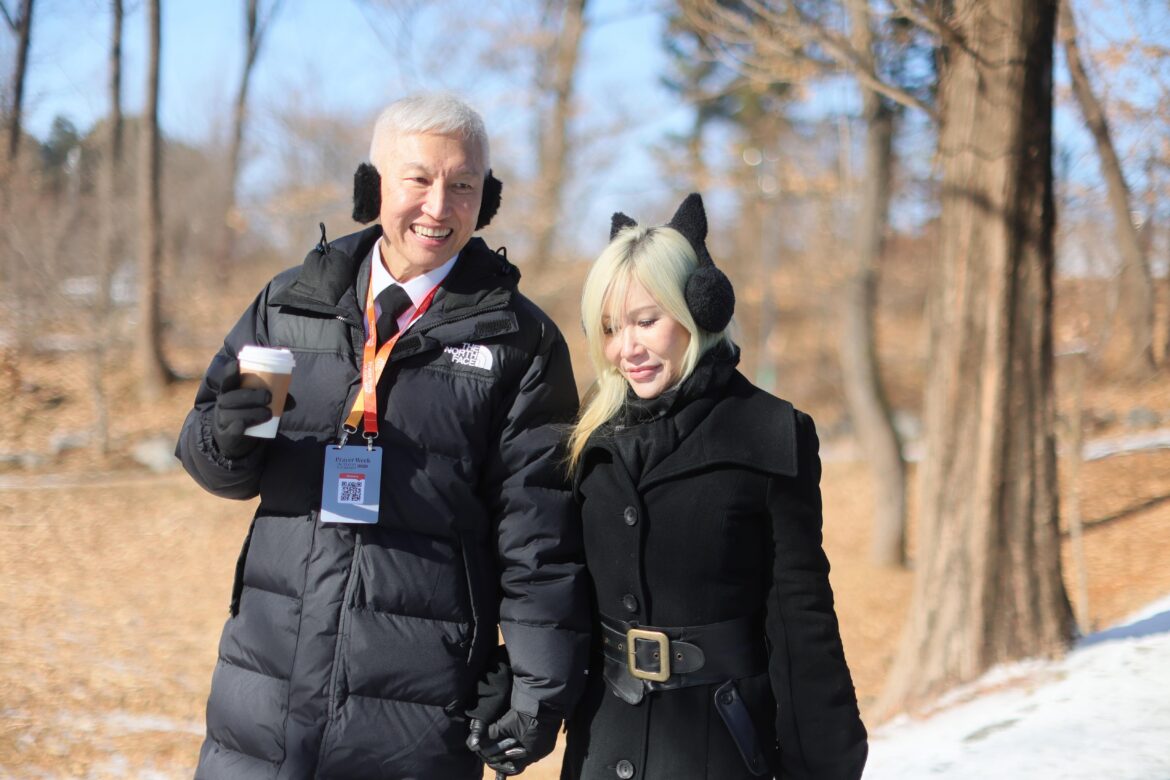
Recently, my wife Sun and I visited Dr Cho’s Memorial Museum at Prayer Mountain, and once again we were deeply moved by the words written on the walls. Dr Cho has already revealed to the global church a profound yet simple spiritual truth: the secret of church growth is the Holy Spirit and prayer. It is that simple, yet this revelation has still not fully permeated the global church, which is often enamored by the latest religious trends, marketing strategies, branding techniques, or celebrity pastors and worship leaders.
Through the Holy Spirit and prayer, Yoido Full Gospel Church grew from a single family to nearly one million members. Those who truly grasp this revelation have the power to transform their generation for Jesus Christ.
May Yoido Full Gospel Church continue to remind the world of this sacred legacy:
Come, dear Holy Spirit, let’s go!
Chu-yoi! Chu-yoi! Chu-yoi!