
At the Europe Asia Pentecostal Summit (EAPS) in May at City Harvest Church, Dr Daniela C Augustine, a well-respected theologian, professor, and author—moved attendees with her Zoom presentation, “Pentecost as the Future of Creation”. Though health challenges kept her from traveling to Singapore, her passion and commitment to sharing her insights were unmistakable. Dr Daniela presented her paper through Zoom.
Dr Daniela currently serves as Reader in World Christianity at the University of Birmingham and directs graduate studies in the School of Theology and Ministry at Lee University. Her teaching and writing span Pentecostal theology, theological ethics, public witness, and the Spirit’s transformative work in society.
The author of numerous works, including Pentecost, Hospitality, and Transfiguration: Toward a Spirit-Inspired Vision of Social Transformation (2012) and The Spirit and the Common Good: Shared Flourishing in the Image of God (2019)—the latter awarded Pneuma’s 2020 Book of the Year—Dr Daniela has become a vital voice in contemporary theology.
In this interview with CityNews, Dr Daniela shares what fuels her scholarly journey, her love for God, and her Spirit-filled vision for the Church and society.
CITY NEWS: It’s our first time hearing from you, and we would love to get to know you more. Would you share your salvation story, how you first received the Holy Spirit in your life? Also, what first stirred your passion for Pentecostal theology?
DR DANIELA AUGUSTINE: My story really begins in communist Bulgaria, where I was born into an Eastern Orthodox family of intellectual dissidents. Religion was largely forbidden under the regime, and while my parents weren’t persecuted for being Christians per se, they were watched closely for their anti-Communist views. I was told very early on that faith was something I would have to choose for myself. My parents made it clear—they did not want to impose their beliefs on me. They knew that becoming a Christian could mean persecution, and didn’t want me to suffer unless I made that decision freely.
When I was around 11 or 12, something extraordinary happened. One of my close friends was diagnosed with a rare form of cancer. She went through multiple treatments, but it was not effective. Her family invited me on a summer camping trip across the Bulgarian mountains. It was beautiful, but bittersweet; they didn’t know how much time they had left with her.
One night, while camping near a monastery in the Balkan Mountains, both of us felt this overwhelming urge to be baptised. Neither of us had been baptised before; my friend’s family weren’t Christians, and though I came from an Orthodox background, I hadn’t gone through any official rites. But the desire was intense—we didn’t even know what it meant, really, just that we needed to do it.
Her parents were concerned but supportive, and they spoke to the monastery priest. He was hesitant at first because it was forbidden to baptise children, but being unable to deny the request of a dying child, he agreed. They locked the monastery doors, and with the monastery’s custodian as our godmother to witness, and we were baptised—dipped three times in the name of the Father, the Son, and the Holy Spirit. We had no idea what we were repeating—about renouncing the devil or confessing Christ—but we meant it with everything we had.
And then something miraculous happened. My friend began to recover. By the end of the summer, her tests came back clear—completely healed! There was no more cancer. I had witnessed a miracle, and it was then that I knew without a doubt that God was real. It wasn’t something I’d inherited from my parents or been taught to believe. It came from a real, undeniable encounter with the divine. That experience planted a desire in me to understand, to go deeper…I was determined to get to the bottom of this! From then, my desire to study theology was ignited.
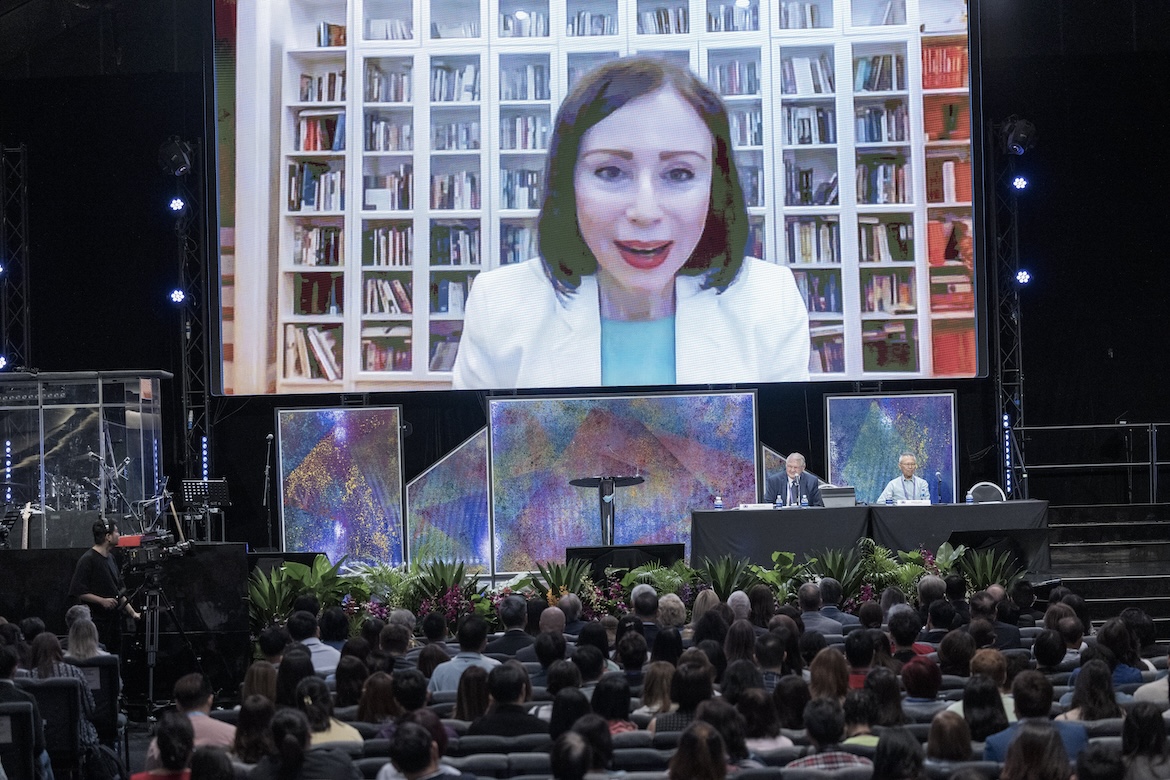
Although she was unable to present her paper in person as she was still undergoing treatment, Dr Daniela’s session at EAPS was a deeply memorable one for attendees.
However, this dream was not possible at that time. Under Communism, there was only one Orthodox theological academy, and it only accepted men preparing for the priesthood. Women weren’t allowed. So I buried that desire and studied economics instead. I went on to earn a Bachelor’s and a Master’s in social economics, with a focus on programming and statistics. Still, the call to theology never left me.
Then came the fall of Communism. No one expected it. It took us all by surprise. Around that time, I connected with the underground Church of God—the only unregistered and therefore most persecuted Pentecostal group in Bulgaria. Their faith touched me deeply. One day, as I prayed with them, someone asked if I wanted to receive the Holy Spirit. I barely knew what that meant; I only knew I had been baptised in the name of the Father, Son, and the Holy Spirit. But I said yes, and we prayed—and suddenly, I found myself speaking in tongues. I was shocked and scared at first, but they told me, “Don’t be afraid—just surrender.” And I did.
That experience happened just months before the regime collapsed. And as the country changed, doors began opening—supernatural doors. I received offers to study journalism in the US and artificial intelligence in Germany, but none of it felt right. I wept in my pastor’s office, torn between opportunity and calling. But God was at work behind the scenes. There was an opening for one person to be nominated to study theology at the seminary in Cleveland, Tennessee. Through a series of divine events, I was nominated, and accepted!
I worked tirelessly to finish my thesis early and flew to the States in January 1992. I still remember landing in New York, then Atlanta, then driving to Cleveland, Tennessee to start my theological studies. I was 23 and a half years old.
In Eastern Christianity, there is a saying, “You don’t choose theology—theology chooses you.” I know that it is true for me. It is a calling. From the moment I entered the classroom, I knew I was exactly where I was meant to be. Theology, for me, isn’t dry or academic. It’s the most sublime form of communion with God. It’s poetry. It has to be beautiful, because God is beautiful. God is beauty, goodness, and truth—and theology must reflect that.
In your paper, you spoke of humanity’s role, not as conquerors but as worshiping creatures ie, homo adorans. In this world that is more often than not self-centered, self-seeking, and self-indulgent, how do we stay in that state of worship to remember that we are to be worshiping creatures?
That’s a big and beautiful question, because it touches on the daily challenge we all face—how to live as worshiping beings in a world that pulls us toward selfishness and consumption.
I’d begin with Jesus in the wilderness. After His baptism, it was the Holy Spirit who led Him there. That’s important—it was a Spirit-initiated journey. He fasted for 40 days, facing temptation in a place of total scarcity and lack, a place totally antithetical to the cravings of humanity. Unlike Adam and Eve, who were tempted in a garden of abundance and fell, Jesus overcame temptation in conditions of absolute scarcity. That contrast is extraordinary.
From the moment humanity left Eden, they’ve been haunted by fear: the fear of scarcity and the fear of death, because there is a sense that there is no more access to the Tree of Life. We have to face our finiteness, including the reality of a finite world. And so in the process, all human beings become competitors in an ever shrinking material world. Driven by that fear of scarcity and death, humanity begins to consume the world, devouring creation, hoarding resources, even using one another through exploitation and slavery, trying to channel everything that has any life in it towards themselves.
But we weren’t originally created to be like this. Humanity is created for the other, for communion with God and each other. The image of God in us reflects a God who is a triune being, a divine community. When we turn inward and live selfishly, it is not just sin—it prevents the real fulfillment of humanity. The Fall is like the bending of humanity into itself, having a distorted spine curving into itself. Humanity has lost its capacity to stand face-to-face with God and its fellow humans, in whose face he is to encounter and discern the divine image that is shared between humanity. The image of God that is shared between human beings is the first common good that we are called to guard, steward and safekeep. We are given to one another for mutual safekeeping, as we steward the image of God in us, and affirm the image of God in one another.
So how do we resist the constant temptations of power, prosperity, and security? Think about how Jesus withstood temptation in the wilderness. How could He do that in conditions of scarcity, when the first Adam fell in conditions of abundance? Christ overcame the temptations by the Word of God, the power of His testimony, and the power and communion of the Holy Spirit.
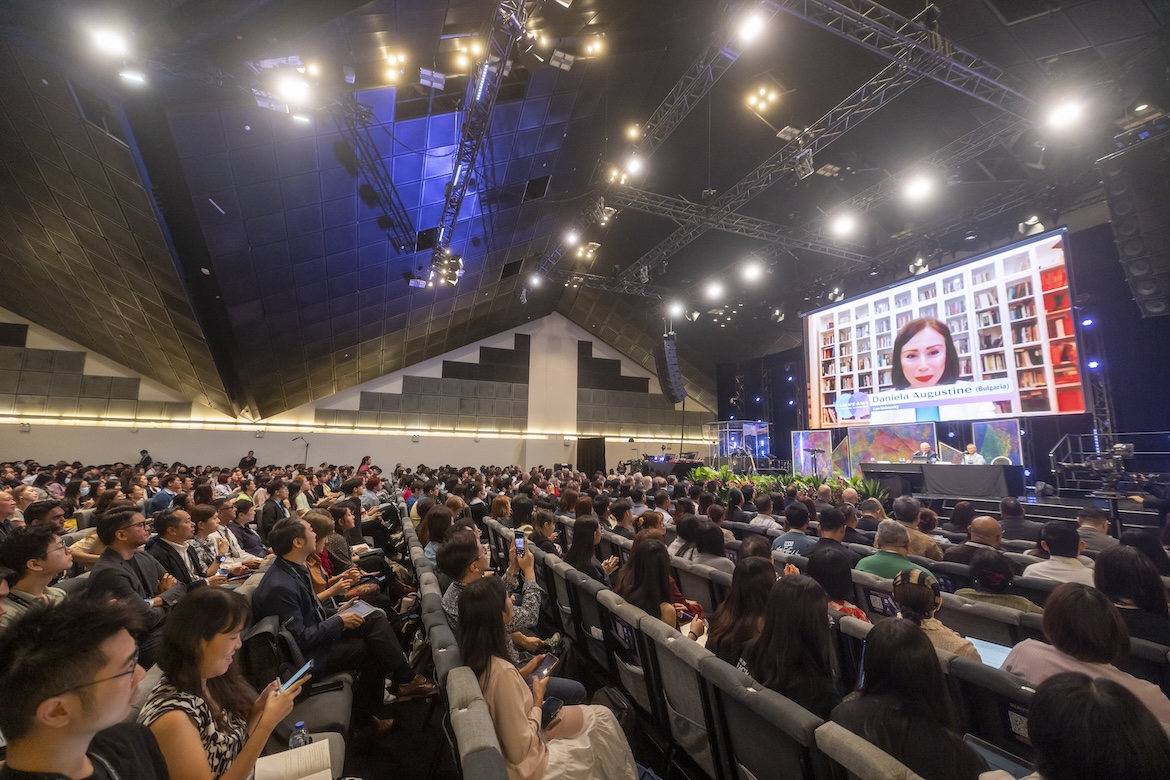
Dr Daniela’s deep love for the Holy Spirit moved many who sat through her presentation at EAPS.
To stand upright again—to live as homo adorans, as worshiping creatures—we need the Holy Spirit. We need the Holy Spirit for discernment, for overcoming temptation, and also for grasping a vision ie, God’s vision of the world, for oneself and the fellow human, and the church’s mission is to disseminate that vision to the world.
You wrote that the world is given to humanity by God in self-sharing as a gift of life, so that we may learn to, in turn, share it with the other and the different. How would you encourage believers who are in a season of pain—perhaps facing depression or betrayal—and want to withdraw inwardly instead of reaching out?
That’s such an important question, and there are many layers to it. Depression can come from many sources—chemical imbalances, trauma, physical illness, or emotional wounds like betrayal. So first, we must acknowledge that we are wonderfully and fearfully made, as Scripture says—but also complex and fragile. Our minds and bodies groan, just like creation does, and the Spirit groans together with us. We long to feel that sense of wholesomeness.
In seasons of deep pain or depression, it’s natural to want to isolate. Like a wounded animal, we don’t want to be touched. But healing often doesn’t happen in isolation. It happens in community—what I like to call “healing communities.”
John Dominic Crossan makes a helpful distinction between curing and healing. Medicine can take care of the symptoms and cure you, but true healing cannot happen without community. In Jesus’ time, people with illnesses like leprosy or bleeding were cast out of society, which is profoundly disturbing because we were all created by God to be in community. When Jesus healed them, He didn’t just take away their symptoms—He restored them back to community. That’s true healing: being seen, embraced, and brought back into communion. We are made for encounters, made to turn towards God and the fellow human. This is a very important truth.
We are social creatures, and sociality is healing. I’ve experienced this personally in a season of great physical suffering. A small group of women from church came and wrapped themselves around me, at times literally. They didn’t rush to fix me. They journeyed with me, encouraged me, and invited me into little acts of beauty and service. I remember helping them decorate prayer stations for church. It was exhausting, but it was healing. Step by step, that sense of belonging pulled me back to life.
So, to anyone who is struggling: don’t underestimate the power of being held by a healing community. For the church members in cell groups or small groups—let us not wait for the hurting to come to us. Let us go to them. Wrap ourselves around them in love and be that healing presence.
Unforgiveness is another weight many carry. It can imprison us, even torment us, as Jesus’ parables show. But forgiveness, unlike repentance, isn’t for the offender—it’s for our own healing. A culture of forgiveness and reconciliation is a big mark of a mature community. Forgiveness frees us from the bitterness that can harden the soul.
That said, forgiving someone does not mean tolerating abuse. We must still hold people accountable; we are responsible for each other’s humanity. It is not loving to allow offenders to continue to abuse verbally, physically or in any form. In so doing, they are degrading the humanity of not only their victims, but also themselves. We are given to each other for mutual safekeeping, and thus we ought to hold each other accountable and not tolerate abusive behavior.
Ultimately, the Spirit is the one who heals—through love, through community, and through daily reminders that we are never abandoned. We are held, even in our darkest times.
Beyond all the texts and professional academic study, who is the Holy Spirit to you personally?
To me, the Holy Spirit is the One in whom I live, and move, and have my being. Every breath I take is because of the Spirit. Scripture says that if God were to withdraw His breath, all life would perish. Even the simple act of breathing is a gift of divine hospitality. The Holy Spirit hosts our life. We live each day in the embrace of the Trinity.
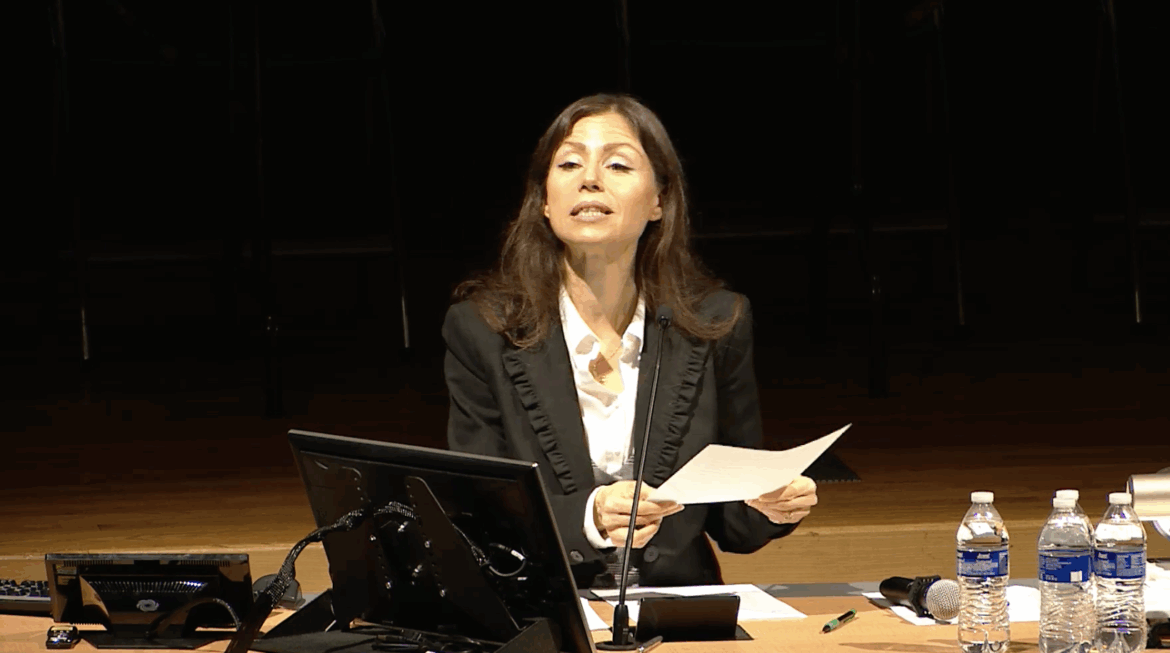
Dr Daniela is an Honorary Research Fellow in University of Birmingham’s Department of Theology and Religion. Image from a lecture in 2015.
Because of the Spirit, I can begin each day with gratitude—for the communion God offers, for the love I feel through others, for the beauty in creation. There has not been a single moment in my life when I was not loved, even if it didn’t always feel that way. The Spirit reminds me of this truth daily. For those who’ve experienced rejection, pain, or absence of love, this is such a healing realization: that before the foundations of the world, we were already loved by God.
And this love isn’t just for us to hold onto—it’s to be shared. As Paul writes in Romans 5:5, “The love of God has been poured out in our hearts by the Holy Spirit.” We were made to be loved and to love, to be vessels of that love for others.
The Spirit is my teacher, my guide, my comforter, and my source of strength. And He’s also the one who stirs vision—God’s vision of what the world can be. That’s why I connect Pentecost so deeply with social transformation. I’ve lived through dramatic social change, and I believe the Spirit transforms not just societies – he also transforms hearts.
There’s so much more I can say about the Holy Spirit. He is my life—my breath, my joy, and the lover of my soul!
Last question — do you have any books besides the Bible that deeply influenced your faith?
Yes, there are several books that have deeply shaped both my faith and my theological imagination. One that stands out is Exclusion and Embrace by Miroslav Volf. His reflections on forgiveness and reconciliation resonated with me deeply, especially as someone who did research in post-conflict communities in Eastern Slavonia. That book influenced my own work, particularly The Spirit and the Common Good, which in fact was inspired by those communities. At the end of that book, in the Epilogue, I included several short testimonies from that region to give readers a glimpse into what inspired the theology.
Another book I recommend is To Heal a Fractured World: The Ethics of Responsibility by Rabbi Jonathan Sacks. He was the former Chief Rabbi of the United Kingdom, and although he’s now passed, his voice continues to shape interreligious dialogue. That book brings me to tears every time I read it. I always assign it in my Theology of Social Transformation courses—it really helps students appreciate our shared ethical and spiritual roots, especially with our Jewish brothers and sisters, with whom we share the Old Testament.
If you’re asking about non-theological works that impacted me, I’d say Dostoevsky—especially The Brothers Karamazov. His writing is deeply ethical and theological. One of the characters in that novel says something I’ll never forget: “I don’t want to live in a world without God, because in a world without God, everything is permissible.” That idea speaks directly to our human longing for meaning, conscience, and moral accountability.
So yes — Volf, Sacks, Dostoevsky. Each in their own way has helped me see the world, and God, more clearly.
Edited by Yong Yung Shin
