
Ps Joshua Heward-Mills speaks honestly about the struggles of pastors’ kids, the importance of spiritual authority, and why this generation must ask hard questions and find its answers in Scripture.
Joshua Heward-Mills is a pastor, preacher, and recording artist from Ghana. He is the son of Bishop Dag Heward-Mills, founder of the United Denominations Originating from the Lighthouse Group of Churches. Ps Joshua also hosts the First Love Conversations podcast, a space for honest, heartfelt conversations about faith, life, and everything in between.
Despite the weight of that legacy, Ps Joshua exudes remarkable warmth—down to earth, sincere, relatable, and completely without airs. He has a way of putting one at ease, moving easily between humour, honest reflection, and deep spiritual conviction.
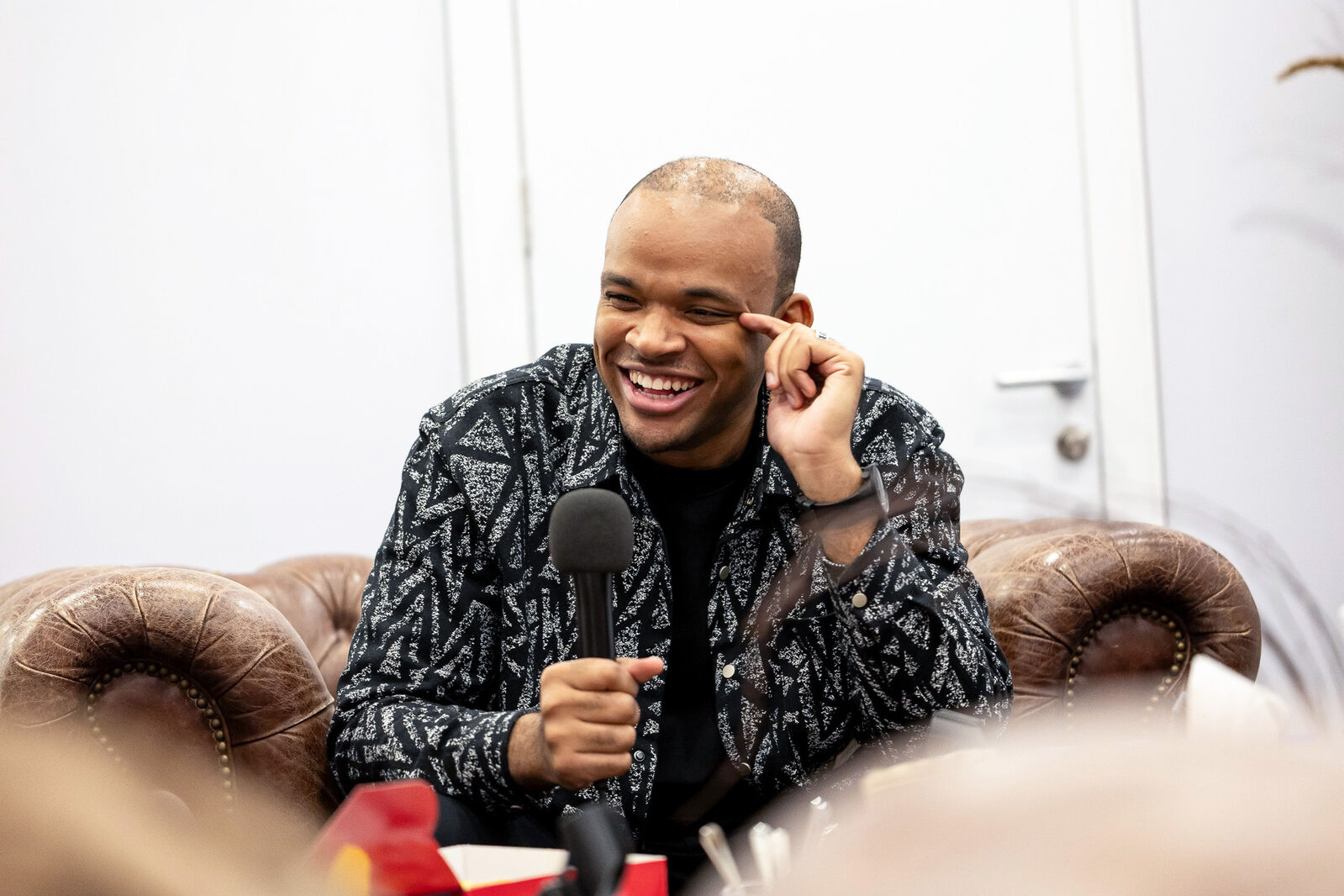
Ps Joshua sharing his thoughts with CityRadio and City News
Beneath the easy banter is a pastor deeply passionate about this generation, marked by a spiritual hunger for God, and a profound honour for his father, Bishop Dag, whom he calls his “hero”.
Another one of his faith heroes is Ps Kong Hee. He first met Ps Kong when he was 18, and speaks of him with deep love and affection. Even now, he sends Ps Kong text messages often, sometimes late into the night, learning from him and gleaning from his wisdom. His wife, Dr Priscilla Heward-Mills, jokes that he loves talking to Ps Kong more than he loves talking to her.
City News and CityRadio recently sat down with Ps Joshua for a joint interview; this article is adapted from that conversation.
CITY NEWS: Did you ever struggle with feeling that you inherited your faith rather than owned it? Tell us about the defining moment when God became real and personal to you.
PS JOSHUA HEWARD-MILLS: By the time I was 18, I wanted nothing to do with God or with church. My parents brought me up going to church, but I had no desire to be there. To me, church felt empty and boring. I had drifted far from God.
I remember going to Korea and sitting through all the services at Yoido Full Gospel Church. I found the whole experience so boring. Most of the time, I was on my phone trying to catch Wi-Fi so I could text my friends. On the last day, we were at the little prayer grottos that look almost like brick ovens. The guide said that about 98 or 99 percent of prayers prayed on this prayer mountain had been answered. So I went into one of the little grottos. At first, I thought, “Maybe I can pray for a new laptop or a new phone.” But then I felt the Holy Spirit touch my heart.
Alone, I prayed honestly, “Lord, I really have no desire for You. I have no desire for Your work. I have no desire for Your house. I have so many worldly desires. I feel so attracted to the things of this world. I feel more at home outside Your house than in Your house. I love the music of the world. I love my friends in the world. I love the activities of the world. I don’t want to have anything to do with You. God, I wish I did. I wish I liked You, but I don’t like You.”
Then I said, “Lord, if You can work in my heart, if You can touch my heart, Holy Spirit, and turn my heart to You, I will serve You for the rest of my life.” I did not fully know what I was saying. I just said it.
That was in October 2009. I went back home, and in January I went to England to start law school. My mother took me to university, and the first thing she did was call the pastor of our church in that city to come and meet me. I knew what was coming. They invited me to an all-night prayer meeting on Friday. I told myself, “I’m not going to pray for seven hours. I’m barely saved.”
Later, the pastor and his wife visited me and brought me a rice cooker—and not just a rice cooker, but rice as well. Then they reminded me again about the all-night prayer meeting. I did not want to go, but because of the rice cooker, I felt bad. Every time I used it, I felt guilty. So when Friday night came, I decided, “I’ll go for this prayer meeting once, just to say thank you for the rice cooker, and then I’m done.”
The meeting started at 10pm and was supposed to go on until around 5 or 6am. I had not spoken in tongues for years. I had not been in a prayer meeting for a long time. I was sitting there, bored. After a while, I went to hide in a corner and sleep. I thought no one had seen me.
When I came back into the church hall, someone came up to me and said, “I saw you sleeping in the corridor.” Then she told me she was going to give me a sermon to listen to, preached by my own father. She said it would help me stay awake to pray. She put the message on my iPod. I put in my earphones and started praying while listening to my father preach. I will never forget that message. It was called “The Missionary Call.” It was a very extreme message to begin with, but that was what I listened to as I prayed.
Suddenly, I began to have an encounter with God. The atmosphere in the room changed. It felt as though the room was filling up with water and I could not breathe. It felt like there was no oxygen in the room. After a few seconds, I ran out of the room and onto the street. It was winter in northern England, and I was breathing hard. I remember seeing the vapour from my breath because I was breathing so fast. Then I heard myself saying, “Jesus, I love You. Jesus, I will serve You. Jesus, I will give my life to follow You.”
My parents could never have forced me to become a pastor. I did not know what I wanted to be when I grew up, but I knew I did not want to be a pastor. Yet what happened to me that night changed my life. The Holy Spirit has a way of working in the heart and changing our desires.
I went on to study law for six years and graduated with a First Class degree. I worked in a bank, and the pay was good. But no one can break the desires the Holy Spirit places inside your soul. I knew God had a higher purpose for me. I knew my life was much more than just working on this earth to eat, sleep, and drink. God had something great for me to do.
How did you discern your call into the ministry?
I always say that I did not have a spectacular call. There is definitely nothing special about me. Among my siblings, I was the least smart one until the Holy Spirit came into my life. But the one special thing about my life is that God touched my heart to love Him.
Over the years, there were different moments when the Holy Spirit gave me a stronger and stronger desire to belong to God, to follow Him, and to serve Him well.
I graduated with a First Class degree from Nottingham Law School. I was called to the Bar at Lincoln’s Inn in London, and later started working at HSBC’s global headquarters in London, in legal compliance. It was a fantastic opportunity for my career, and I loved the people I worked with. But I was so unhappy.
There were times when I would literally sit at my computer with tears in my eyes. I used to go into the office very early to spend time praying and reading the Word. One Monday morning, I felt overcome by God’s presence and was burning with a desire to serve Him. After work that day, I walked home praying in the Spirit. When I reached the door of my flat, I stayed outside in the car park, pacing up and down, still praying in the Spirit.
I just felt the Holy Spirit telling me to go all out into the ministry.
So I called my dad and said, “God has called me.” My parents could not quite handle my transition at first. My dad asked me, “What do you want, Joshua?” And I said, “I want to be in the ministry.” He did not really take me seriously at first.
But a month later, I resigned from my job and moved back to Ghana. My boss at work even tried to double my salary to get me to stay. But when the Holy Spirit touches your heart, I believe that is one of the greatest ways God calls people.
When you look at the servants of God in the Bible, you see this same desire. Moses said, “I want to see Your face.” Enoch walked with God. David had such strong desires for God. In Psalm 27, he said, “One thing have I desired, and that will I seek after: to behold the beauty of the Lord and to inquire in His temple.” You see the same desire in Paul to give up everything, “that I may know Him.” I believe that is the genesis of all ministry. Jesus asked Peter, “Do you love Me?” And if you do, then you can feed His sheep.
So when I moved back home, I went to my dad and told him, “I want to be in the ministry.” My dad was pastoring one of the largest modern charismatic churches in our country, with hundreds of buildings and churches across the city and the nation. But he did not give me a ready-made platform. He simply told me to go and start a new church.
There was no building, no piano, nothing — just open air.
So my friend and I arranged our first service where six people showed up. We did not even have electricity. We did not have anything. I just preached to the few people who came. The next week, four people came. The week after that, five people came. For a while, it stayed around that range. After three months, we had about 60 people. After six months, we had 100. After a year, we had 500.
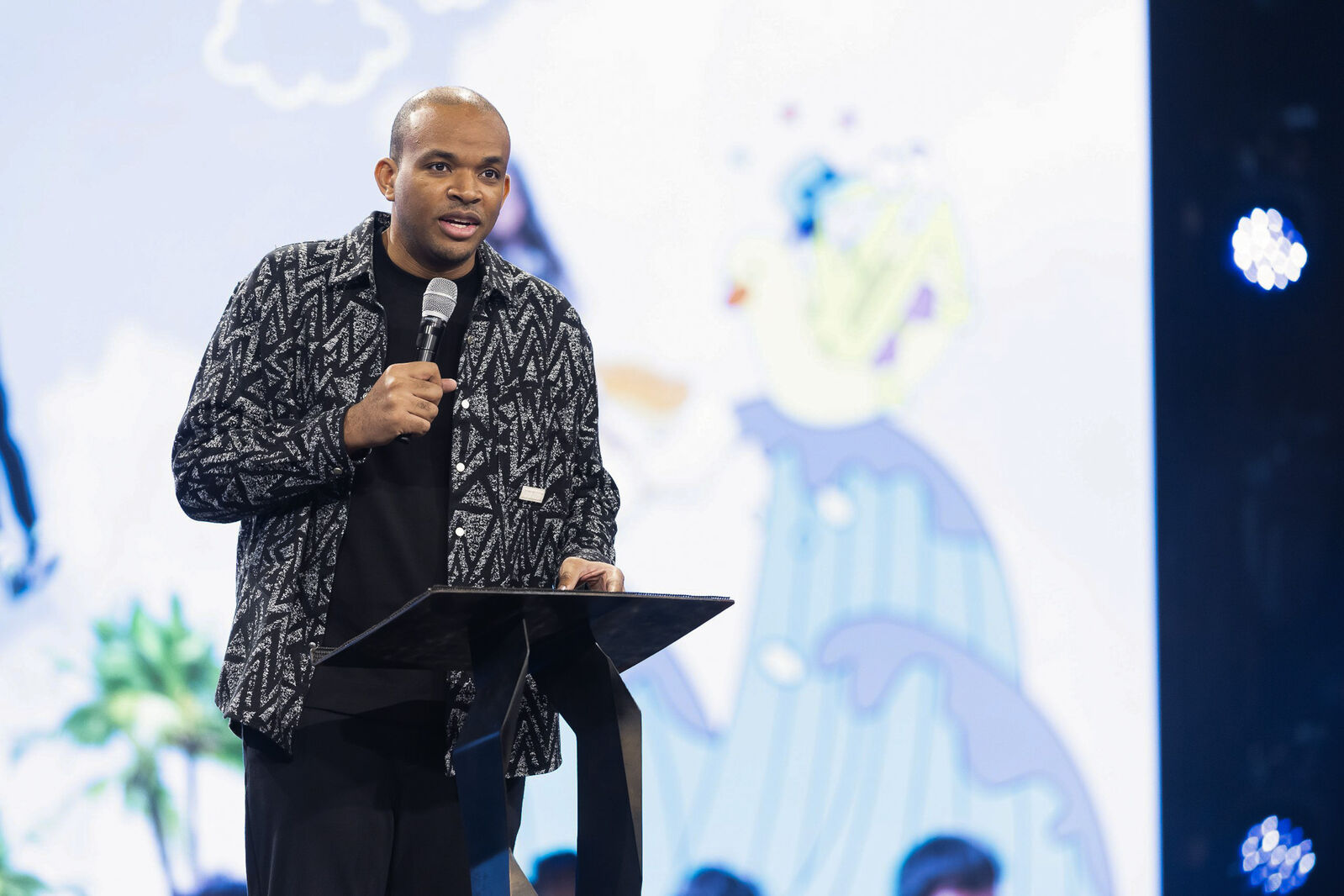
Ps Joshua preaching at CHC’s Emerge service on 16 May 2026
Looking back, I can see that the Holy Spirit was shaping my desires all along. I studied law, worked in banking, and had good career opportunities before me. But when the Holy Spirit touches your heart, no one can break the desire He places inside your soul. That, to me, is how God called me into ministry.
What is it like serving alongside your father, Bishop Dag?
For the last 10 years that I have been in full-time ministry, every ditch I have dodged was because my dad said, “Hey, watch out.” I have been blessed to be next to my dad, who is my hero.
One of the things we need to understand is that when we are saved, the nature of our relationships changes. Paul said, “Henceforth know we no man after the flesh.” That means everyone in our lives must have a scriptural definition. We need to understand who people are to us in the spirit, and then relate to them accordingly.
Scripture recognises certain relationships. The Bible recognises a father and mother, and says that if you honour them, it will be well with you and you will live long on the earth. The Bible recognises pastors who feed you with knowledge and understanding. It recognises friends, spiritual brothers, instructors, and people God sends into your life to teach you. It also recognises the strange woman, and when you recognise that kind of relationship, the Bible says to flee.
So I always teach the young people in my church that you need to find out who someone is to you in the spirit. Once you recognise that, you can relate to them scripturally and receive everything God intended you to receive from that relationship.
With my dad, we are very close. We talk all the time, and of course there is a natural paternal relationship. But I do not relate to him only after the flesh, because you cannot receive spiritual things from a purely fleshly relationship. Although he is my earthly father, he is also my spiritual father.
There is a passing on of the spirit and of the mantle that only comes when you recognise who someone is in the spirit. When the Holy Spirit reveals that someone is a spiritual father to you, that relationship must be marked by honour. “If I am a father,” God says in Malachi 1:6, “where is My honour?” That honour includes blessing, even financially, but it also includes receiving spiritually and scripturally.
So I relate to my dad based on his spiritual identity, not merely his physical relationship to me. That is what makes the anointing flow. Psalm 133 says that the anointing flows from the head of Aaron all the way down. David said, “You anoint my head; my cup runs over.” God anoints your spiritual head—your father, your covering—and then your cup runs over.
I do not believe there is anyone God has used greatly who did not honour a spiritual father. When you honour where the anointing is, it works.
You can see this in the life of Jesus. When He went to His hometown, the people said, “Isn’t this Mary’s son? Aren’t His sisters here with us?” They knew Him after the flesh. They related to Him based on what they knew about Him naturally. And the Bible says He could not do any great work there. It does not say He would not; it says He could not. The anointing was limited by their dishonour.
Honour is powerful because the anointing is limited where it is not honoured.
What was it like growing up in a family where your life was so visible to others, being a pastor’s kid?
I want to stand up for pastors’ children, because I feel like we get a lot of flak. People do not always understand what it is like to sit in this place. We are often judged by standards that are not reasonable. Of course, we can be a mess. We cause trouble. But I also feel that most of the time, we pan out in the end.
If I were speaking to a younger version of myself, I would say, “Find yourself in Scripture.” When you find yourself in Scripture, you know what to do. And I think many pastors’ children are like Simon of Cyrene. Simon did not set out to carry the cross; he was forced by the Roman soldiers to carry it. In the same way, many pastors’ children are forced to carry a cross.
You are told, “You have to pray.” But sometimes you do not feel like praying. The Holy Spirit has not touched you or anointed you to pray yet. You are told, “You have to read the Bible.” But you may not want to read the Bible. Everyone else in church is there because they want to be there, but many pastors’ children are there because they have to be there.
That can create a dynamic that makes many pastors’ children walk away. Simon carried the cross all the way to Calvary, but after Calvary, you never hear of him again. In the same way, many pastors’ children do not necessarily denounce God or become atheists. Some do, but that is rare. More often, they simply disappear from the ministry scene and from active church life. I think it is because they are forced to carry a cross until they finally have a choice.
When it comes to pastors and parents, I think there are two things to hold in tension. On one hand, you do have to make your children do certain things. There is no running away from that. The Bible says to train up a child in the way he should go, and when he is old, he will not depart from it.
When you look at Hophni and Phinehas, you see that Eli did not restrain them. They disrespected the sacrifices people brought to God. Sometimes pastors do not put their children in their place or teach them to respect the sacrifices that other pastors and church members make in the house of God.
So there is a place for order. My dad was very strong about how we treated people, honoured God, and respected the things of God. I remember one Sunday, when I was a teenager, I tried not to go to church. I said it was my life. My dad told me, “Look, you can move out of this house. But while you are in this house, you are going to church every Sunday.” That was really important.
But if I were speaking to pastors’ children, I would say: go and find God for yourself. Because we are often made to do things. I went for conferences, conventions, services, and church meetings when I did not want to be there. And when you are made to do something you do not want to do, it is easy to walk away from God.
So you need your own encounter with the Holy Spirit. Everything you do must be rooted and grounded in your love for God and your passion for Him. And that usually happens when you get alone with God—in silence and solitude.
Young people today value freedom, authenticity, and autonomy. How would you explain the role of spiritual authority and structure in a genuine move of the Spirit?
Order has always gone with the move of the Spirit. Pastor Kong once preached from Ezekiel, about the river that flows from under the temple, and he said that the river had banks. That means it was controlled. If you do not have banks, you do not have a river—you have a flood.
Young people need those banks. The Bible says foolishness is bound in the heart of a child, and honestly, as young pastors and leaders, we can have a lot of foolishness in us. But in a way, that is also why God uses us. The Bible says that not many wise are called, and that God uses the foolish things of the world to confound the wise.
So yes, we can be passionate, bold, and even a little crazy. But God always gives us spiritual authority and spiritual controls. I like to say they are guardrails. When you drive, the guardrails do not stop you from moving; they keep you from going off the road. Between the guardrails, you can be free. But you still need those guardrails, because without them, you can go off course.
When we look through Scripture, we always see control and order. Even Jesus stayed with His disciples for three years. The Holy Spirit has always brought order into every move. Without spiritual fathers, we have no control.
Can authority go overboard? Of course. Everything can go overboard. Even the most simple, innocent things can go overboard. But by and large, I think there is a greater issue today with submission to authority. Romans 13 tells us that those who rebel against authority are actually rebelling against God.
I see many young pastors walking away from spiritual authority. But in my own life and ministry, I have seen the blessing of having my father present. In our church, we are seeing revival. We have a weekend attendance of over 10,000 people. We have seen church growth, souls saved, and a move of the Spirit. God has blessed our church with so much, and I attribute a lot of that to the presence of my dad in the ministry.
I have been around the world and seen many young pastors, and I realise God gave me something special by giving me my dad. I have had many stupid ideas, and my dad has saved me from a lot of mess. He supports me and wants young people to do what they need to do, but I always try to run things by him. I also run things by my spiritual father in the Philippines. These spiritual fathers have protected me more times than I can count.
Rebellion is the spirit of Satan. Satan said, “I will ascend. I will sit on the throne.” The spirit of rebellion says, “I want to lead. I want to make decisions for myself. I do not want to be controlled.” But submission to authority is safety.
Even Jesus submitted Himself to His mother. In John 2, at the wedding in Cana, He said, “My time has not yet come.” He did not want to perform the miracle of turning water into wine. But His mother said, “Whatever He says to you, do it.” And Jesus submitted.
So I believe order, honour, and submission are not enemies of the move of the Spirit. They are the guardrails that allow the move of the Spirit to flow safely and powerfully.
What inspired you to start your podcast, and how do you see conversations becoming a way to bring people closer to God?
I think the conversation space is the new town square. In the old days, people gathered in town squares to learn, to hear, to discuss, and to receive public discourse. Paul stood in places like Athens, where people naturally gathered for conversation. Today, people gather on social media, podcasts, and digital platforms. That is where conversations are happening all the time.
So I believe that in our time, one of the new ways of sharing the Word of God is through conversations. People will listen to the conversations we have, and since the world is already having conversations all the time, we need to have God-centred conversations—conversations that bring people closer to God.
The Bible says that those who feared the Lord spoke often to one another, and God heard them and wrote it down in a book. There is something powerful about conversations that honour God. They allow us to bring Scripture into the place of people’s needs and questions.
When I interview people on my podcast, I try to do that. I am always thinking about a broad audience: someone who may come closer to God, someone who may go deeper, someone who may be called into ministry, or someone who may catch an anointing. I want to make sure the conversation is relevant to them.
This also applies to preaching. If you want to be a preacher, preach to the people in front of you. A lot of people preach what I call “stadium messages”—big, impressive messages that are designed to sound powerful. When you are young, every time you preach, you want to preach a “zinger,” what Dr (Yonggi) Cho used to call a “home run.”
But as you grow older, or more spiritually mature, you realise that the goal is not just to preach a great message. The goal is to deliver the message God has given you in a way that blesses the people in front of you.
That is especially important in small groups. You have to think about the people in front of you. Preaching is supposed to help people grow, and I believe the biggest issue in the church today is spiritual maturity. We have many spiritual babies in church.
The Bible says that the heir, as long as he is a child, is no different from a servant, even though he owns everything. That is powerful. What God has for us is already ours—love, joy, peace, blessing, increase, spiritual strength, holiness, sanctification, love for God, long life, and a happy family. But we only step into these things as we grow.
So when you are ministering to people, especially in small groups, you have to recognise that many are still spiritual babies. They need the sincere milk of the Word. They do not need the meat of the Word yet. They do not need something overly complicated or impressive. Babies can only drink milk because it is basic and easy to receive.
You can preach a thousand verses in four different versions and use Greek words, but what people often need most is the sincere, basic milk of the Word—something they can understand, receive, and grow from. Because they will not walk in all that God has for them until they grow spiritually.
What do you believe God is stirring in today’s generation?
I believe God is raising up a generation of God-lovers—a generation that is authentic, pure, and hungry for Him.
I think the “Hollywood” of church is passing away in our generation, and God is bringing back the purity of an Enoch generation: people who simply want to be close to God. You can already see it. When you go to a church or a service filled with the younger generation, you can sense that they just want God. They are not looking for titles, money, or even impressive halls. All over the world—in Europe, Africa, Asia, and America—young people are meeting in canteens, basements, and simple spaces. This generation does not care where it is, as long as God is there.
I believe that hunger is going to bring in the power of God. We are going to see a generation marked by intimacy with Him. You can already sense that this is a worship generation. We really want to be close to God.
Pew Research once found that many people go to church because they want to feel closer to God, and I think that captures the heart of this generation. We just want to be closer to Him.
So I believe God is stirring up a deep love for Himself, for the person of the Holy Spirit, and for the presence of the Holy Spirit. And that is going to lead to an outpouring—because when He comes, His power comes; when He comes, His gifts come.
I believe we are going to see a move of God like we have never seen before.
How should a youth deal with frustration and resentment towards parents?
I do not think any child grows up without having some issues of unforgiveness, and if that is not dealt with, it can become bitterness.
In my context, I think bitterness can often be directed at the church, because you see your parents pouring everything out for the church, and there can be real pain there. But even in a normal family, growing up with your parents, there will be things that hurt you, just like anyone else.
That is why unforgiveness is such an important subject, and I do not think we teach about it enough. In Romans, Paul says not to take vengeance. Then he says that if your enemy is hungry, feed him; if he is thirsty, give him something to drink. And after that, he says, “Do not be overcome by evil, but overcome evil with good.”
That shows us something powerful: when people offend us, the hurt can twist us. It can end up doing far more damage than the initial wound. We become bitter, angry, and changed by what happened to us.
There are many young people today who are angry—angry at the world, angry at their parents, angry at their experiences. Many grow up in broken homes or split families. Others grow up with both parents but see a lot of arguments and fights. Sometimes they take sides; sometimes they become detached. There is so much bitterness and unforgiveness, and when we do not deal with it, we allow evil to overcome us.
But Paul shows us how to overcome bitterness and unforgiveness: we overcome evil by doing good.
So I think young people need to look at Scripture and say, “The Bible tells me to honour my father and mother, that it may be well with me and that I may live long on the earth.” It is the only commandment with a promise.
The Bible does not say, “Honour your good father and your good mother.” It simply says to honour your father and mother. I was blessed with great parents, but I know many people were not blessed with the same situation. Still, Scripture calls us to honour.
That does not mean blind obedience. The Bible says to obey our parents “in the Lord,” which means within the context and boundaries of Scripture. But we need to have more obedience to Scripture and say, “I am going to do good. I am going to honour my dad. I am going to check on him. I am going to pray for him.”
When we choose to do good, we do not allow evil to overcome us.
What conversations do you think the church needs to have more with Gen Z?
I think we need to have the conversation of “why”.
That conversation can be scary, because there may be some things we do that we do not actually need to do. And when those things come up, I think the older generation needs to be honest enough to say, “Yes, that part is optional.”
I went through this when I came back to the Lord at 18. I questioned everything. Why do we go to church? Do we really need to go to church every week? Is that what the Word of God says? Is the Word of God true? Why do we speak in tongues? Why do we sing in church? Why do we give tithes and offerings? Why do people fall when hands are laid on them? Why do people shake? Is the Holy Spirit really a person? Is He really there?
I asked myself everything.
When you grow up in church, many things are simply “the way it is.” But if people do not go back into Scripture and answer those questions for themselves, their foundations can be shaken, and they may fall away from God.
Jesus said that the one who hears His words and does them is like a man who built his house on the rock. If you do what you do only because of what a pastor, parent, or leader said, then your house is not truly built on the rock. When the storm comes, it can come crashing down. But when you build your life on what Jesus has said, you become a deeply rooted Christian. The storms may break a few windows or shake a few doors, but you will still be standing after every storm.
So I would say to young people: question everything, but find your answers in Scripture. That will lead you to know God’s Word for yourself.
I think a big part of my calling is to answer the questions of my generation. That is one reason I have a podcast—because there are so many questions. And the amazing thing is that Scripture has answers for so many things. I can go into interviews and say, “Ask me anything,” because I have asked many of the same questions young people are asking today. With the help of the Holy Spirit, I have found answers, and that has made me unshakeable in my faith.
Like Paul said, my faith does not rest on the wisdom of men, but on the power of God.
I also think the older generation needs to talk more about how they found God. Jehoshaphat said, “Believe in the Lord your God, and you will be established; believe His prophets, and you will prosper.” I think our generation has a lot of “believing the prophets”—we are gifted, loud, bold, and able. In some ways, we may be more gifted than many Christian generations before us. But we are also in danger of being shallow.
We do not always have the same foundations of fasting and prayer that our parents had. We do not always have the same foundations of sacrifice, outreach, and dedication to God. Generally speaking, we are softer.
So the older generation needs to talk more about the price they paid for God. They need to talk more about prayer, spending time alone with God, silence and solitude, detachment, worldliness, the spirit of the world, dedication to God, and the cross of Jesus Christ.
Many of these things may seem basic to the older generation, but they are often missing in ours. And in our attempt to move forward from the basics, we may have accidentally removed the foundations.
