
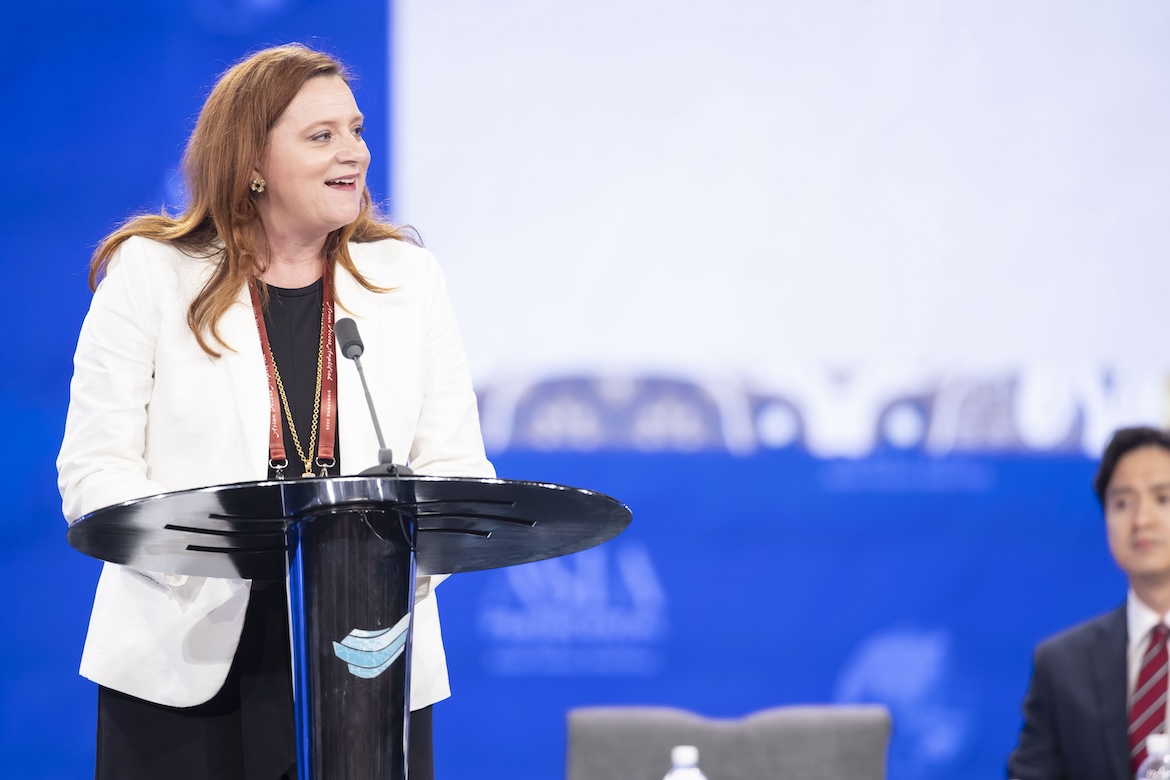
Dr Joy Qualls is an Associate Professor of Communication Studies and Associate Dean in the Division of Communication at Biola University, Los Angeles, USA. Qualls is an alumna of Vanguard University and Regent University, where she earned her Bachelor’s, Master’s and Doctorate, respectively in communication studies, with research emphases in religious and political rhetoric. She is also a member of the Society for Pentecostal Studies. In addition, she serves on a national advisory committee for the Network for Women Ministers, part of the General Council of the Assemblies of God.
Dr Qualls co-wrote the paper “Youth as Pneumatological Agents: Toward a Pentecostal Theology of Youth” with Dr Wayne Choong from City Harvest Church. Their paper seeks to address a gap in theology, which has been predominantly adult-centred, viewing youths simply as a ministry category rather than Spirit-empowered agents in their own rights today, and not just the church of tomorrow.
CITY NEWS: Tell us what inspired you to do a study on the youth-centred Pentecostal theology, with youth as pneumatological agents?
DR JOY QUALLS: The topic itself started with (Summit organiser) Dr Byron Klaus wanting us to think through how we approach ministry for the next generation—we were heading down another path. However, Dr Wayne Choong heard from the Lord that we were attempting to explain ministry to youth in the digital age, trying to understand young people’s use of digital media, but what we really were supposed to address was the young people themselves as ministers.
In your paper, you mentioned that we often overgeneralise individuals based on age, overlooking their unique life experiences and exposures. In your opinion, how can the church move beyond that and create a more collaborative and inclusive way of doing ministry that empowers youth as active agents rather than passive participants?
Wayne said that most of these generational labels are more about marketing than anything else. Younger generations have been marketed to since they were in their mothers’ womb. And I think there is a growing resentment among the younger generations. As a mother of two teenage kids, I see it in my own children. They are tired of being sold an idea to, and they want to be taken seriously, to be treated as a human.
My two children, aged 14 and 15, often say to me that they do not want to be part of this generation and to be labeled this way because it is not reflective of who they are.
So, I think part of the process is acknowledging that we don’t fit into our own generational stereotypes. When I was younger as a Gen-Xer, we were supposed to be the slackers and lazy ones. And yet, here we are holding a lot of major roles in organisations as Baby Boomers retire, and Millennials have not yet been raised up.
As elders, we have the responsibility to not attempt to determine what the next generation is to do, but instead to reflect back to them who they are.
When we attempt to impose these restrictions, we are actually determining and attempting to control the outcomes rather than allowing them to reflect who they are back to them.
How can the church and parents walk with young people in discernment, ensuring their passion stays biblically grounded, without adults overshadowing or limiting what the Spirit may be doing through them? As you’ve mentioned, we need to discern with them and not for them?
I think as parents, the first thing we need to recognise is that our children will be discipled. The question is: by what and by whom, and so we do have to be involved.
For example, my husband and I have chosen that our children are not allowed to have social media yet, and if I could go back, they wouldn’t have their phones yet. They have very many restrictions on their phones as of now. This is not because we’re trying to prevent them from being a part of the world that they live in, but because the more that we read about the harms and challenges that are coming with these technologies, the more we feel like it’s our responsibility to say that there’s an age appropriateness to these things.
We also know that they are going to see social media, whether we want them to see it or not. And so, we have to say to them that we can’t prevent them from experiencing all of these things, but we can walk with you and identify maybe something that isn’t super helpful to them.

We really need to wonder what and who the voices are that we’re listening to. With social media having so much content, we really need to be cautious that just because somebody is speaking about religion, prayers or their experiences doesn’t mean they’re speaking the truth.
So we must be in constant communication with our children. We want to know who it is they are listening to and who they’re talking to because we want to understand them and not be overbearing.
Through open conversation, we discern together. Sometimes they bring perspectives we wouldn’t have considered, which can be beneficial to us. And on the other hand, we sometimes have to say, “I’m not too sure if this is the best thing.”
So that’s the balance we seek to have.
So, it’s also teaching our kids to be media literate?
Exactly. We need to ask questions like, “Who is this person? What is their credibility? What is their training? Is this voice we should be listening to?” It is not to punish them for things, but it is to help them to discern: “Is this true? Is this lovely or is it worthy of a good report?” as Philippians 4:8 tells us. This is part of that co-discernment process: teaching our kids and working with them on critical thinking.
The role of the elders of the church is not just to discern the message with them, but also to discern the messenger. I think that it comes with experience that we can impart to the youth and then they teach us what the loopholes are, because sometimes we get blindsided by our own experiences.
We’ve all had experiences in being caught up in trendy things that we look back on now and realise that they may not have been as good as we thought that it was.
For parents, how do they broach such topics with their youths—to find out what they are consuming but also to not be controlling—so that they are able to help them with discerning what’s good and what’s not?
Before we get to those things, we must first have open conversations with our kids. We need to build first a relational discipleship. Are we having mundane conversations on the way to school or at the dinner table to talk about our lives? If we have established those open lines in the mundane, then when it comes to the important things, there’s already a respect that exists in the relationship.
I’ve even had conversations with my kids that I will be held accountable from the Lord on the Day of Judgement for the choices I have made for them. And so, I tell them that I’m not just trying to control or dictate the things they can or cannot do but I am on my own journey with Him as well with the responsibilities He has entrusted me with.
For example, I tell my kids that if they have any hidden accounts on social media, they should confess now so that we can walk through those things as opposed to us discovering those things later. We must start at a young age with our children for them to understand that if they tell me the truth, even if it’s not what I want to hear, it is better for all of us. But if they hide things from me because they are afraid of what my response will be, it will be worse for everyone.
And so, I think if you have those good relationships with your children, then when accountability is needed, there’s already an expectation of trust and openness.
In your opinion, what are some practical ways the church can meaningfully engage youth, empowering them to actively participate and step up now, rather than just preparing them to be the “leaders of tomorrow”?
I think integrating young people into the service in the church as early as possible is part of how we can help build that theological muscle amongst our children. So, we let them hand out weekly newsletters or hold the elements when communion is served. It is giving youth the opportunity to serve alongside the elders in church and encouraging them to be part of those things, and they will begin to see what the work of the church is.
The sooner we can integrate them into the life of the church, the better. Let them rise up even within their own spheres so that they are not just passive recipients of the message. Show them they have a responsibility to the body of Christ; they’re not just a consumer.
How do we also create the space for them to develop decision making or see more in-depth how the elders at the church think of different aspects of things and learn from them?
I wasn’t raised in a “let them be seen and not heard” environment so I was invited to the table, but I knew when it was time for me to speak and when it wasn’t. As Dr Craig Keener said (in his paper “Paul supported the Ministry of Women”), learn to discern when to be silent and when to learn, so that we don’t embarrass our families or communities.
But the fact that I could sit at the table gave me an opportunity to learn together with my mother’s generation, my aunties, uncles and even grandparents. So I think if we can create spaces like that within the church, to put young people at the table and see what they can handle and what they can’t, and guide and direct them in the ways that will help them grow their maturity.
We need to give them the freedom to step up and do things on their own, but we catch them before they go off the cliff, and that’s how, as elders at church, we should encourage our youths to not be afraid.
I was really blessed by all the examples of how most revivals were sparked by youths who had visions and who were passionate in bringing the Good News of the gospel to their communities. With more youth turning to the digital space and in anticipation for a revival, how can the Church prepare for such a movement?
First, I think we need to teach and remind them of what revival actually is. We tend to see the expressiveness or the hours-long services as such. But true revival is marked first by repentance, by deep understanding of our own fallenness. The whole notion of being revived is that something is coming back to life from something else, and I think we need them to fully understand what it is.
Revival is not just ecstatic worship or emotional hype, and it’s also not the number of clicks and likes on social media. It is marked by others having a deep sense of their need for God and their need for a Saviour.
So, we need to teach our youth to understand this theologically. Because eventually the emotions go away and you must go back to work and continue in the daily routine you’ve been doing. If we don’t teach them to have a deeper understanding of what revival is, it can be disillusionment when one is unable to maintain that feeling.
Any final thoughts on the role of youth as pneumatological agents and of the Summit?
This really was a beginning place. One of the reasons why we titled it the way we did—“Moving Toward a Pentecostal Theology”—is that it was not meant to be an answer to things, but the starting of a conversation. So, I hope that’s what we have done: that we’ve opened a door to greater conversation within the different communities in the church, leadership, families and ministries.
I hope when we go back to our own countries, we will think through the ways that we’re engaging in our own communities to build a greater theological structure. Throughout Scripture, Jesus says to bring the children to Him and to not keep them away from Him.
We see Jeremiah called as a young man and he answered to God, “No, I’m too young”. But, God said, “No, I’m the one who gives the word.” When we think about Timothy and about Samuel, we really must not look at our children as something that they will become, but that they are already being used by the Spirit. Can we, as elders, have eyes to see and ears to hear?
So it’s about opening up to welcome young people, engaging them and supporting them as people empowered by the Spirit?
Yes, and learning to let go of our own positions. We often think: “It’s taken me a long time to earn the place that I have, you will have to wait for your turn.” But are we willing to open doors and create space for others in the same way that others created space for us?
I’ve seen in our own children the way the Spirit speaks. There’s a purity to their hearts, a purity to their souls. They haven’t been beaten up by the world yet. There’s a humility and a wholeness to the way in which the Spirit interacts with them.
And I think, if I remember correctly, some of our sweetest moments with the Holy Spirit was when we were young too. What if we could recapture that by empowering the next generation?
The world is going to beat them up at some point, so we can encourage and empower them as young as we can, so that when those difficulties come, they’re also not sidelined in their faith by those challenges as well.
Instead of asking “Where is God?”, they will be asking themselves, “What is God doing in this moment in me and through me?”
